Amine gas treating
Refinery process
Amine treating washes refinery gas and LPG with a water solution of an amine to absorb hydrogen sulphide and carbon dioxide. The captured H2S goes to sulphur recovery.
- Feed
- Sour refinery gas or LPG containing H2S and CO2
- Makes
- Sweet gas, Acid gas rich in H2S (to Claus unit), Regenerated lean amine (recycled)
- Temperature
- Absorption about 35 to 50 (source range)
- Catalyst
- Aqueous amine solvent (MEA about 20 wt%, DEA about 25 to 35 wt%, MDEA about 30 to 55 wt%)
Process flow
What it does
Hydrotreaters, crackers and cokers all produce gas with hydrogen sulphide, which is toxic and must not be burned in fuel gas at high levels. Sour gas flows up an absorber column against a downward stream of lean amine solution. The amine reacts reversibly with the acid gases and leaves the bottom as rich amine. The rich amine is heated in a stripper with a reboiler, which releases a concentrated acid gas stream and regenerates lean amine for reuse. The sweetened gas leaves the top of the absorber. Common amines include MEA, DEA and MDEA, and MDEA can be selective for H2S over carbon dioxide.
Step by step
- Sour gas enters the bottom of the absorber
- Lean amine is sprayed down from the top
- Amine absorbs H2S and CO2
- Sweet gas leaves the top
- Rich amine is heated in a regenerator
- Acid gas leaves the stripper overhead for sulphur recovery
- Lean amine is cooled and recycled
The chemistry
An amine is a weak base. It accepts a proton from dissolved H2S to form an ammonium and hydrosulphide ion pair, a reversible acid-base reaction that runs backward when the solution is heated.
Reactions, drawn atom by atom
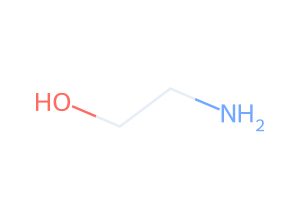

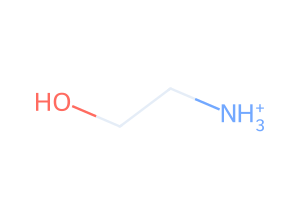
 RNH2 + H2S <-> RNH3+ + HS-R is HOCH2CH2; heating reverses the reaction.
Main equipment
- Absorber contactor
- Regenerator with reboiler
- Lean-rich exchanger
- Amine filters
- Amine surge tank
Safety
H2S is highly toxic even at low concentrations, and amine solutions foul and corrode if contaminated.
Test yourself
Which amine is typically used at about 20 percent by weight?
Related
- Hydrotreating and hydrodesulphurisationRefinery process
- Sulphur recovery (Claus plus tail gas)Refinery process
- LPG, gas plant and light ends recoveryRefinery process
Sources
Written in PST's own words from the sources above. Confidence in the data: high. Real plants differ in design and operating conditions.