Chemicals & other · Trade sulphur, typically 99.9% pure
Sulphur (granular or molten)
A by-product of refining and gas treatment. The Gulf is the world's largest sulphur exporter, and the main buyers are fertiliser and metals producers in Africa, Asia and North Africa.
- 7Parameters
- 6With a limit
- 6Off-spec causes explained
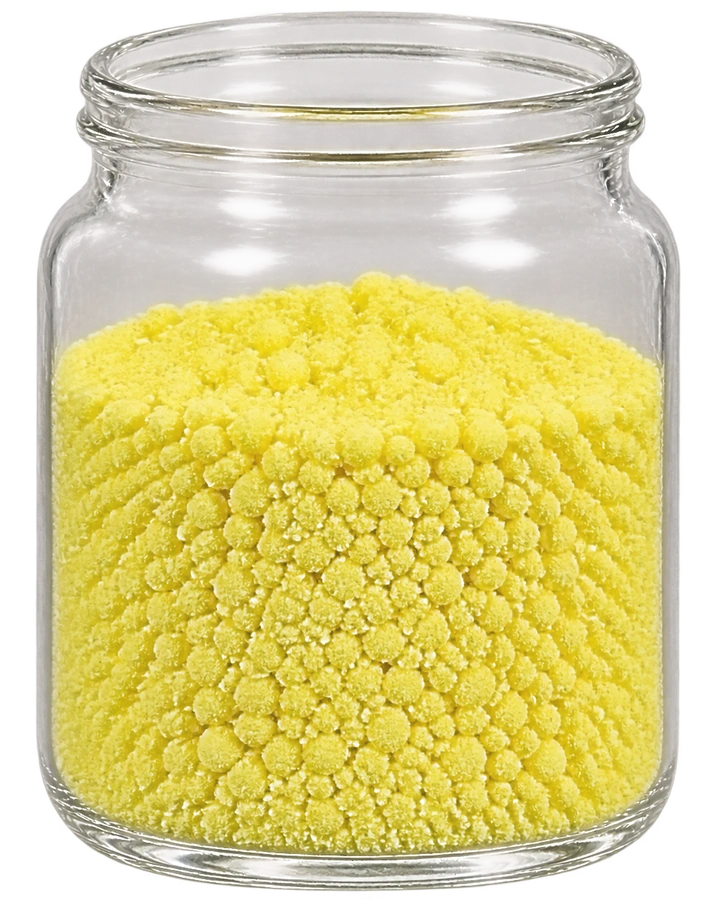
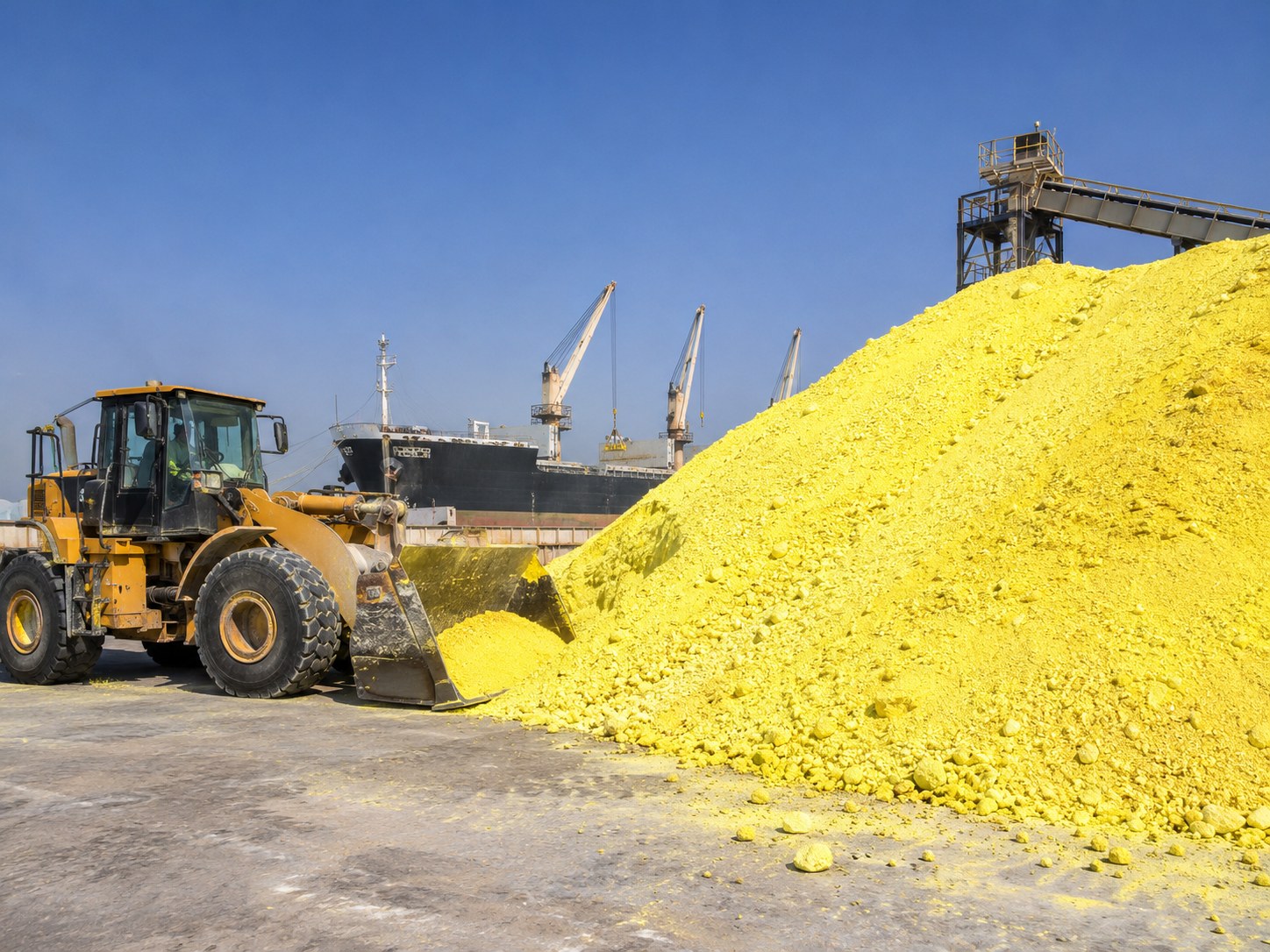
Image credits Laboratory glass samples are made from reference photos on Wikimedia Commons by Chemik10 (CC BY-SA 2.5) and a CC0 petroleum sample photo.
Sulphur (granular or molten) is a solid at normal temperature, so there is no liquid to stir.
How it looks
Bright yellow granules or prills when solid, and a clear amber to red-brown liquid when molten. Dark specks or grey colour point to carbon or oil contamination.
Where it is used
- Sulphuric acid for fertiliser
- Metals leaching
- Chemicals and rubber
Handling and safety
- Dust is a fire and explosion risk. Keep wet-handling rules.
- Molten cargoes need heated tanks at about 140 °C and gas safety checks.
- Independent surveyor for quantity and purity at loading.
Typical properties
- Sulphur purity (dry basis)
- min 99.5 % m/m
- Moisture
- max 0.5 % m/m
- Ash
- max 0.1 % m/m
- Acidity as H₂SO₄
- max 0.02 % m/m
- Organic matter
- max 0.5 % m/m
- Hydrogen sulphide, molten
- max 10 mg/kg
The specification
Trade sulphur, typically 99.9% pure. Limits are the commonly published ones. Your contract and the current edition of the standard decide.
| Parameter | Limit | Test method | What it protects |
|---|---|---|---|
| Sulphur purity (dry basis) | min 99.5 % m/m | ASTM D4045 / ISO 8213 | Value to the buyer. |
| Moisture | max 0.5 % m/m | ASTM D4059 | Weight you pay for and caking. |
| Ash | max 0.1 % m/m | ISO 3706 | Impurity load. |
| Acidity as H₂SO₄ | max 0.02 % m/m | ASTM D4045 | Corrosion in handling. |
| Organic matter | max 0.5 % m/m | ASTM D4045 | Discolours acid and fouls plants. |
| Particle size (granules over 4 mm) | report % m/m | sieve | Dust and handling. |
| Hydrogen sulphide, molten | max 10 mg/kg | ASTM D4045 / Shell method | Toxic gas released from molten sulphur. |
Why a cargo goes off spec
When one parameter fails, it usually points to one cause. Here is what to look for.
Sulphur purity (dry basis)min 99.5 % m/m
Too lowDirt, ash or oil.
Why it mattersValue to the buyer.
Moisturemax 0.5 % m/m
Too highRain or wet handling.
Why it mattersWeight you pay for and caking.
Ashmax 0.1 % m/m
Too highDirt and sand.
Why it mattersImpurity load.
Acidity as H₂SO₄max 0.02 % m/m
Too highSulphur dioxide formation.
Why it mattersCorrosion in handling.
Organic mattermax 0.5 % m/m
Too highOil or hydrocarbon carry-over.
Why it mattersDiscolours acid and fouls plants.
Hydrogen sulphide, moltenmax 10 mg/kg
Too highPoor degassing.
Why it mattersToxic gas released from molten sulphur.
Check your own certificate
Type the values, paste the certificate text, or upload a PDF or photo. The checker names every parameter that is off spec and the usual reason.
| Parameter | Limit | Your value | Result |
|---|---|---|---|
| Sulphur purity (dry basis)ASTM D4045 / ISO 8213 | min 99.5 % m/m | enter a value | |
| MoistureASTM D4059 | max 0.5 % m/m | enter a value | |
| AshISO 3706 | max 0.1 % m/m | enter a value | |
| Acidity as H₂SO₄ASTM D4045 | max 0.02 % m/m | enter a value | |
| Organic matterASTM D4045 | max 0.5 % m/m | enter a value | |
| Particle size (granules over 4 mm)sieve | report % m/m | enter a value | |
| Hydrogen sulphide, moltenASTM D4045 / Shell method | max 10 mg/kg | enter a value |
Sources
Indicative information for professional users. Not a substitute for the standard, a contract or an independent inspector.