Gases
LPG
LPG is a mixture of mainly propane and butane that is a gas at normal conditions but is stored and shipped as a liquid under moderate pressure or refrigeration. It is used for cooking, heating, petrochemicals and as a vehicle fuel.
← Todos los productosTambién llamado: Liquefied petroleum gas, Autogas, Cooking gas, LP gas
- Punto de inflamaciónBelow minus 60 C (propane, vapour)
- Densidad500 to 580 kg/m³
- Rango de ebullición-42 to 0 °C
- PeligroUN1075 (petroleum gases, liquefied), Class 2.1 flammable gas
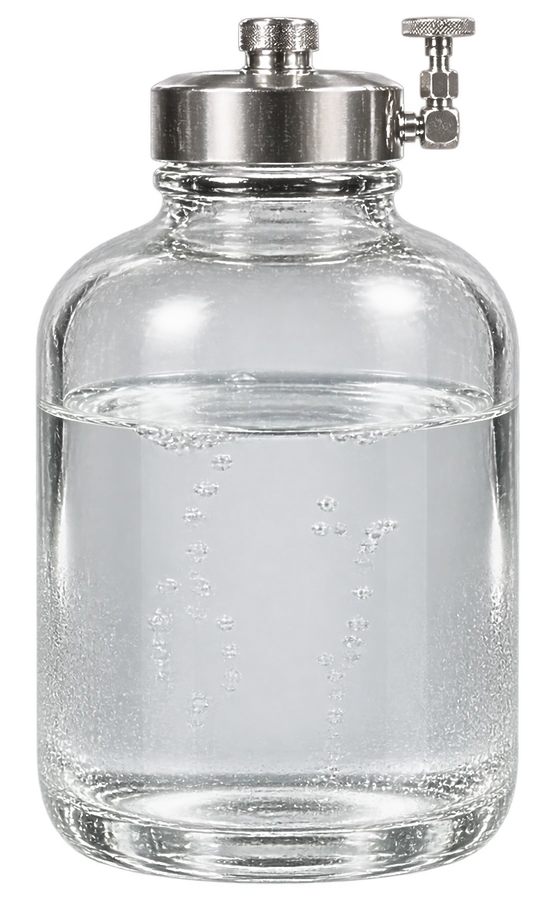
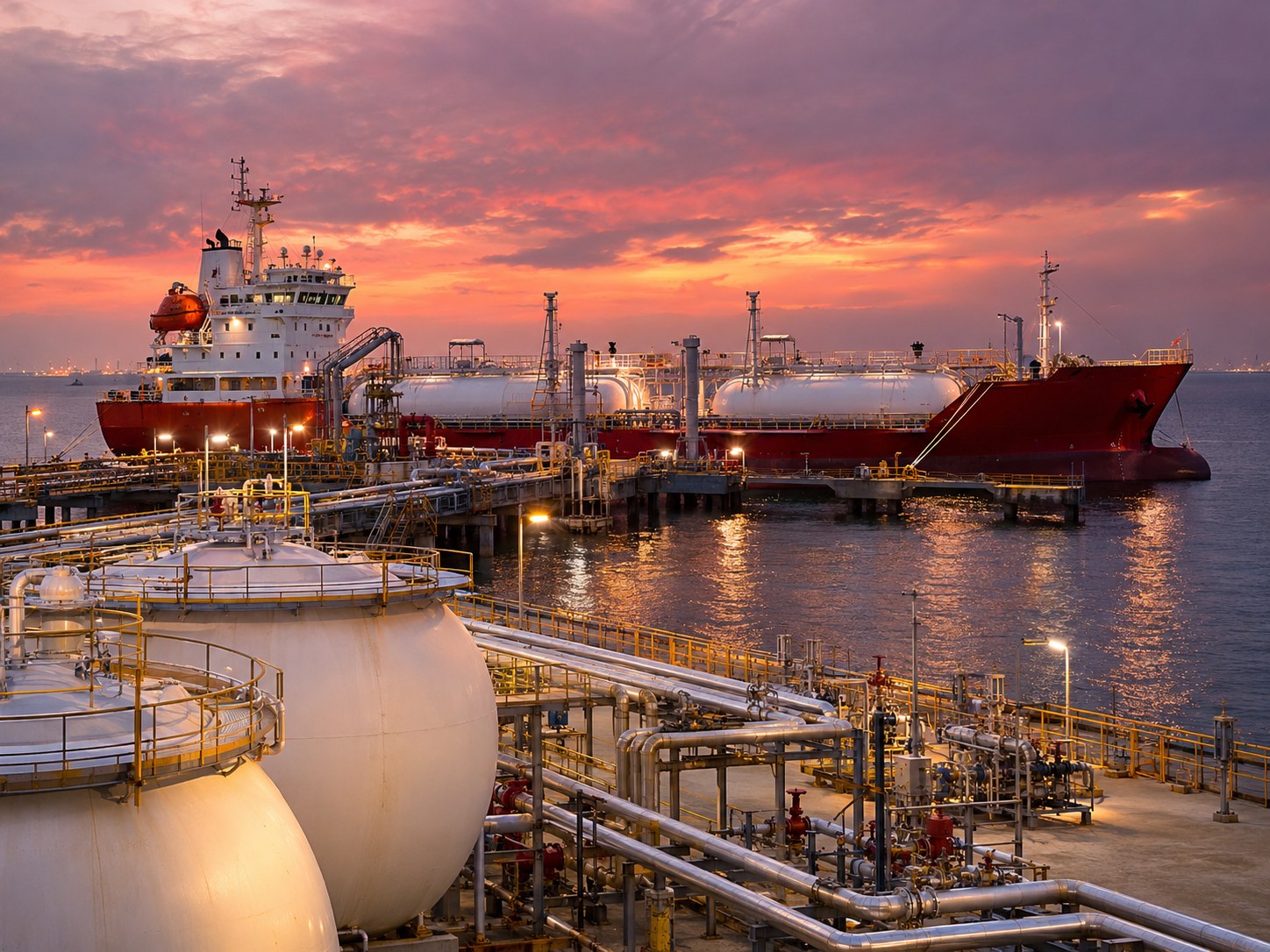
Créditos de las imágenes Las muestras en vidrio de laboratorio se elaboran a partir de fotos de referencia de Wikimedia Commons de Chemik10 (CC BY-SA 2.5) y una foto de muestra de petróleo CC0. Fotografía: elaborada a partir de una foto de referencia de W. Bulach, CC BY-SA 4.0, vía Wikimedia Commons.
Agite el líquido para sentir su espesor
Mueva el ratón o un dedo sobre el líquido. Mantenga pulsado y arrastre para agitar con más fuerza. Teclado: las flechas agitan, la barra espaciadora sacude.
Muy fino Fino como el agua o más. Las ondas corren rápido y duran mucho.
- Velocidad de agitación
- 0 px/s
- Movimiento del líquido
- 0%
- Se calma tras
- -
- Superficie
- Quieto
La clase es solo una guía de sensación. La viscosidad indicada es la de los datos de la especificación.
Aspecto
Colourless gas, liquid under pressure, with a stench agent added for leak detection. You cannot judge it by eye, so quality is shown by composition and vapour pressure on the certificate.
Dónde se utiliza
- Cooking and heating
- Petrochemical feedstock (crackers, propane dehydrogenation)
- Autogas vehicle fuel
- Refrigerant and aerosol propellant (limited)
Manipulación y seguridad
- Stored in pressurised or refrigerated spheres and bullets, loaded on gas carriers at terminals. Inspection covers quantity by tank gauging, quality by composition (gas chromatography) and odorant checks.
- Extremely flammable, asphyxiant in confined spaces, liquid can cause cold burns. Vapour is heavier than air.
Propiedades típicas
- Aspecto
- Colourless gas, colourless liquid under pressure
- Densidad a 15 °C
- 500 to 580 kg/m³
- Rango de ebullición
- -42 to 0 °C
- Punto de inflamación
- Below minus 60 C (propane, vapour)
- Viscosidad
- Very low as liquid
- Punto de fluidez
- Not applicable (boils far below)
- Azufre típico
- Very low, odorant only
◉What it is
LPG is a flammable mixture of hydrocarbon gases, mainly propane and butane (including isobutane), sometimes with small amounts of propylene and butylene. It comes from natural gas processing and from refinery cracking, and the mix varies seasonally, with more propane in winter and more butane in summer. Under modest pressure it turns into a liquid with roughly half the density of water, which lets a large amount of energy be stored in a small tank. It has no natural smell, so an odorant such as ethanethiol is added for safety. Its vapour is heavier than air and pools in low places, which is the main hazard in leaks.
⬡What it is made of
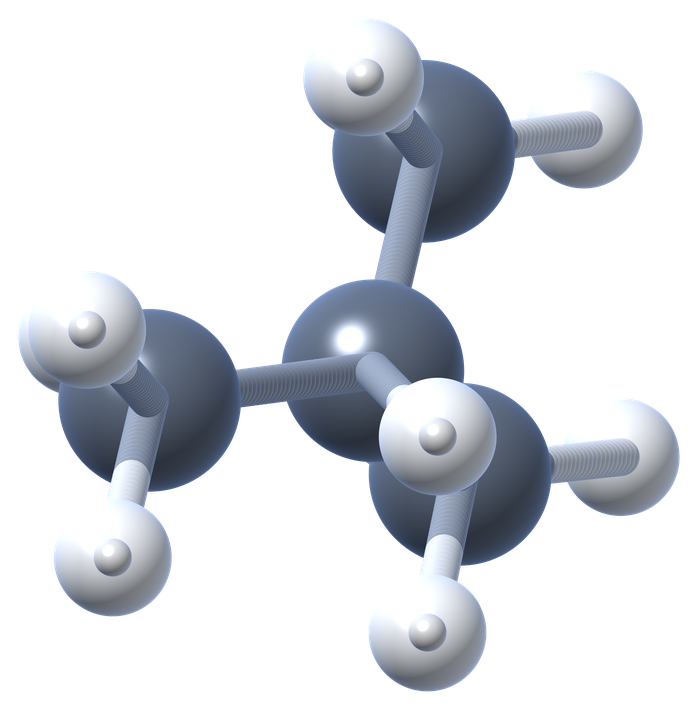
C3 and C4 hydrocarbons: propane, n-butane and isobutane, plus some propylene and butylenes.
⚛La química
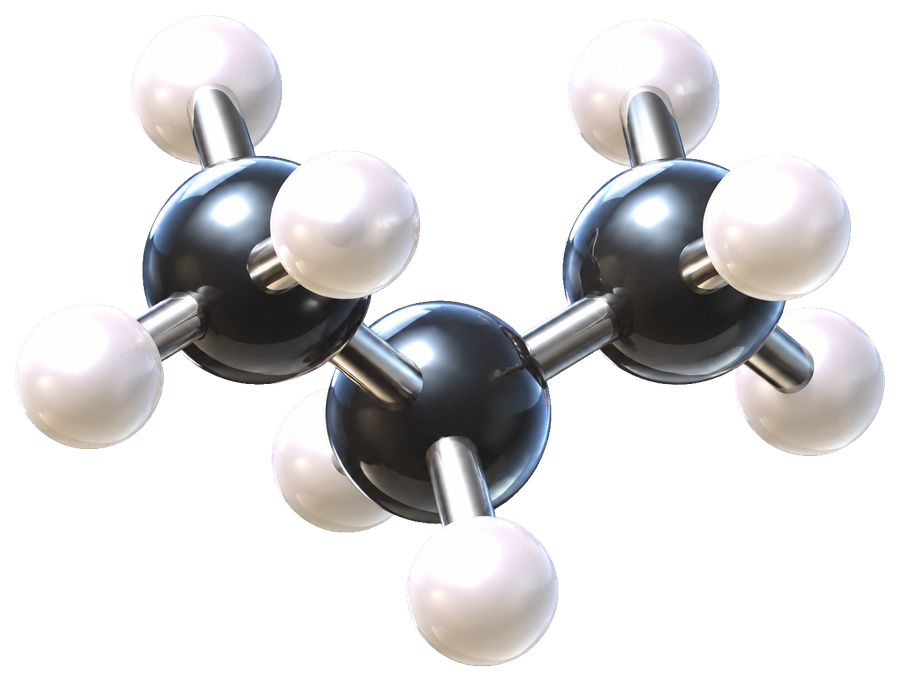
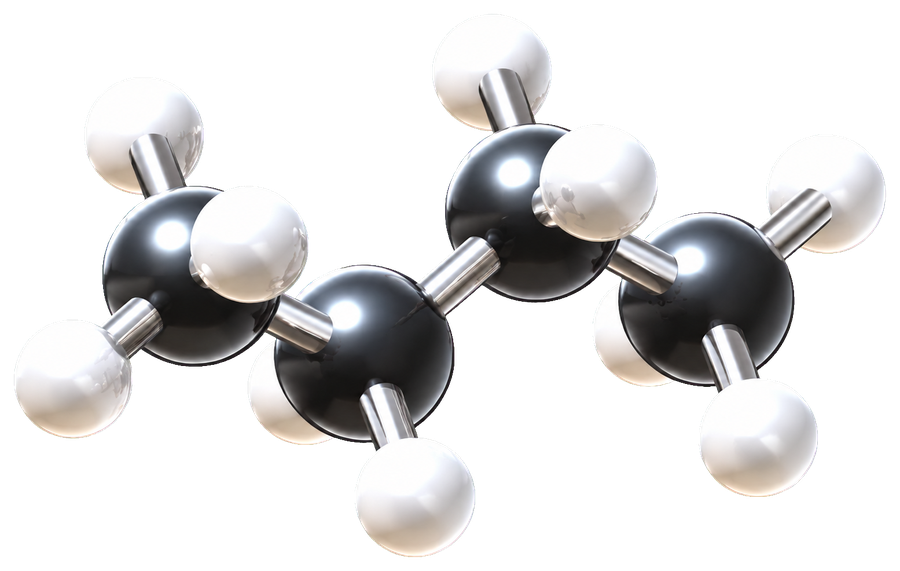
Propane is C3H8 and butane is C4H10. They are saturated, non-polar alkanes with weak intermolecular forces, which explains why they boil at low temperatures (propane near minus 42 C, butane near minus 1 C at atmospheric pressure) and why moderate pressure is enough to liquefy them. They contain almost no sulphur once treated, so they burn cleanly.
⚙How it is made
LPG comes from natural gas processing and from refineries. At gas plants it is separated by fractionation from NGL, and at refineries it is recovered from crude distillation and cracker off-gases.
▶How it works
In use, liquid LPG vaporises from a tank as pressure drops, and the vapour is burned in stoves, heaters or engines. Propane has a higher vapour pressure than butane, so propane-rich mixes work better in cold climates.
▣Storage, loading and inspection
Stored in pressurised or refrigerated spheres and bullets, loaded on gas carriers at terminals. Inspection covers quantity by tank gauging, quality by composition (gas chromatography) and odorant checks.
★Why it matters in the Gulf
Gulf producers such as Saudi Arabia, Qatar, the UAE, Kuwait and Iran are large LPG exporters, mostly to India and East Asia, and the Saudi Aramco Contract Price is the regional price reference. Wikipedia describes the US as the leading producer and exporter. Gulf export volumes are not stated.
Moléculas clave
Normas y especificaciones
| EN 589 | European standard for automotive LPG. |
|---|---|
| ASTM D1835 | Standard specification for liquefied petroleum (LP) gases. Covers propane, propene, butane and their mixtures for heating and engine fuel use. |
Peligros
Extremely flammable, asphyxiant in confined spaces, liquid can cause cold burns. Vapour is heavier than air.
Cómo se comercializa
Units
Metric tonnes
Benchmarks
Saudi Aramco Contract Price (CP) for propane and butane, Argus Far East Index (AFEI), Mont Belvieu in the US
Typical cargo
VLGC about 44,000 tonnes (84,000 cubic metres) or more; coastal gas carriers 3,000 to 15,000 tonnes
Incoterms
FOB (term contracts), CFR/CIF Asia
Notes
Saudi Aramco CP is announced monthly and is a reference price for Middle East LPG. Cargo quality is fixed by propane and butane share and by sulphur and moisture limits.
Refinerías que lo producen: nuestras sugerencias
100 refinerías de la lista producen este producto, 44 de ellas en el Golfo, Irán e Irak. Ordenamos primero las plantas del Golfo, después las que están en operación y luego por capacidad.
- 1Ruwais Refinery
 United Arab Emirates · 922,000 bpdLargest capacity among Gulf-first matchesGulf locationOperatingDeep conversionAcceso de exportación
- 2Ras Tanura Refinery
 Saudi Arabia · 550,000 bpdGulf locationOperatingDeep conversionAcceso de exportación
- 3SATORP Jubail Refinery Saudi Arabia · 465,000 bpdGulf locationOperatingDeep conversionAcceso de exportación
- 4SAMREF Yanbu Refinery Saudi Arabia · 400,000 bpdGulf locationOperatingAcceso de exportación
- 5Petro Rabigh Refinery Saudi Arabia · 400,000 bpdGulf locationOperatingAcceso de exportación
- 6Persian Gulf Star Refinery
 Iran · 360,000 bpdGulf locationOperatingAcceso de exportación



Terminales que lo manipulan
- Ras Tanura terminal Saudi Arabia
- VTTI Fujairah United Arab Emirates
- Emarat Jebel Ali Terminal United Arab Emirates
- Jebel Dhanna / Ruwais (ADNOC) United Arab Emirates
- Ju'aymah crude terminal Saudi Arabia
- Mesaieed terminal and port
 Qatar



¿Sabía que…?
💡 Global LPG production was over 292 million tonnes in 2015, according to Argus figures cited by Wikipedia.
💡 Ethanethiol is added so that leaks can be smelled.
💡 LPG is lighter than gasoline: relative density about 0.5 to 0.58 against 0.71 to 0.77 for gasoline.
Póngase a prueba sobre LPG
LPG is mainly which mixture?
Ver la página de especificaciones de PST
Más de este grupo
Fuentes
Redactado con palabras propias de PST a partir de las fuentes anteriores. Fiabilidad de los datos: medium. Los valores típicos varían según el origen y el contrato, por lo que debe leer siempre la especificación de su propio contrato.