Hydrocracking
Refinery process
Hydrocracking splits heavy gas oil into jet fuel, diesel and naphtha in the presence of hydrogen and a dual-function catalyst. It gives clean, saturated products and is favoured where diesel and jet demand is high.
- Feed
- Vacuum gas oil, heavy distillates, and hydrogen
- Makes
- Jet fuel and diesel, Naphtha, LPG, Unconverted oil (lube base or FCC feed)
- Temperature
- About 350 to 450
- Pressure
- About 69 to 138
- Catalyst
- Bifunctional: metal hydrogenation sites on an acidic support
Process flow
What it does
Vacuum gas oil and other heavy distillates are mixed with hydrogen, heated and passed over a catalyst bed at high pressure. The catalyst has a metal function that adds hydrogen and an acid function that cracks carbon-carbon bonds. Large molecules break into smaller ones, which are immediately saturated, so the products are low in sulphur, nitrogen and aromatics. Mostly diesel and jet-range liquids are made, along with naphtha and some LPG. An unconverted oil stream can be recycled for more conversion or used as a high-quality lube base feed.
Step by step
- Feed and hydrogen are heated to reaction temperature
- A first-stage bed removes sulphur and nitrogen
- The stream enters the cracking beds where molecules split and are hydrogenated
- Quench hydrogen controls the strong heat release
- Effluent is cooled and separated from hydrogen
- Hydrogen is recycled and H2S is removed by amine
- A fractionator separates naphtha, jet, diesel and unconverted oil
The chemistry
Hydrocracking combines acid-catalysed carbon-carbon cleavage with metal-catalysed hydrogenation. Aromatics and olefins become saturated naphthenes and paraffins, and cracked fragments are capped with hydrogen so little coke forms. Isomerisation also occurs, giving branched paraffins with good cold-flow properties.
Reactions, drawn atom by atom


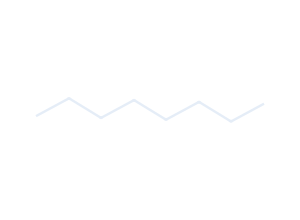 C16H34 + H2 -> 2 C8H18C-C scission followed by hydrogen saturation.

 C10H8 + 2H2 -> C10H12Aromatic ring saturation.
Main equipment
- Charge heater
- High-pressure reactors
- Hot and cold separators
- Recycle gas compressor
- Fractionator
Safety
Very high-pressure hydrogen is an explosion hazard and the reactions release much heat, so loss of quench can cause a temperature runaway.
In the Gulf
The Ruwais Refinery in Abu Dhabi has had a hydrocracker plant in its East complex since 1985, per the operator history summarised on Wikipedia.
Test yourself
Which extra feed does hydrocracking require?
Related
- Vacuum distillation (VDU)Refinery process
- Hydrotreating and hydrodesulphurisationRefinery process
- Fluid catalytic cracking (FCC and residue RFCC)Refinery process
- Hydrogen production (steam methane reforming)Refinery process
- Lube oil refining (base oil chain)Refinery process
Sources
Written in PST's own words from the sources above. Confidence in the data: high. Real plants differ in design and operating conditions.