Crude & feedstocks · Producer assay, typical 50 to 65 API
Condensate (stabilised)
Very light liquid from gas fields. It is split into naphtha and kerosene, or blended. Qatar, the UAE, Saudi Arabia, Kazakhstan, Australia and others export large volumes, and buyers include refineries and splitters in Asia and the Mediterranean.
- 7Parameters
- 2With a limit
- 2Off-spec causes explained
- Flash pointreport °C
- Sulphurreport % m/m
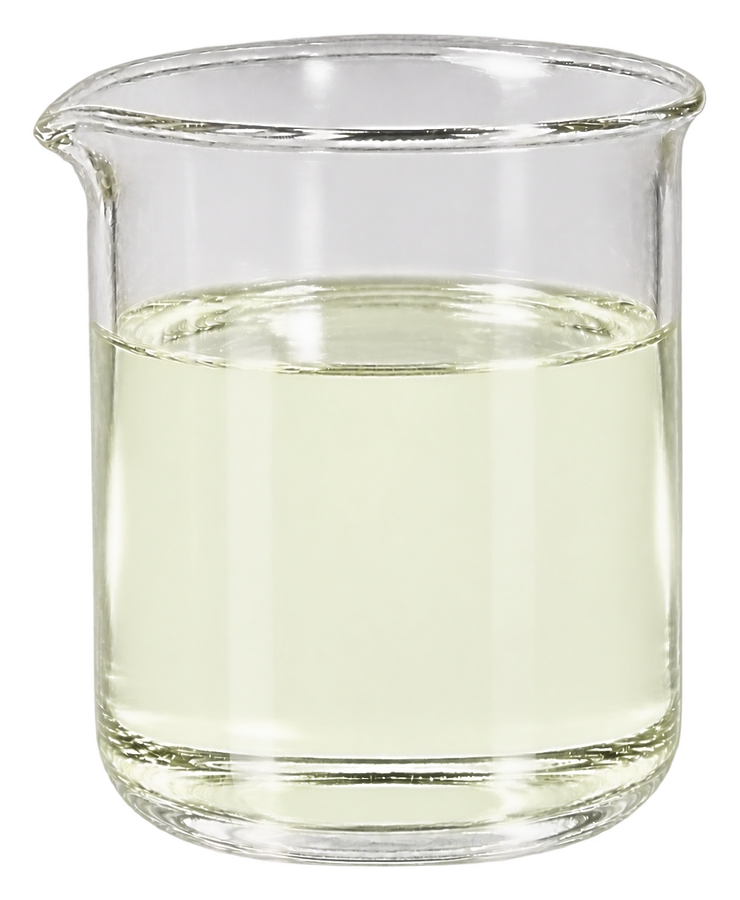

Image credits Laboratory glass samples are made from reference photos on Wikimedia Commons by Chemik10 (CC BY-SA 2.5) and a CC0 petroleum sample photo. Photograph: made from a reference photo by Spielvogel, CC BY-SA 4.0, via Wikimedia Commons.
Stir the liquid to feel how thick it is
Move the mouse or a finger across the liquid. Press and drag to stir harder. Keyboard: arrow keys stir, Space shakes.
Very thin Water-thin or thinner. Ripples run fast and ring for a long time.
- Stir speed
- 0 px/s
- Liquid movement
- 0%
- Settled after
- -
- Surface
- Still
The class is a guide for feel. The viscosity figure shown is the one in the specification data.
How it looks
Water-white to pale straw, thin like a solvent, with a strong smell. A dark colour points to contamination or crude blended in.
Where it is used
- Splitter feedstock for naphtha, kerosene and gasoil
- Petrochemical cracker feed
- Blending with crude
Handling and safety
- Highly flammable and toxic vapour: gas-tight systems and controlled loading.
- Assay and certificate from the producer, verified by an independent inspector.
- Name the origin, the field blend and the pricing basis in the contract.
Typical properties
- API gravity at 60 °F
- min 50 °API
- Basic sediment and water
- max 0.1 % vol
The specification
Producer assay, typical 50 to 65 API. Limits are the commonly published ones. Your contract and the current edition of the standard decide.
| Parameter | Limit | Test method | What it protects |
|---|---|---|---|
| API gravity at 60 °F | min 50 °API | ASTM D287 / D1298 | Shows how light it is. |
| Sulphur | report % m/m | ASTM D4294 | Treatment needs downstream. |
| Reid vapour pressure | report kPa | ASTM D323 / D6377 | Ship and tank vapour handling. |
| Basic sediment and water | max 0.1 % vol | ASTM D4007 | Barrels you pay for. |
| Mercaptan sulphur | report mg/kg | UOP 163 | Odour and treating needs. |
| Mercury | report µg/kg | UOP 938 | Destroys aluminium cryogenic equipment in crackers. |
| Flash point | report °C | ASTM D56 | Very low: treat as highly flammable. |
Why a cargo goes off spec
When one parameter fails, it usually points to one cause. Here is what to look for.
API gravity at 60 °Fmin 50 °API
Too lowHeavier crude mixed in.
Why it mattersShows how light it is.
Basic sediment and watermax 0.1 % vol
Too highPoor settling.
Why it mattersBarrels you pay for.
Check your own certificate
Type the values, paste the certificate text, or upload a PDF or photo. The checker names every parameter that is off spec and the usual reason.
| Parameter | Limit | Your value | Result |
|---|---|---|---|
| API gravity at 60 °FASTM D287 / D1298 | min 50 °API | enter a value | |
| SulphurASTM D4294 | report % m/m | enter a value | |
| Reid vapour pressureASTM D323 / D6377 | report kPa | enter a value | |
| Basic sediment and waterASTM D4007 | max 0.1 % vol | enter a value | |
| Mercaptan sulphurUOP 163 | report mg/kg | enter a value | |
| MercuryUOP 938 | report µg/kg | enter a value | |
| Flash pointASTM D56 | report °C | enter a value |
Sources
Indicative information for professional users. Not a substitute for the standard, a contract or an independent inspector.