Crude & feedstocks · Typical assay of the named grade, certified at loading
Crude oil (Middle East grades)
Crude oil from the Gulf region. Murban is light and sweet (about 40 API, 0.8% sulphur). Arab Light is about 33 API and 1.8% sulphur. Dubai is about 31 API and 2.0%. Basrah Medium is about 29 API and 2.9%. Values are typical only: the certified assay of each cargo decides.
- 9Parameters
- 1With a limit
- 1Off-spec causes explained
- Viscosityreport mm²/s
- Cold flowreport °C
- Sulphurreport % m/m
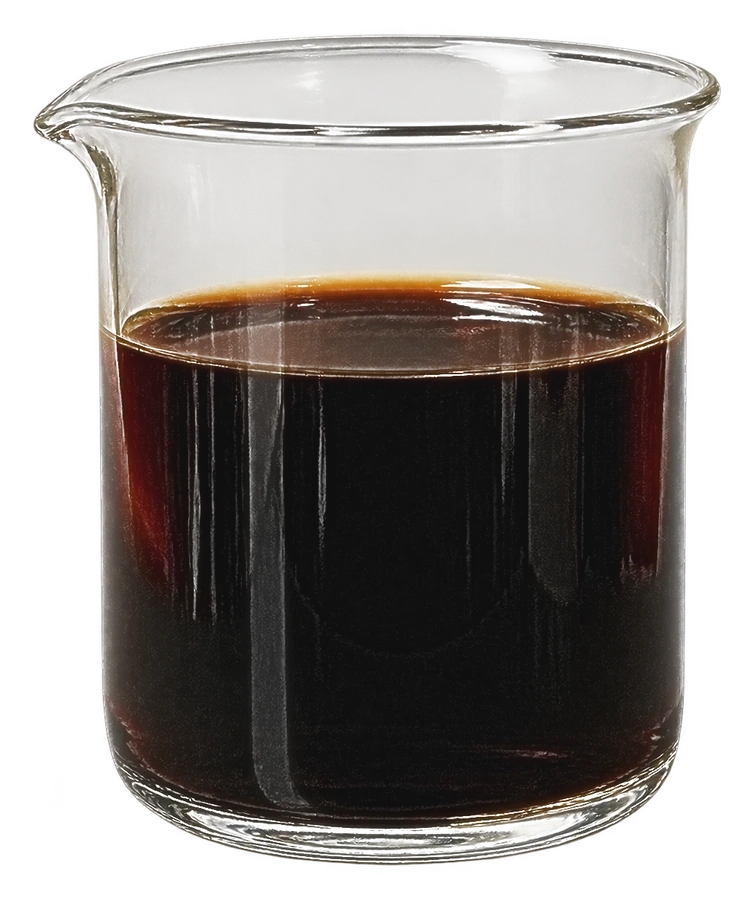
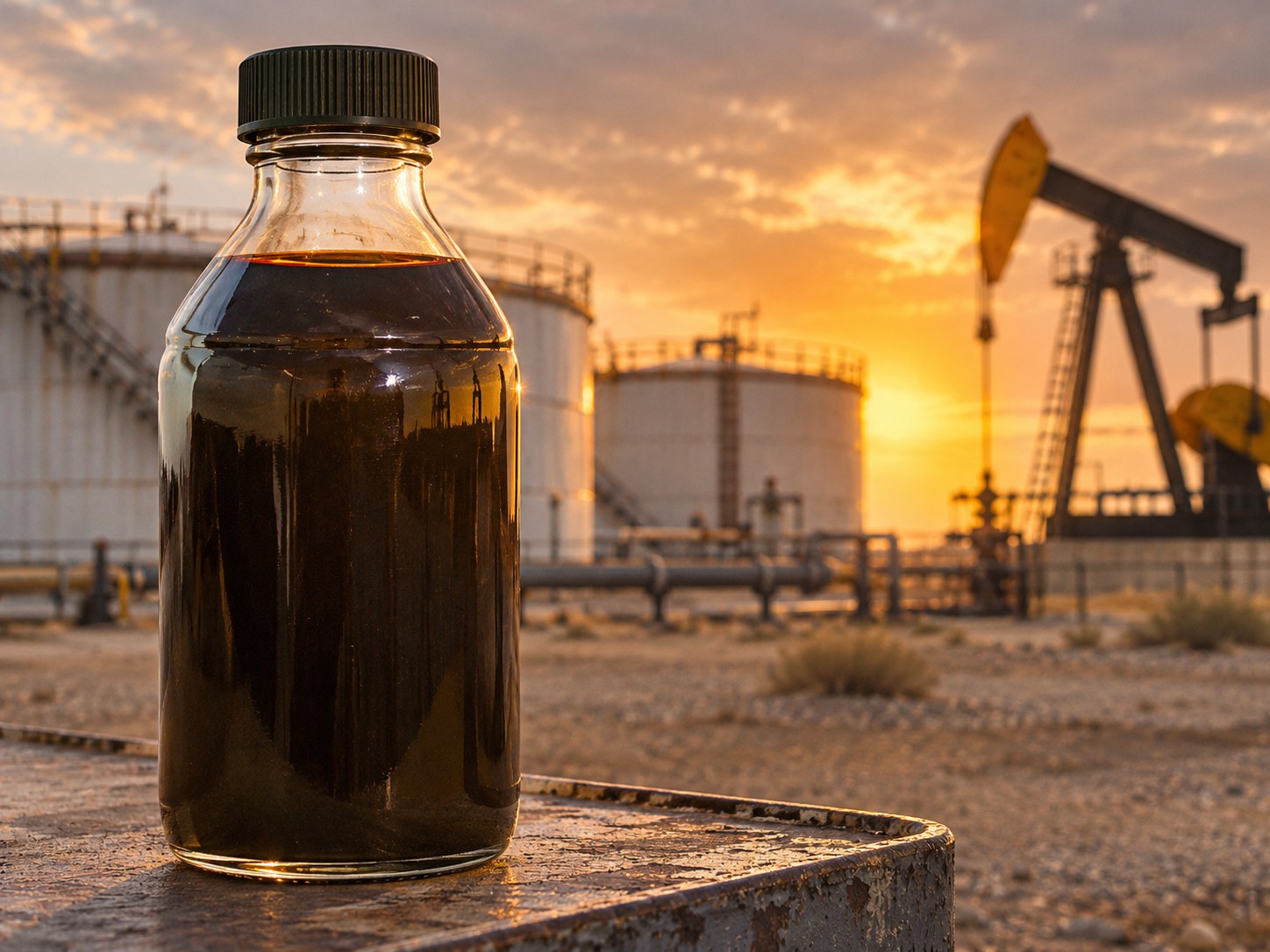
Image credits Laboratory glass samples are made from reference photos on Wikimedia Commons by Chemik10 (CC BY-SA 2.5) and a CC0 petroleum sample photo. Photograph: made from a reference photo by Glasbruch2007, CC BY-SA 3.0, via Wikimedia Commons.
Stir the liquid to feel how thick it is
Move the mouse or a finger across the liquid. Press and drag to stir harder. Keyboard: arrow keys stir, Space shakes.
Medium Oily. Waves are slower and rounder.
Typical viscosity from the dataViscosity at 40 °C: report mm²/s
- Stir speed
- 0 px/s
- Liquid movement
- 0%
- Settled after
- -
- Surface
- Still
The class is a guide for feel. The viscosity figure shown is the one in the specification data.
How it looks
Brown to black. Light, sweet grades such as Murban can look dark amber and flow like thin oil. Heavy grades are black and thick. Colour is not a quality test: the assay is.
Where it is used
- Refinery feedstock
- Topping plants and condensate splitters
- Strategic and commercial storage
Handling and safety
- The grade, the loading terminal and the pricing basis (Dubai, Brent or OSP) must be named in the contract.
- Independent inspection at loading, with the loadport certificate of quality and quantity.
- Origin and sanctions checks on the cargo and the vessel are mandatory before any deal.
Typical properties
- Basic sediment and water
- max 0.5 % vol
The specification
Typical assay of the named grade, certified at loading. Limits are the commonly published ones. Your contract and the current edition of the standard decide.
| Parameter | Limit | Test method | What it protects |
|---|---|---|---|
| API gravity at 60 °F | report °API | ASTM D287 / D1298 | Light crude gives more gasoline and diesel. Heavy crude gives more fuel oil. |
| Sulphur | report % m/m | ASTM D4294 | Sweet crude has under 0.5%. Sour crude needs more refining. |
| Basic sediment and water | max 0.5 % vol | ASTM D4007 | Water and mud reduce the barrels you pay for. |
| Salt content | report ptb | ASTM D3230 | Corrodes refinery equipment. |
| Pour point | report °C | ASTM D97 | Handling and heating in the cold. |
| Reid vapour pressure | report kPa | ASTM D323 / D6377 | Light ends and vapour loss. |
| Viscosity at 40 °C | report mm²/s | ASTM D445 | Pumping. |
| Total acid number | report mg KOH/g | ASTM D664 | High acid crudes corrode equipment. |
| Vanadium plus nickel | report mg/kg | ASTM D5708 | Poison cracking catalysts. |
Why a cargo goes off spec
When one parameter fails, it usually points to one cause. Here is what to look for.
Basic sediment and watermax 0.5 % vol
Too highPoor settling or tank bottoms.
Why it mattersWater and mud reduce the barrels you pay for.
Check your own certificate
Type the values, paste the certificate text, or upload a PDF or photo. The checker names every parameter that is off spec and the usual reason.
| Parameter | Limit | Your value | Result |
|---|---|---|---|
| API gravity at 60 °FASTM D287 / D1298 | report °API | enter a value | |
| SulphurASTM D4294 | report % m/m | enter a value | |
| Basic sediment and waterASTM D4007 | max 0.5 % vol | enter a value | |
| Salt contentASTM D3230 | report ptb | enter a value | |
| Pour pointASTM D97 | report °C | enter a value | |
| Reid vapour pressureASTM D323 / D6377 | report kPa | enter a value | |
| Viscosity at 40 °CASTM D445 | report mm²/s | enter a value | |
| Total acid numberASTM D664 | report mg KOH/g | enter a value | |
| Vanadium plus nickelASTM D5708 | report mg/kg | enter a value |
Sources
Indicative information for professional users. Not a substitute for the standard, a contract or an independent inspector.