Light products · Trade basis; raw or hydrotreated
Pygas (pyrolysis gasoline)
A by-product of steam cracking, rich in benzene, toluene and xylenes. It is sold raw or after hydrotreating and is a blend stock or aromatics feed. No single published standard exists, so buyers agree the parameters.
- 8Parameters
- 2With a limit
- 8Off-spec causes explained
- Density0.78 to 0.84 kg/l
- Sulphurreport ppm (mg/kg)
- Boiling endreport °C
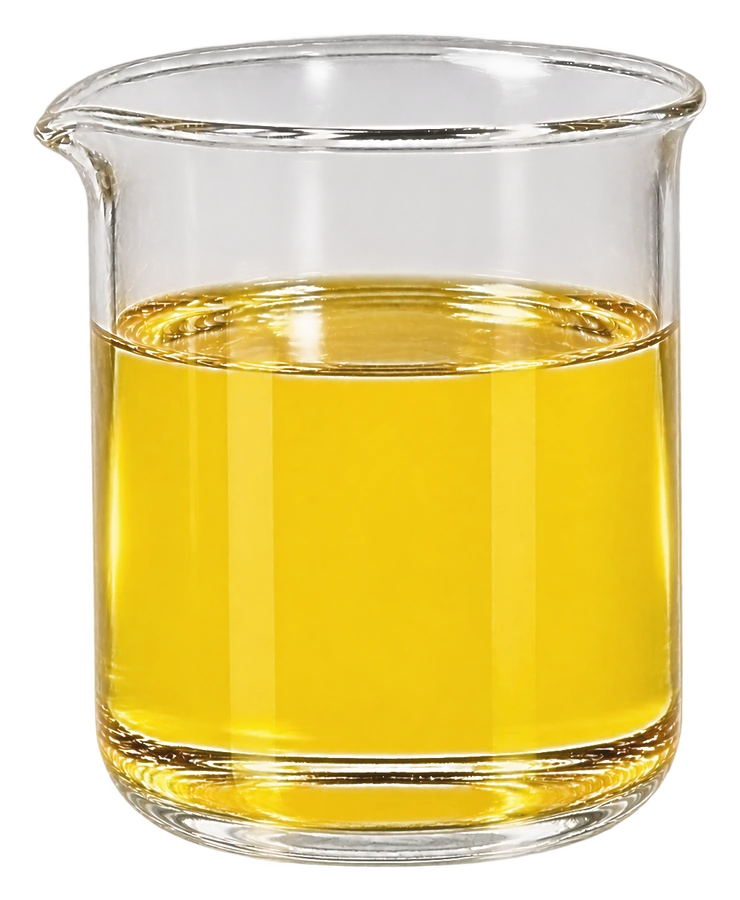
Image credits Laboratory glass samples are made from reference photos on Wikimedia Commons by Chemik10 (CC BY-SA 2.5) and a CC0 petroleum sample photo.
Stir the liquid to feel how thick it is
Move the mouse or a finger across the liquid. Press and drag to stir harder. Keyboard: arrow keys stir, Space shakes.
Very thin Water-thin or thinner. Ripples run fast and ring for a long time.
- Stir speed
- 0 px/s
- Liquid movement
- 0%
- Settled after
- -
- Surface
- Still
The class is a guide for feel. The viscosity figure shown is the one in the specification data.
How it looks
Pale yellow to amber, with a sharp, sweet aromatic smell. It darkens with oxidation and storage, and raw pygas can become cloudy or form gum.
Where it is used
- Aromatics extraction for benzene, toluene, xylenes
- Gasoline blending after hydrotreating
Handling and safety
- Nitrogen-blanketed tanks and low storage time to limit gum.
- Agree the parameter list and limits in the SPA before shipment.
Typical properties
- Density at 15 °C
- 0.78 to 0.84 kg/l
- Final boiling point
- max 210 °C
The specification
Trade basis; raw or hydrotreated. Limits are the commonly published ones. Your contract and the current edition of the standard decide.
| Parameter | Limit | Test method | What it protects |
|---|---|---|---|
| Density at 15 °C | 0.78 to 0.84 kg/l | ASTM D4052 | A first check on aromatic content. |
| Benzene | report % m/m | ASTM D6730 | The value of the product to an aromatics buyer. |
| Bromine number | report g Br/100 g | ASTM D1159 | Shows how many reactive double bonds there are, and how much hydrotreating is needed. |
| Diene value | report g I/100 g | UOP 326 | Dienes polymerise into gum and foul units. |
| Existent gum | report mg/100 ml | ASTM D381 | Fouling in storage and downstream. |
| Total sulphur | report ppm (mg/kg) | ASTM D5453 | Downstream catalyst poisoning. |
| Initial boiling point | report °C | ASTM D86 | Fixes the cut. |
| Final boiling point | max 210 °C | ASTM D86 | Heavy ends reduce quality. |
Why a cargo goes off spec
When one parameter fails, it usually points to one cause. Here is what to look for.
Density at 15 °C0.78 to 0.84 kg/l
Too highHeavy aromatics or C9+ ends.
Too lowParaffinic naphtha mixed in.
Why it mattersA first check on aromatic content.
Benzenereport % m/m
Too lowA lighter, less aromatic stream.
Why it mattersThe value of the product to an aromatics buyer.
Bromine numberreport g Br/100 g
Too highRaw or poorly hydrotreated pygas.
Why it mattersShows how many reactive double bonds there are, and how much hydrotreating is needed.
Diene valuereport g I/100 g
Too highRaw pygas or a stream that has aged.
Why it mattersDienes polymerise into gum and foul units.
Existent gumreport mg/100 ml
Too highOxidation, dienes, long storage.
Why it mattersFouling in storage and downstream.
Total sulphurreport ppm (mg/kg)
Too highUntreated stream.
Why it mattersDownstream catalyst poisoning.
Initial boiling pointreport °C
Too lowC5 and lighter carry-over.
Why it mattersFixes the cut.
Final boiling pointmax 210 °C
Too highC9+ and heavy aromatics.
Why it mattersHeavy ends reduce quality.
Check your own certificate
Type the values, paste the certificate text, or upload a PDF or photo. The checker names every parameter that is off spec and the usual reason.
| Parameter | Limit | Your value | Result |
|---|---|---|---|
| Density at 15 °CASTM D4052 | 0.78 to 0.84 kg/l | enter a value | |
| BenzeneASTM D6730 | report % m/m | enter a value | |
| Bromine numberASTM D1159 | report g Br/100 g | enter a value | |
| Diene valueUOP 326 | report g I/100 g | enter a value | |
| Existent gumASTM D381 | report mg/100 ml | enter a value | |
| Total sulphurASTM D5453 | report ppm (mg/kg) | enter a value | |
| Initial boiling pointASTM D86 | report °C | enter a value | |
| Final boiling pointASTM D86 | max 210 °C | enter a value |
Sources
Indicative information for professional users. Not a substitute for the standard, a contract or an independent inspector.