Solvents and specialities · ISO 1250 / BS 245 type white spirit
White spirit
A refined petroleum solvent used in paints, cleaning and degreasing. Grades differ by aromatic content: standard, and low-aromatic or dearomatised for lower odour.
- 8Parameters
- 7With a limit
- 8Off-spec causes explained
- Flash pointmin 30 °C
- Density0.77 to 0.795 kg/l
- Boiling endmin 140 °C
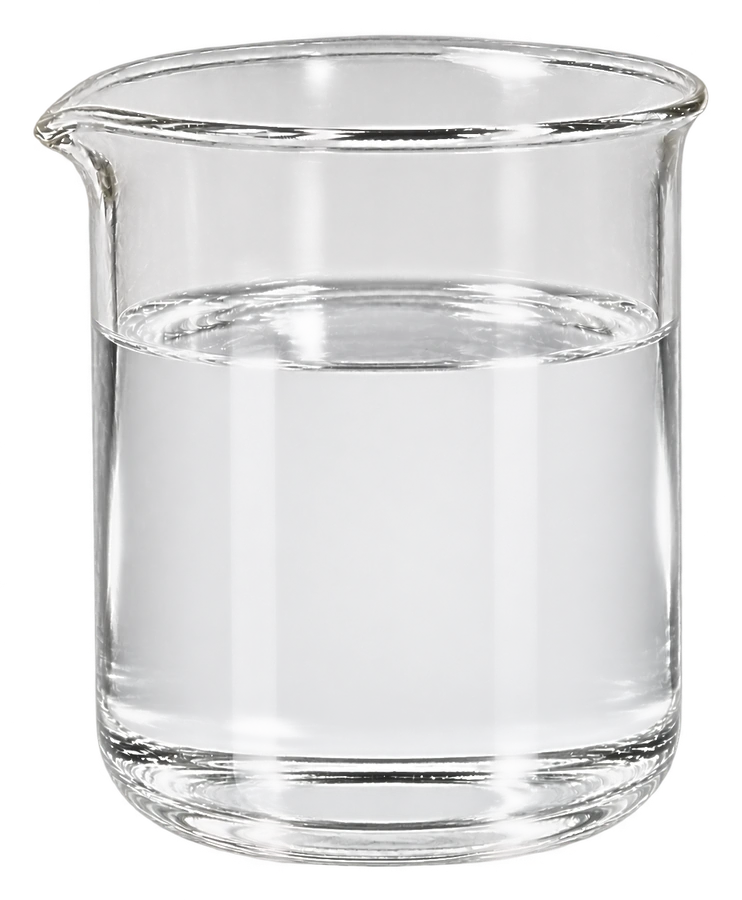
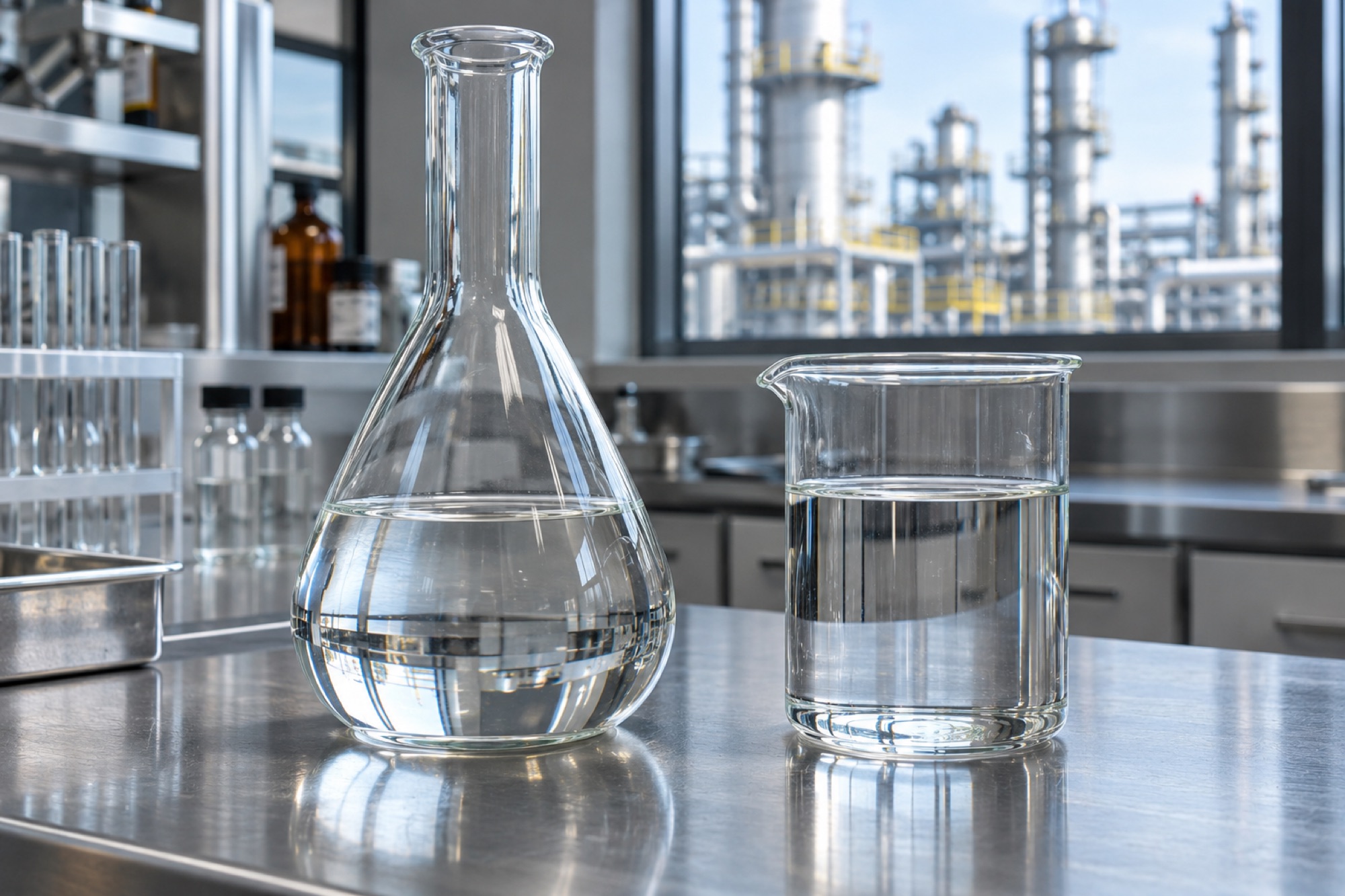
Image credits Laboratory glass samples are made from reference photos on Wikimedia Commons by Chemik10 (CC BY-SA 2.5) and a CC0 petroleum sample photo.
Stir the liquid to feel how thick it is
Move the mouse or a finger across the liquid. Press and drag to stir harder. Keyboard: arrow keys stir, Space shakes.
Thin Light and free flowing. Waves travel quickly and fade slowly.
- Stir speed
- 0 px/s
- Liquid movement
- 0%
- Settled after
- -
- Surface
- Still
The class is a guide for feel. The viscosity figure shown is the one in the specification data.
How it looks
Water-white and thin, with a mild hydrocarbon smell. Colour is measured on the Saybolt scale, and any haze, yellow tint or strong odour counts against it.
Where it is used
- Paint and varnish thinner
- Industrial degreasing and cleaning
- Printing inks and polishes
Handling and safety
- Clean, dry, dedicated tanks.
- Odour and colour are checked by eye and nose at loading, in addition to the lab test.
Typical properties
- Flash point
- min 30 °C
- Density at 15 °C
- 0.77 to 0.795 kg/l
- Initial boiling point
- min 140 °C
- Dry point
- max 220 °C
- Aromatics
- max 25 % vol
- Colour, Saybolt
- min 25
- Residue on evaporation
- max 5 mg/100 ml
The specification
ISO 1250 / BS 245 type white spirit. Limits are the commonly published ones. Your contract and the current edition of the standard decide.
| Parameter | Limit | Test method | What it protects |
|---|---|---|---|
| Flash point | min 30 °C | ISO 13736 / ASTM D56 | Fire safety. |
| Density at 15 °C | 0.77 to 0.795 kg/l | ISO 12185 | Shows whether the cut is correct. |
| Initial boiling point | min 140 °C | ISO 3405 | Drying speed and flash point. |
| Dry point | max 220 °C | ISO 3405 | Heavy ends dry slowly and leave residue. |
| Aromatics | max 25 % vol | ASTM D1319 | Odour and toxicity. Dearomatised grades are below 1%. |
| Colour, Saybolt | min 25 | ASTM D156 | A water-white solvent is clean and fresh. |
| Residue on evaporation | max 5 mg/100 ml | ISO 6246 | Leaves a film on the surface. |
| Kauri-butanol value | report | ASTM D1133 | A measure of solvent power. |
Why a cargo goes off spec
When one parameter fails, it usually points to one cause. Here is what to look for.
Flash pointmin 30 °C
Too lowLight ends or contamination with naphtha.
Why it mattersFire safety.
Density at 15 °C0.77 to 0.795 kg/l
Too highHeavy ends or aromatic content.
Too lowToo light, with light ends.
Why it mattersShows whether the cut is correct.
Initial boiling pointmin 140 °C
Too lowLight ends.
Why it mattersDrying speed and flash point.
Dry pointmax 220 °C
Too highHeavy ends.
Why it mattersHeavy ends dry slowly and leave residue.
Aromaticsmax 25 % vol
Too highA conventional, not dearomatised, stream.
Why it mattersOdour and toxicity. Dearomatised grades are below 1%.
Colour, Sayboltmin 25
Too lowOxidation or contamination.
Why it mattersA water-white solvent is clean and fresh.
Residue on evaporationmax 5 mg/100 ml
Too highHeavy ends or contamination.
Why it mattersLeaves a film on the surface.
Kauri-butanol valuereport
Too lowA less aromatic grade.
Why it mattersA measure of solvent power.
Check your own certificate
Type the values, paste the certificate text, or upload a PDF or photo. The checker names every parameter that is off spec and the usual reason.
| Parameter | Limit | Your value | Result |
|---|---|---|---|
| Flash pointISO 13736 / ASTM D56 | min 30 °C | enter a value | |
| Density at 15 °CISO 12185 | 0.77 to 0.795 kg/l | enter a value | |
| Initial boiling pointISO 3405 | min 140 °C | enter a value | |
| Dry pointISO 3405 | max 220 °C | enter a value | |
| AromaticsASTM D1319 | max 25 % vol | enter a value | |
| Colour, SayboltASTM D156 | min 25 | enter a value | |
| Residue on evaporationISO 6246 | max 5 mg/100 ml | enter a value | |
| Kauri-butanol valueASTM D1133 | report | enter a value |
Sources
Indicative information for professional users. Not a substitute for the standard, a contract or an independent inspector.