Lubricants and waxes
Base Oil Group I (SN 150, SN 500, Bright Stock)
Group I base oils are solvent-refined mineral oils with less than 90 percent saturates and/or more than 0.03 percent sulphur, and a viscosity index of 80 to under 120. SN 150, SN 500 and bright stock are common viscosity grades.
← Todos los productosTambién llamado: Group I base oil, Solvent refined base oil, SN 150, SN 500, Bright stock, Solvent neutral
- Punto de inflamaciónSN 150 about 210 C; SN 500 about 240 C; bright stock about 290 C (open cup)
- Densidad860 to 900 kg/m³
- ViscosidadSN 150: about 30 mm2/s at 40 C; SN 500: about 100 mm2/s at 40 C; bright stock: about 30 mm2/s at 100 C
- Flujo en fríoSN 150 about -9 C; SN 500 about -9 to -6 C; bright stock about -6 C to 0 C
- Azufre0.03% to 1% (above 0.03% by definition)
- Rango de ebullición300 to 600 °C
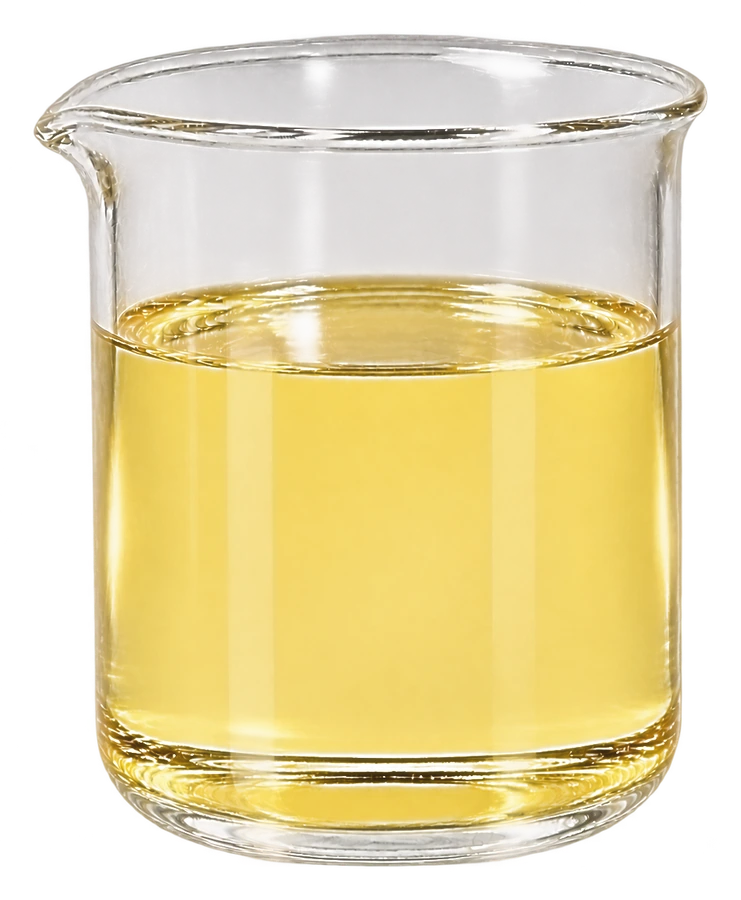
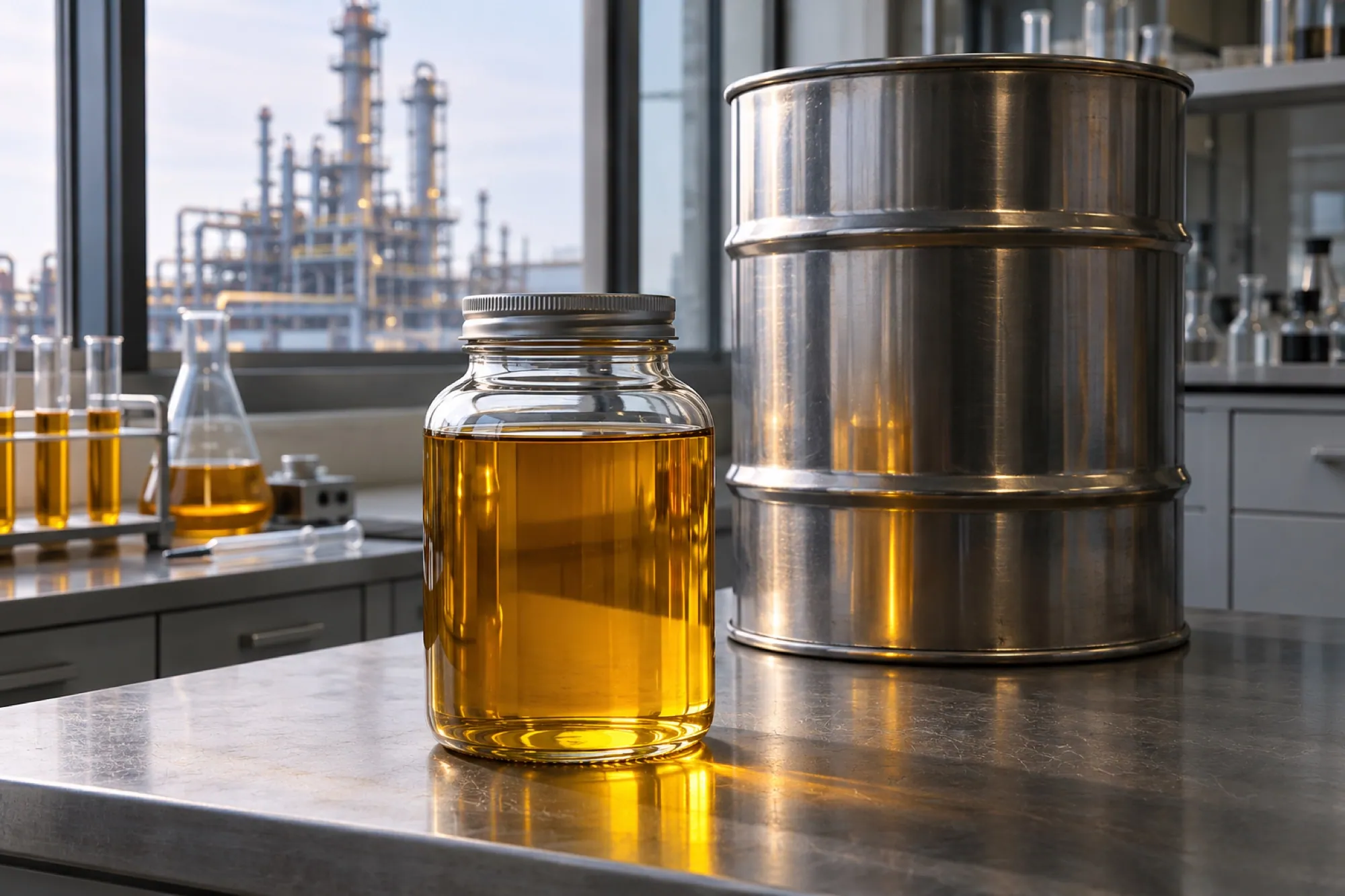
Créditos de las imágenes Las muestras en vidrio de laboratorio se elaboran a partir de fotos de referencia de Wikimedia Commons de Chemik10 (CC BY-SA 2.5) y una foto de muestra de petróleo CC0.
Agite el líquido para sentir su espesor
Mueva el ratón o un dedo sobre el líquido. Mantenga pulsado y arrastre para agitar con más fuerza. Teclado: las flechas agitan, la barra espaciadora sacude.
Espeso Pesado. Se resiste a la agitación y solo se mueve despacio.
Viscosidad típica según los datosSN 150: about 30 mm2/s at 40 C; SN 500: about 100 mm2/s at 40 C; bright stock: about 30 mm2/s at 100 C
- Velocidad de agitación
- 0 px/s
- Movimiento del líquido
- 0%
- Se calma tras
- -
- Superficie
- Quieto
La clase es solo una guía de sensación. La viscosidad indicada es la de los datos de la especificación.
Aspecto
Light yellow to amber, bright
Dónde se utiliza
- Engine oils (older formulations)
- Industrial and marine lubricants
- Greases
- Metalworking fluids
- Rubber process oils
Manipulación y seguridad
- Store in clean, dry closed tanks away from heat. Keep different grades separate to avoid contamination. Sample per ASTM D4057; inspect colour, viscosity, flash point and water. Drums, IBCs and flexitanks are common packaging.
- Combustible at high temperature. Hot product causes burns. Low acute toxicity; mist inhalation and prolonged skin contact should be avoided.
Propiedades típicas
- Aspecto
- Light yellow to amber, bright
- Densidad a 15 °C
- 860 to 900 kg/m³
- Rango de ebullición
- 300 to 600 °C
- Punto de inflamación
- SN 150 about 210 C; SN 500 about 240 C; bright stock about 290 C (open cup)
- Viscosidad
- SN 150: about 30 mm2/s at 40 C; SN 500: about 100 mm2/s at 40 C; bright stock: about 30 mm2/s at 100 C
- Punto de fluidez
- SN 150 about -9 C; SN 500 about -9 to -6 C; bright stock about -6 C to 0 C
- Azufre típico
- 0.03% to 1% (above 0.03% by definition)
◉What it is
Group I is the oldest and least refined API base oil category. It is made from vacuum distillates and deasphalted residue using solvents to remove aromatics and wax. API defines it as having less than 90 percent saturates and/or more than 0.03 percent sulphur, with a viscosity index of 80 to under 120 (Wikipedia). SN means solvent neutral, and the number is roughly the viscosity in Saybolt seconds at 100 F: SN 150 is a light grade, SN 500 a medium-heavy grade. Bright stock is the heaviest grade, made from deasphalted vacuum residue, with a viscosity of about 30 mm2/s at 100 C.
⬡What it is made of
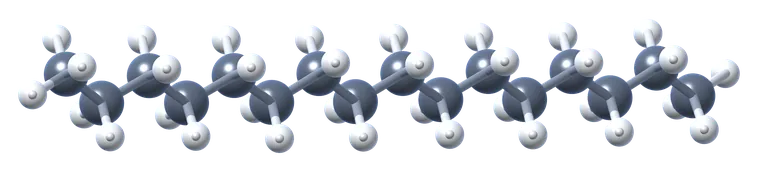
C26 to C40 paraffins, naphthenes and aromatics (Wikipedia: 26 to 40 carbon fraction).
⚛La química
The oil contains branched and cyclic hydrocarbons. Remaining aromatics and sulphur compounds oxidise more easily than saturates, which limits oil life. Solvent refining removes polar aromatics, raising viscosity index.
⚙How it is made
Vacuum distillates are extracted with furfural or NMP to remove aromatics, dewaxed with MEK or toluene solvent, and finally hydrofinished. Bright stock comes from propane-deasphalted vacuum residue.
▶How it works
Base oil makes up 70 to 99 percent of a lubricant. Viscosity grade decides film thickness; viscosity index measures how little viscosity changes with temperature; saturates and low sulphur control oxidation stability.
▣Storage, loading and inspection
Store in clean, dry closed tanks away from heat. Keep different grades separate to avoid contamination. Sample per ASTM D4057; inspect colour, viscosity, flash point and water. Drums, IBCs and flexitanks are common packaging.
★Why it matters in the Gulf
Group I base oil supply is concentrated in a few regional lube plants and is shrinking worldwide as Group II and III grow. Gulf plant lists and volumes are not stated.
Moléculas clave

Normas y especificaciones
| API 1509 Annex E | Defines base oil groups I to V |
|---|---|
| ASTM D445 | Kinematic viscosity |
| ASTM D2270 | Viscosity index |
Peligros
Combustible at high temperature. Hot product causes burns. Low acute toxicity; mist inhalation and prolonged skin contact should be avoided.
Cómo se comercializa
Units
Metric tonnes; drums; flexitanks of 20 to 24 mt
Benchmarks
Platts Group I base oil assessments (SN 150, SN 500, bright stock) FOB Arab Gulf and Northwest Europe
Typical cargo
Parcels of 500 to 5,000 mt on small product tankers; containers
Incoterms
FOB, CFR, CIF; drums and ISO tanks FCA or DAP
Notes
Group I supply is shrinking as refiners shut solvent plants.
Refinerías que lo producen: nuestras sugerencias
38 refinerías de la lista producen este producto, 18 de ellas en el Golfo, Irán e Irak. Ordenamos primero las plantas del Golfo, después las que están en operación y luego por capacidad.
- 1Ruwais Refinery
 United Arab Emirates · 922,000 bpdLargest capacity among Gulf-first matchesGulf locationOperatingDeep conversionAcceso de exportación
- 2Daura Refinery
 Iraq · 140,000 bpdGulf locationOperating
- 3Pearl GTL
 Qatar · 140,000 bpdGulf locationOperatingAcceso de exportación
- 4Najaf Refinery Iraq · 30,000 bpdGulf locationOperating
- 5Bahrain Lube Base Oil Plant (BLBOC)
 Bahrain · 8,000 bpdGulf locationOperatingAcceso de exportación
- 6Sepahan Oil Company
 Iran · Not publishedGulf locationOperatingAcceso de exportación




Terminales que lo manipulan
- Gulf Petrochem Hamriyah terminal United Arab Emirates
- Regal Petro Trading terminal, Hamriyah United Arab Emirates
- Sharafco Petroleum terminal, Hamriyah United Arab Emirates
- Sharlu base oil terminal, Hamriyah United Arab Emirates
¿Sabía que…?
💡 Bright stock is the heaviest Group I grade and is used in gear oils and greases.
💡 Group I output is falling worldwide as Group II and III oils gain share.
Póngase a prueba sobre Base Oil Group I (SN 150, SN 500, Bright Stock)
What do Group I oils have by definition?
Más de este grupo
Fuentes
Redactado con palabras propias de PST a partir de las fuentes anteriores. Fiabilidad de los datos: medium. Los valores típicos varían según el origen y el contrato, por lo que debe leer siempre la especificación de su propio contrato.