Lubricants and waxes
Base Oil Group II
Group II base oils are hydroprocessed mineral oils with at least 90 percent saturates and sulphur at or below 0.03 percent. They are the main base stock for modern engine oils.
← सभी उत्पादअन्य नाम: Group II base oil, Hydroprocessed base oil
- फ़्लैश पॉइंट200 to 250 C typical (open cup)
- घनत्व840 to 870 kg/m³
- विस्कॉसिटीAbout 4 to 10 mm2/s at 100 C depending on grade
- ठंड में प्रवाह-12 to -18 C typical
- सल्फरLess than 0.03% (often below 10 ppm)
- क्वथनांक सीमा300 to 550 °C
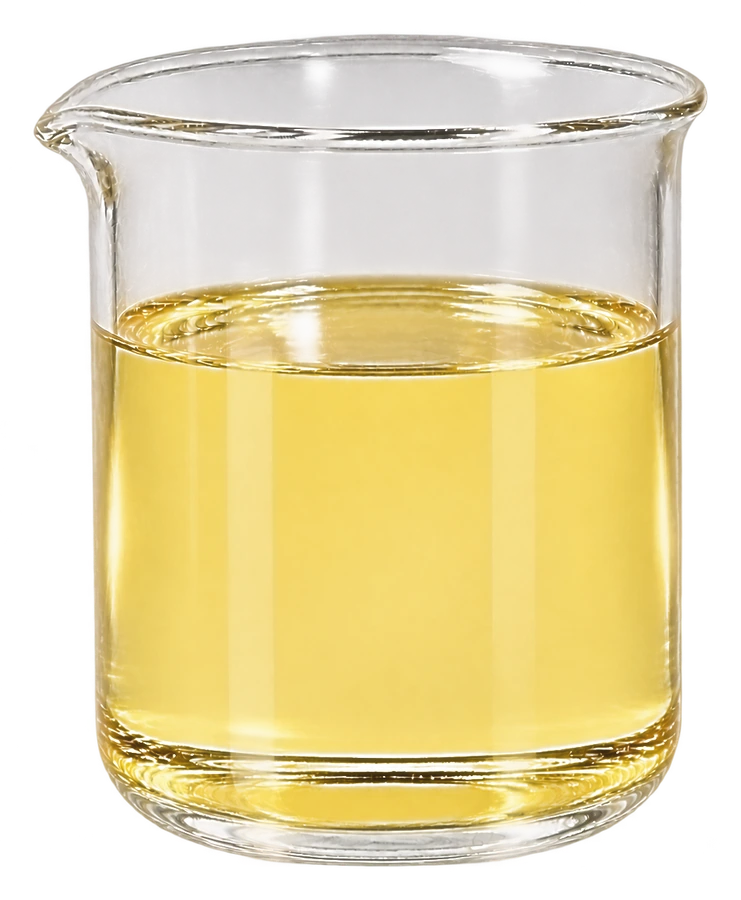
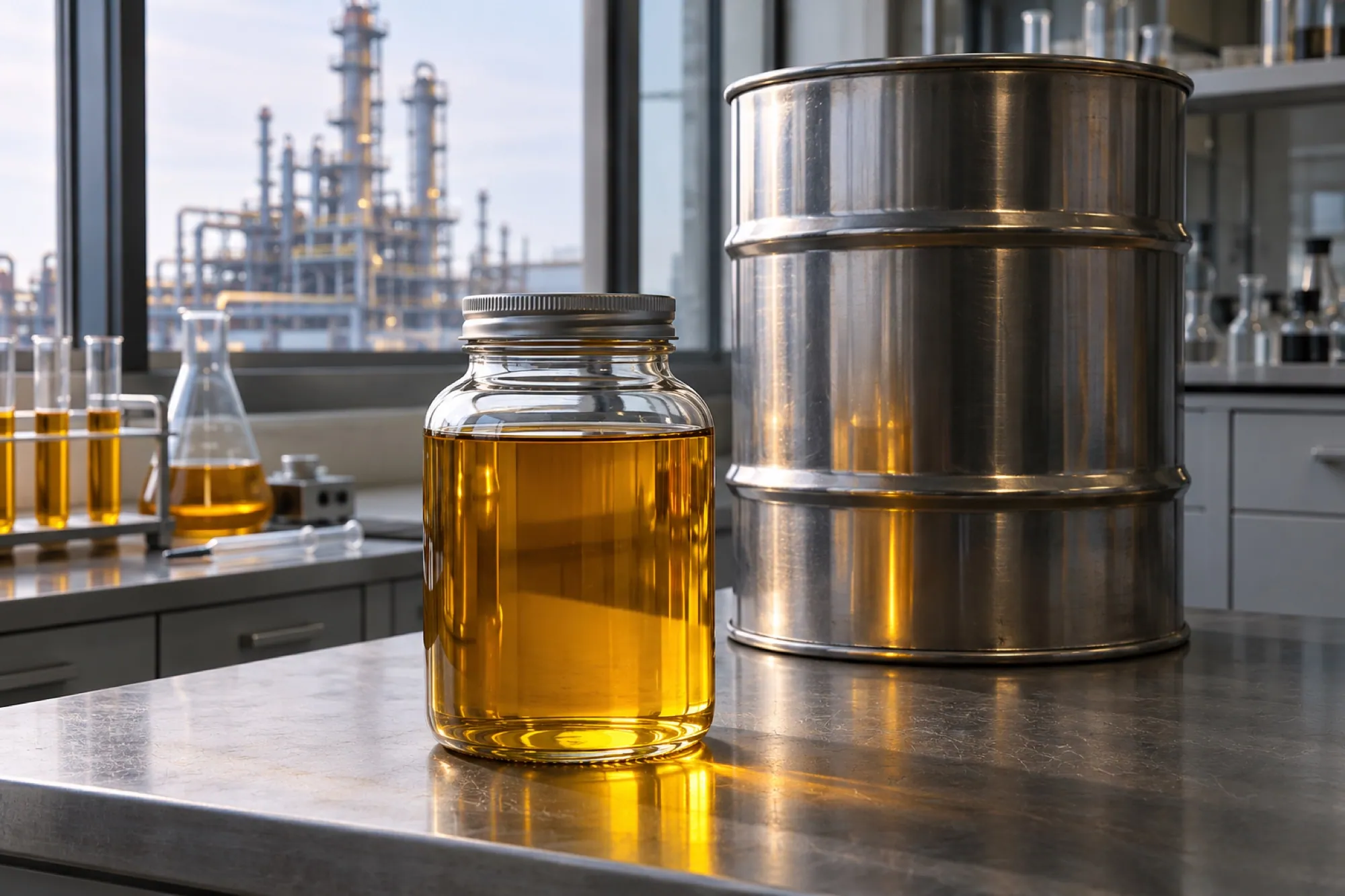
चित्र श्रेय प्रयोगशाला काँच के नमूने Wikimedia Commons पर मौजूद संदर्भ तस्वीरों से बनाए गए हैं, द्वारा Chemik10 (CC BY-SA 2.5) और एक CC0 पेट्रोलियम नमूना फ़ोटो.
तरल को हिलाकर उसका गाढ़ापन महसूस करें
माउस या उँगली तरल के ऊपर चलाएँ। ज़ोर से हिलाने के लिए दबाकर खींचें। कीबोर्ड: तीर कुंजियाँ हिलाती हैं, Space झकझोरता है।
गाढ़ा भारी। यह हिलाने का विरोध करता है और केवल धीरे-धीरे चलता है।
डेटा से सामान्य श्यानताAbout 4 to 10 mm2/s at 100 C depending on grade
- हिलाने की गति
- 0 px/s
- तरल की गति
- 0%
- शांत होने में लगा समय
- -
- सतह
- स्थिर
यह श्रेणी केवल अनुभव का मार्गदर्शन है। दिखाया गया श्यानता मान विनिर्देश डेटा का मान है।
यह कैसा दिखता है
Water-white to pale yellow
इसका उपयोग कहाँ होता है
- Engine oils (SAE 5W-30, 10W-40)
- Hydraulic and turbine oils
- Gear oils
- Transformer oils
हैंडलिंग और सुरक्षा
- Store in clean, dry closed tanks away from heat. Keep different grades separate to avoid contamination. Sample per ASTM D4057; inspect colour, viscosity, flash point and water. Drums, IBCs and flexitanks are common packaging.
- Combustible at high temperature. Hot product causes burns. Low acute toxicity; mist inhalation and prolonged skin contact should be avoided.
सामान्य गुण
- रूप-रंग
- Water-white to pale yellow
- 15 °C पर डेंसिटी
- 840 to 870 kg/m³
- क्वथनांक सीमा
- 300 to 550 °C
- फ़्लैश पॉइंट
- 200 to 250 C typical (open cup)
- विस्कॉसिटी
- About 4 to 10 mm2/s at 100 C depending on grade
- पोर पॉइंट
- -12 to -18 C typical
- सामान्य सल्फ़र
- Less than 0.03% (often below 10 ppm)
◉What it is
Group II oils have at least 90 percent saturates and no more than 0.03 percent sulphur, with a viscosity index of 80 to under 120 (Wikipedia). They are made by hydroprocessing rather than solvent extraction, so they are clearer, more stable and more consistent than Group I. Group II is widely used for passenger car and heavy-duty engine oils. Viscosity grades are given in cSt at 100 C or by Neutral numbers such as N 100, N 150 or N 600.
⬡What it is made of
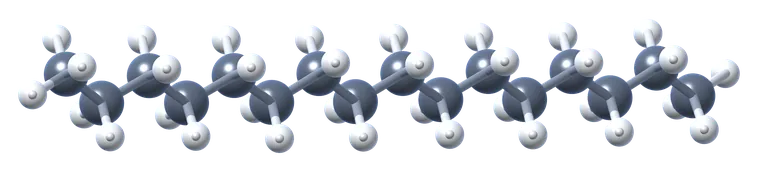
C20 to C40 saturated paraffins and naphthenes.
⚛रसायन विज्ञान
Hydrogenation saturates aromatic rings and removes sulphur and nitrogen, leaving cycloalkanes and isoparaffins. Branched isoparaffins give low pour point and good viscosity index; saturated structure improves oxidation stability.
⚙How it is made
Vacuum gasoil is hydrocracked or severely hydrotreated vacuum distillate, then catalytically dewaxed.
▶How it works
Base oil forms the bulk of the lubricant and provides film thickness, heat transfer and solvency for additives. Higher saturates and viscosity index give longer drain intervals.
▣Storage, loading and inspection
Store in clean, dry closed tanks away from heat. Keep different grades separate to avoid contamination. Sample per ASTM D4057; inspect colour, viscosity, flash point and water. Drums, IBCs and flexitanks are common packaging.
★Why it matters in the Gulf
Group II and III base oils are traded into the region for lubricant blending, including blending plants at Jebel Ali. Gulf production plants are not stated.
मुख्य अणु

मानक और स्पेसिफिकेशन
| API 1509 | Group classification |
|---|---|
| ASTM D445 and D2270 | Viscosity and VI |
| ACEA and ILSAC | Engine oil standards that drive demand |
ख़तरे
Combustible at high temperature. Hot product causes burns. Low acute toxicity; mist inhalation and prolonged skin contact should be avoided.
इसका व्यापार कैसे होता है
Units
Metric tonnes; drums; flexitanks
Benchmarks
Platts Group II and III base oil assessments FOB Arab Gulf, Asia and Europe
Typical cargo
Parcels of 1,000 to 10,000 mt; containerised lots
Incoterms
FOB, CFR, CIF; drums and ISO tanks FCA or DAP
Notes
Group III is also called VHVI or hydrocracked base oil.
इसे बनाने वाली रिफ़ाइनरियाँ: हमारे सुझाव
38 सूचीबद्ध रिफ़ाइनरियाँ यह उत्पाद बनाती हैं, उनमें से 18 खाड़ी, ईरान और इराक़ में हैं। हम पहले खाड़ी के प्लांट, फिर चालू प्लांट, फिर क्षमता के हिसाब से रखते हैं।
- 1Ruwais Refinery
 United Arab Emirates · 922,000 bpdLargest capacity among Gulf-first matchesGulf locationOperatingDeep conversionएक्सपोर्ट एक्सेस
- 2Daura Refinery
 Iraq · 140,000 bpdGulf locationOperating
- 3Pearl GTL
 Qatar · 140,000 bpdGulf locationOperatingएक्सपोर्ट एक्सेस
- 4Najaf Refinery Iraq · 30,000 bpdGulf locationOperating
- 5Bahrain Lube Base Oil Plant (BLBOC)
 Bahrain · 8,000 bpdGulf locationOperatingएक्सपोर्ट एक्सेस
- 6Sepahan Oil Company
 Iran · Not publishedGulf locationOperatingएक्सपोर्ट एक्सेस




इसे संभालने वाले टर्मिनल
- Gulf Petrochem Hamriyah terminal United Arab Emirates
- Regal Petro Trading terminal, Hamriyah United Arab Emirates
- Sharafco Petroleum terminal, Hamriyah United Arab Emirates
- Sharlu base oil terminal, Hamriyah United Arab Emirates
क्या आप जानते हैं
💡 Group III is marketed by some blenders as synthetic technology although it is mineral-based.
💡 The shift to low-viscosity engine oils drives growth in Group II and III.
Base Oil Group II पर ख़ुद को परखें
What is the VI of Group II?
इस समूह में और
- Base Oil Group I (SN 150, SN 500, Bright Stock)
- Base Oil Group III
- White Oil (Medicinal and Technical)
- Paraffin Wax
- Slack Wax
स्रोत
ऊपर दिए स्रोतों के आधार पर PST के अपने शब्दों में लिखा गया। डेटा की विश्वसनीयता: medium। सामान्य मान मूल और अनुबंध के अनुसार बदलते हैं, इसलिए हमेशा अपने अनुबंध का स्पेसिफिकेशन पढ़ें।