Isomerisation
Refinery process
Isomerisation rearranges straight-chain light naphtha molecules into branched isomers with higher octane. It also converts normal butane into isobutane for alkylation.
- Carica
- Light naphtha (C5 and C6) or normal butane, plus hydrogen
- Produce
- Isomerate (high-octane gasoline component), Isobutane (from n-butane), Light gases
- Catalizzatore
- Bifunctional catalyst (metal plus acid)
Schema di processo
Cosa fa
Light straight-run naphtha rich in pentane and hexane has low octane because its molecules are straight chains. In an isomerisation unit the feed is mixed with hydrogen and passed over a catalyst that moves carbon atoms to form branched molecules, without changing the number of carbons. The resulting isomerate has higher octane and contains no benzene when benzene is first saturated. Normal butane can be isomerised to isobutane to supply alkylation. Some units recycle unconverted normal paraffins after separation to boost the octane gain.
Passo dopo passo
- Light naphtha is hydrotreated and dried
- Feed is mixed with hydrogen and heated
- The mixture passes over the isomerisation catalyst
- Carbon skeletons rearrange into branched forms
- The effluent is cooled and stabilised
- Normal paraffins may be separated and recycled
- Isomerate goes to gasoline blending
La chimica
Skeletal isomerisation converts a straight-chain alkane into a branched alkane of the same formula, driven by acid sites and an equilibrium that favours branching at moderate temperature. Branched molecules burn more smoothly, which gives a higher octane number.
Reazioni, illustrate atomo per atomo

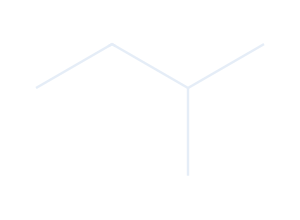 C5H12 -> C5H12 (branched)Same formula, branched structure.

 C6H14 -> C6H14 (branched)Highest-octane hexane isomer.
Apparecchiature principali
- Feed dryer
- Reactor
- Stabiliser
- Deisohexaniser or molecular sieve unit
Sicurezza
Hydrogen and light hydrocarbons are flammable; some catalyst types need dry feed and can release acidic compounds on contact with water.
Si metta alla prova
What does isomerisation change?
Correlati
- Catalytic reformingRefinery process
- Alkylation (sulphuric and HF)Refinery process
- Product blending and additivesRefinery process
Fonti
Redatto con parole proprie di PST a partire dalle fonti sopra. Affidabilità dei dati: medium. Gli impianti reali differiscono per progetto e condizioni di esercizio.