Lubricants and waxes
Base Oil Group III
Group III base oils are hydroprocessed mineral oils with at least 90 percent saturates and sulphur at or below 0.03 percent. They are the main base stock for modern engine oils.
← Tutti i prodottiDetto anche: Group III base oil, Hydroprocessed base oil
- Punto di infiammabilità200 to 250 C typical (open cup)
- Densità840 to 870 kg/m³
- ViscositàAbout 4 to 10 mm2/s at 100 C depending on grade
- Flusso a freddo-12 to -18 C typical
- ZolfoLess than 0.03% (often below 10 ppm)
- Intervallo di ebollizione300 to 550 °C
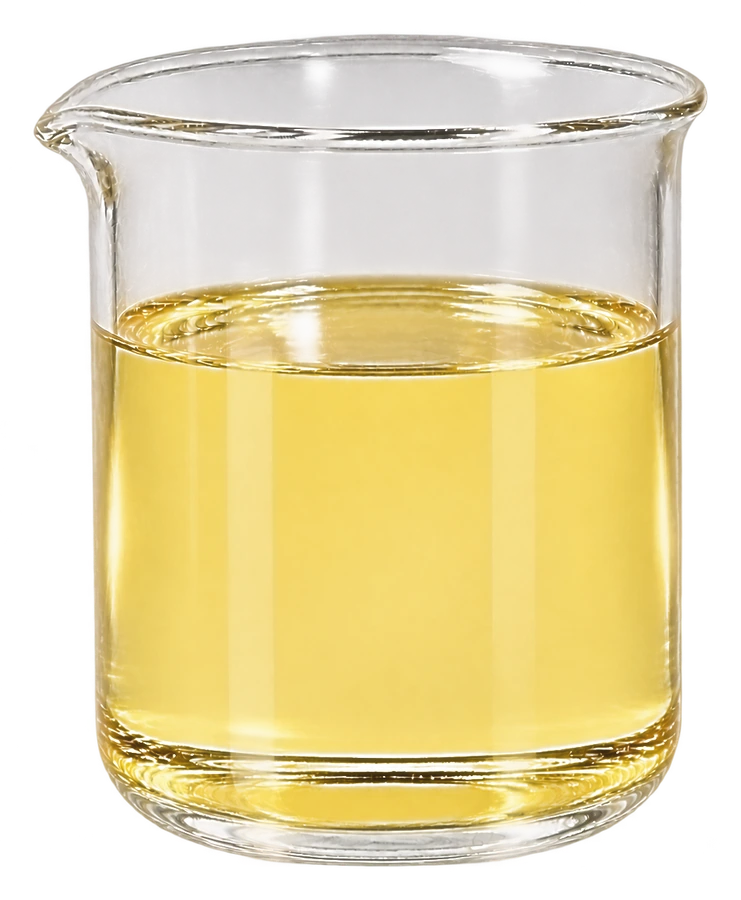
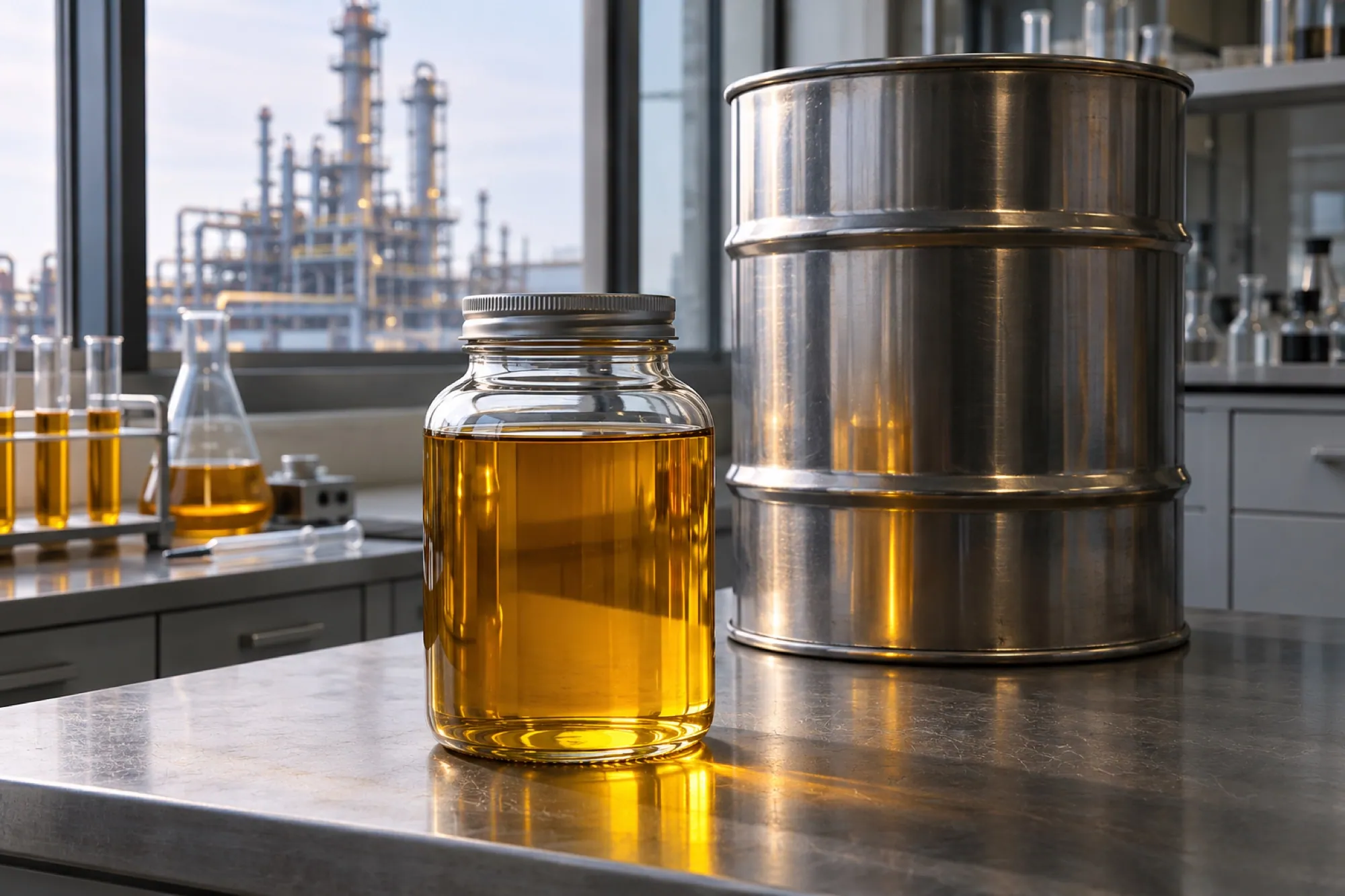
Crediti delle immagini I campioni in vetro da laboratorio sono realizzati da foto di riferimento su Wikimedia Commons di Chemik10 (CC BY-SA 2.5) e una foto di un campione di petrolio CC0.
Agitate il liquido per sentire quanto è denso
Muovete il mouse o un dito sul liquido. Premete e trascinate per agitare più forte. Tastiera: le frecce agitano, Spazio scuote.
Denso Pesante. Resiste all'agitazione e si muove solo lentamente.
Viscosità tipica dai datiAbout 4 to 10 mm2/s at 100 C depending on grade
- Velocità di agitazione
- 0 px/s
- Movimento del liquido
- 0%
- Si calma dopo
- -
- Superficie
- Fermo
La classe è solo una guida alla sensazione. Il valore di viscosità mostrato è quello dei dati di specifica.
Aspetto
Water-white to pale yellow
Dove si usa
- Engine oils (SAE 5W-30, 10W-40)
- Hydraulic and turbine oils
- Gear oils
- Transformer oils
Manipolazione e sicurezza
- Store in clean, dry closed tanks away from heat. Keep different grades separate to avoid contamination. Sample per ASTM D4057; inspect colour, viscosity, flash point and water. Drums, IBCs and flexitanks are common packaging.
- Combustible at high temperature. Hot product causes burns. Low acute toxicity; mist inhalation and prolonged skin contact should be avoided.
Proprietà tipiche
- Aspetto
- Water-white to pale yellow
- Densità a 15 °C
- 840 to 870 kg/m³
- Intervallo di ebollizione
- 300 to 550 °C
- Punto di infiammabilità
- 200 to 250 C typical (open cup)
- Viscosità
- About 4 to 10 mm2/s at 100 C depending on grade
- Punto di scorrimento
- -12 to -18 C typical
- Zolfo tipico
- Less than 0.03% (often below 10 ppm)
◉What it is
Group III oils have at least 90 percent saturates, no more than 0.03 percent sulphur and a viscosity index of at least 120 (Wikipedia). They are made by hydroprocessing rather than solvent extraction, so they are clearer, more stable and more consistent than Group I. Group III is widely used for passenger car and heavy-duty engine oils. Viscosity grades are given in cSt at 100 C or by Neutral numbers such as N 100, N 150 or N 600.
⬡What it is made of
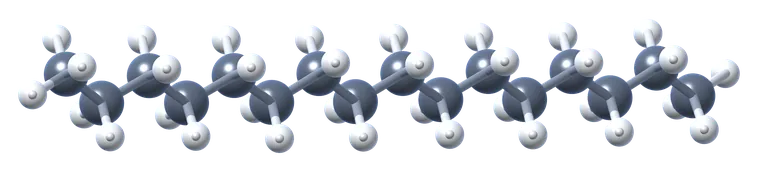
C20 to C40 saturated paraffins and naphthenes.
⚛La chimica
Hydrogenation saturates aromatic rings and removes sulphur and nitrogen, leaving cycloalkanes and isoparaffins. Branched isoparaffins give low pour point and good viscosity index; saturated structure improves oxidation stability.
⚙How it is made
Vacuum gasoil is hydrocracked and hydroisomerised vacuum distillate, with VI raised by isomerising wax.
▶How it works
Base oil forms the bulk of the lubricant and provides film thickness, heat transfer and solvency for additives. Higher saturates and viscosity index give longer drain intervals.
▣Storage, loading and inspection
Store in clean, dry closed tanks away from heat. Keep different grades separate to avoid contamination. Sample per ASTM D4057; inspect colour, viscosity, flash point and water. Drums, IBCs and flexitanks are common packaging.
★Why it matters in the Gulf
Group II and III base oils are traded into the region for lubricant blending, including blending plants at Jebel Ali. Gulf production plants are not stated.
Molecole chiave

Norme e specifiche
| API 1509 | Group classification |
|---|---|
| ASTM D445 and D2270 | Viscosity and VI |
| ACEA and ILSAC | Engine oil standards that drive demand |
Pericoli
Combustible at high temperature. Hot product causes burns. Low acute toxicity; mist inhalation and prolonged skin contact should be avoided.
Come si commercializza
Units
Metric tonnes; drums; flexitanks
Benchmarks
Platts Group II and III base oil assessments FOB Arab Gulf, Asia and Europe
Typical cargo
Parcels of 1,000 to 10,000 mt; containerised lots
Incoterms
FOB, CFR, CIF; drums and ISO tanks FCA or DAP
Notes
Group III is also called VHVI or hydrocracked base oil.
Raffinerie che lo producono: i nostri suggerimenti
38 raffinerie censite producono questo prodotto, 18 delle quali nel Golfo, in Iran e in Iraq. Diamo la precedenza agli impianti del Golfo, poi a quelli in esercizio, poi a quelli per capacità.
- 1Ruwais Refinery
 United Arab Emirates · 922,000 bpdLargest capacity among Gulf-first matchesGulf locationOperatingDeep conversionAccesso all'esportazione
- 2Daura Refinery
 Iraq · 140,000 bpdGulf locationOperating
- 3Pearl GTL
 Qatar · 140,000 bpdGulf locationOperatingAccesso all'esportazione
- 4Najaf Refinery Iraq · 30,000 bpdGulf locationOperating
- 5Bahrain Lube Base Oil Plant (BLBOC)
 Bahrain · 8,000 bpdGulf locationOperatingAccesso all'esportazione
- 6Sepahan Oil Company
 Iran · Not publishedGulf locationOperatingAccesso all'esportazione




Terminal che lo movimentano
- Gulf Petrochem Hamriyah terminal United Arab Emirates
- Regal Petro Trading terminal, Hamriyah United Arab Emirates
- Sharafco Petroleum terminal, Hamriyah United Arab Emirates
- Sharlu base oil terminal, Hamriyah United Arab Emirates
Lo sapeva?
💡 Group III is marketed by some blenders as synthetic technology although it is mineral-based.
💡 Group III oils are fully produced by hydrocracking, hydroisomerisation and hydrotreating (Wikipedia).
Si metta alla prova su Base Oil Group III
What is the VI of Group III?
Altro in questo gruppo
- Base Oil Group I (SN 150, SN 500, Bright Stock)
- Base Oil Group II
- White Oil (Medicinal and Technical)
- Paraffin Wax
- Slack Wax
Fonti
Redatto con parole proprie di PST a partire dalle fonti sopra. Affidabilità dei dati: medium. I valori tipici variano in base all'origine e al contratto, quindi legga sempre la specifica nel Suo contratto.