Crude oils and condensates
Stabilised condensate
Stabilised condensate is the light liquid that separates from raw natural gas and is stabilised for transport; it has a relative density of about 0.5 to 0.8 and is very low in sulphur in the examples assayed.
← Tutti i prodottiDetto anche: Field condensate, Natural gas condensate, NGL condensate
- Densità500 to 800 kg/m³
- ZolfoNot published as a single figure; assayed examples show 0.01 to 0.03 % m/m
- PericoloUN1267 or UN3295, Class 3 (flammable liquid)
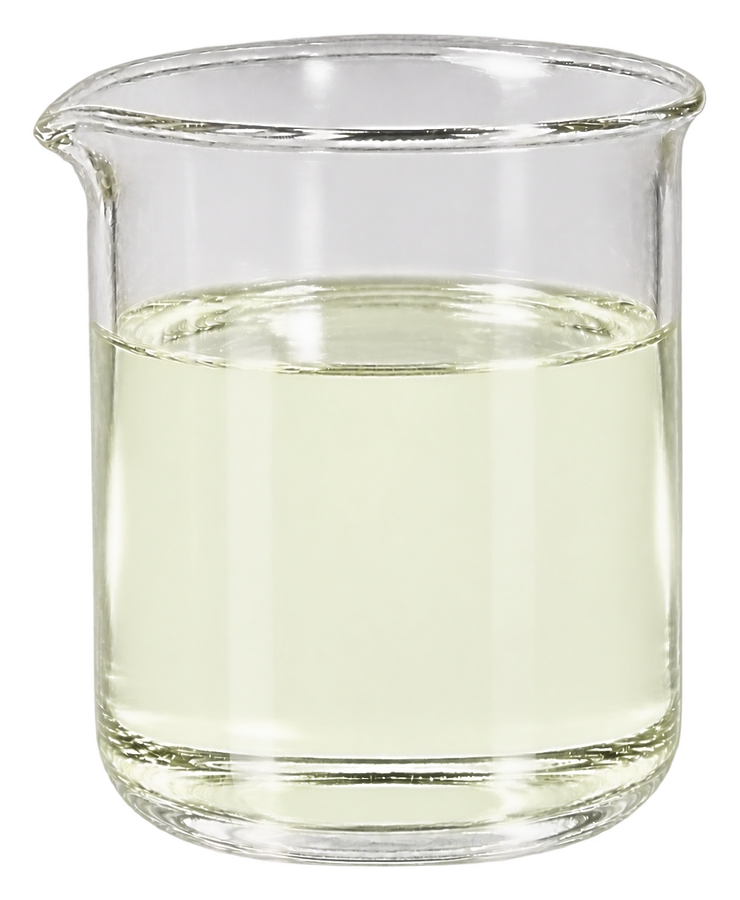

Crediti delle immagini I campioni in vetro da laboratorio sono realizzati da foto di riferimento su Wikimedia Commons di Chemik10 (CC BY-SA 2.5) e una foto di un campione di petrolio CC0. Fotografia: realizzata da una foto di riferimento di Spielvogel, CC BY-SA 4.0, tramite Wikimedia Commons.
Agitate il liquido per sentire quanto è denso
Muovete il mouse o un dito sul liquido. Premete e trascinate per agitare più forte. Tastiera: le frecce agitano, Spazio scuote.
Molto fluido Sottile come l'acqua o più. Le onde corrono veloci e durano a lungo.
- Velocità di agitazione
- 0 px/s
- Movimento del liquido
- 0%
- Si calma dopo
- -
- Superficie
- Fermo
La classe è solo una guida alla sensazione. Il valore di viscosità mostrato è quello dei dati di specifica.
Aspetto
Water-white to pale straw, thin like a solvent, with a strong smell. A dark colour points to contamination or crude blended in.
Dove si usa
- Diluent to thin heavy oil and bitumen (dilbit)
- Splitter and petrochemical feedstock
- Blending to lighten crude
Manipolazione e sicurezza
- Crude moves by pipeline to a terminal, is stored in floating-roof tanks and is loaded by loading arms or single point moorings onto tankers under inert gas. Independent inspectors sample under ASTM D4057 or API MPMS Chapter 8, measure water and sediment and quantity, and issue a quality and quantity certificate at loading.
- UN 1267 is 'Petroleum crude oil'; UN 3295 is 'Hydrocarbons, liquid, n.o.s.'. Which one applies depends on the product's description and classification. Condensate is generally more flammable than normal crude and vapours can cause asphyxiation or anaesthesia within a few breaths.
Proprietà tipiche
- Densità a 15 °C
- 500 to 800 kg/m³
- Zolfo tipico
- Not published as a single figure; assayed examples show 0.01 to 0.03 % m/m
◉What it is
Natural-gas condensate is a low-density mixture of hydrocarbon liquids that exist as gas in the reservoir and condense when the gas cools below its hydrocarbon dew point. Wikipedia gives its relative density as 0.5 to 0.8. Examples assayed by TotalEnergies show very light, low-sulphur liquids: Ichthys 48.4 degrees API, Senipah 50.0, Snohvit 63.7 and Bontang return condensate 72.8, all with sulphur from 0.01 to 0.03 percent. The density range in the properties is taken directly from the stated relative density 0.5 to 0.8, not from an assay. Pour point, flash point and viscosity are not published in the sources checked.
⬡What it is made of
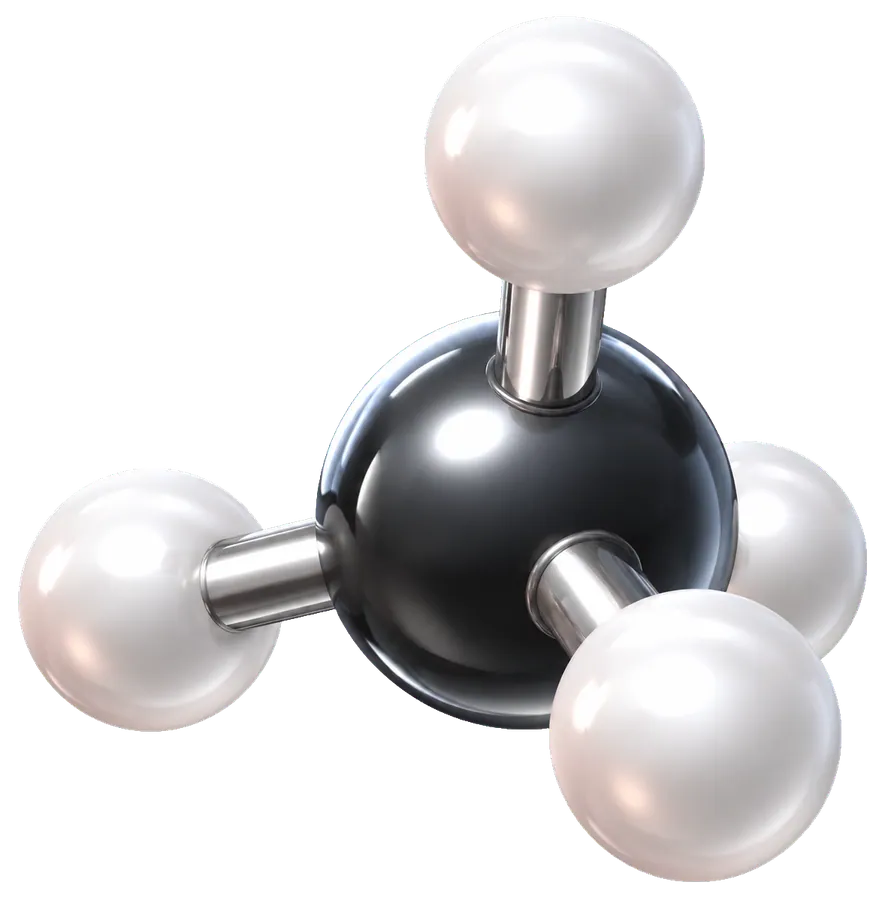
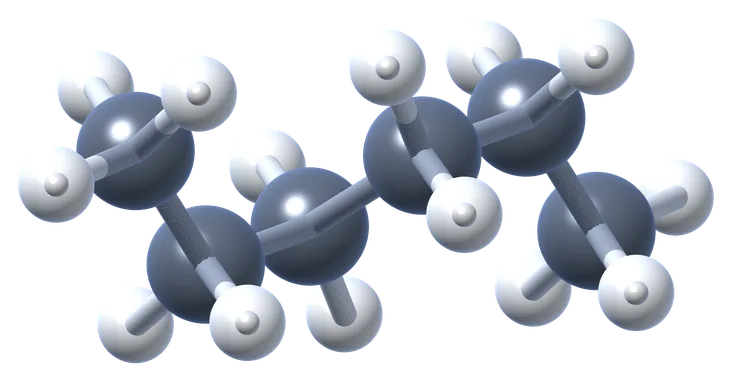
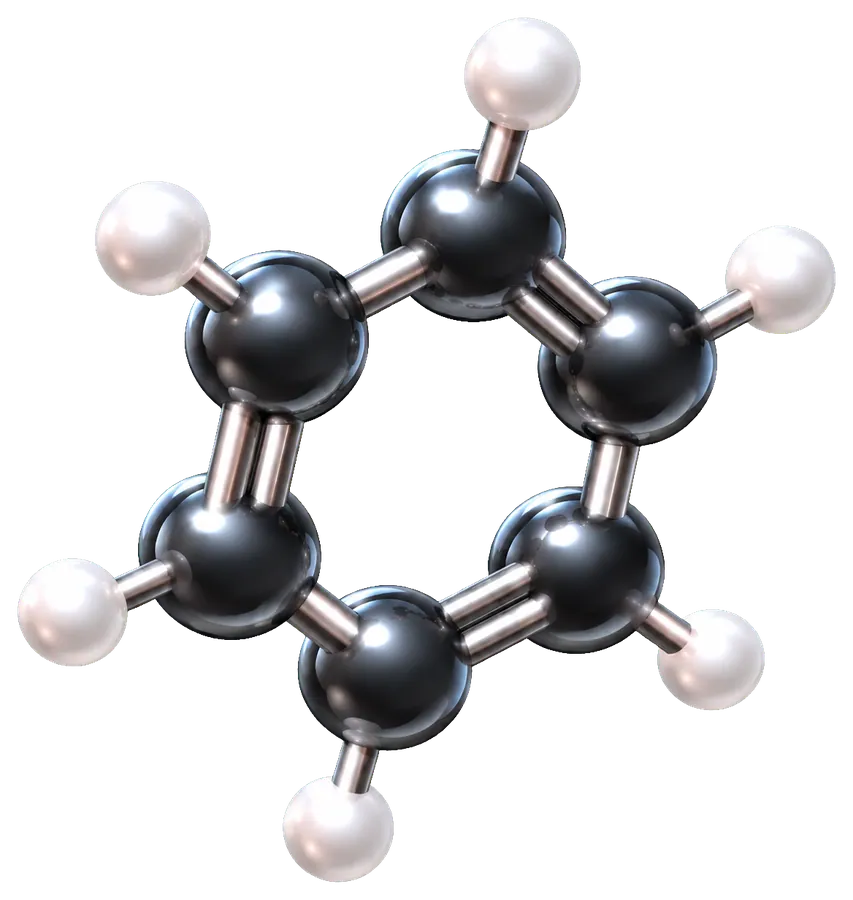
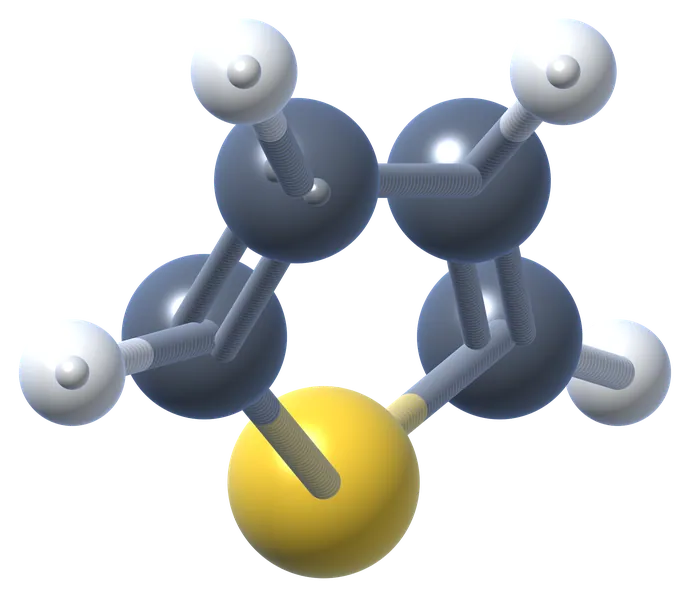
Mainly propane, butane, pentane and hexane, with possible C7 to C12 alkanes, cyclohexane and other naphthenes, BTX aromatics, and traces of hydrogen sulphide, thiols and carbon dioxide.
⚛La chimica
Condensate is dominated by short alkanes and light aromatics. Because the molecules are small, it is far lighter than crude and more volatile. Hydrogen sulphide and mercaptans can be present and are removed in stabilisation.
⚙How it is made
Raw gas is cooled below its hydrocarbon dew point, sent to a high-pressure separator, and the condensate passes through a valve to a low-pressure separator where lighter gases flash off. The gas goes on to a processing plant where C2 to C5+ liquids are recovered.
▶How it works
Condensate is sold as a very light feedstock for splitters and petrochemical units, or as a diluent. Sold volumes are measured in barrels like crude.
▣Storage, loading and inspection
Crude moves by pipeline to a terminal, is stored in floating-roof tanks and is loaded by loading arms or single point moorings onto tankers under inert gas. Independent inspectors sample under ASTM D4057 or API MPMS Chapter 8, measure water and sediment and quantity, and issue a quality and quantity certificate at loading.
★Why it matters in the Gulf
Gulf gas fields produce large condensate volumes. Iran exported about 1.4 million barrels per day of crude and condensate in 2023, according to EIA figures cited by Wikipedia.
Molecole chiave
Norme e specifiche
| ASTM D4052 / ISO 12185 | Density by digital density meter, used to derive API gravity for cargo documents. |
|---|---|
| ASTM D4294 / ISO 8754 | Sulphur content by X-ray fluorescence. |
| ASTM D4057 / API MPMS Ch. 8.1 | Manual sampling of petroleum liquids for cargo quality determination. |
| ASTM D5853 | Pour point of crude oils; relevant to waxy grades. |
| Producer sales specification | A grade is sold against the producer's own assay and quality specification, not one public standard. |
Pericoli
UN 1267 is 'Petroleum crude oil'; UN 3295 is 'Hydrocarbons, liquid, n.o.s.'. Which one applies depends on the product's description and classification. Condensate is generally more flammable than normal crude and vapours can cause asphyxiation or anaesthesia within a few breaths.
Come si commercializza
Units
Barrels (bbl); cargo sizes in thousand barrels; US dollars per barrel
Benchmarks
Often priced against Brent, Dubai or naphtha-linked indices
Typical cargo
VLCC about 2 million barrels, Suezmax about 1 million barrels, Aframax about 600,000 barrels (depends on terminal draft)
Incoterms
FOB at the loading terminal is common; CFR or CIF for delivered sales
Notes
Quality is fixed by the cargo assay and inspector certificates.
Raffinerie che lo producono: i nostri suggerimenti
37 raffinerie censite producono questo prodotto, 28 delle quali nel Golfo, in Iran e in Iraq. Diamo la precedenza agli impianti del Golfo, poi a quelli in esercizio, poi a quelli per capacità.
- 1Ras Tanura Refinery
 Saudi Arabia · 550,000 bpdLargest capacity among Gulf-first matchesGulf locationOperatingDeep conversionAccesso all'esportazione
- 2Persian Gulf Star Refinery
 Iran · 360,000 bpdGulf locationOperatingAccesso all'esportazione
- 3Laffan Refinery
 Qatar · 306,600 bpdGulf locationOperatingAccesso all'esportazione
- 4South Pars Gas Refinery, Phases 2 and 3 (2nd refinery) Iran · Not publishedGulf locationOperatingAccesso all'esportazione
- 5South Pars Gas Refinery, Phases 4 and 5 (3rd refinery) Iran · Not publishedGulf locationOperatingAccesso all'esportazione
- 6South Pars Gas Refinery, Phases 6, 7 and 8 (4th refinery) Iran · Not publishedGulf locationOperatingAccesso all'esportazione




Terminal che lo movimentano
- Vopak Horizon Fujairah
 United Arab Emirates
- VTTI Fujairah United Arab Emirates
- Qeshm (Direstan) oil export terminal Iran
- Assaluyeh condensate storage (Pars) Iran
- ENOC Jebel Ali storage and terminal United Arab Emirates
- Ras Laffan port Qatar



Lo sapeva?
💡 Early engines ran on natural gasoline, and drip gas was sold as a vehicle fuel in North America until the early 1950s.
Si metta alla prova su Stabilised condensate
What relative density range does Wikipedia give for natural-gas condensate?
Vedere la pagina delle specifiche PST
Altro in questo gruppo
- Arab Extra Light
- Arab Light
- Arab Medium
- Arab Heavy
- Murban
- Upper Zakum
- Das Blend
- Umm Lulu
- Basrah Medium
- Basrah Heavy
- Kuwait Export Blend
- Qatar Marine
Fonti
- Wikipedia: Natural-gas condensate
- TotalEnergies Trading and Shipping: crude assays listing
- Wikipedia: List of UN numbers 1201 to 1300
- Wikipedia: List of UN numbers 3201 to 3300
- Wikipedia: Petroleum industry in Iran
Redatto con parole proprie di PST a partire dalle fonti sopra. Affidabilità dei dati: medium. I valori tipici variano in base all'origine e al contratto, quindi legga sempre la specifica nel Suo contratto.