Lubricants and waxes
Slack Wax
Slack wax is the oily wax cake removed from lube oil distillates by dewaxing. Its oil content defines the grade and price.
← All productsAlso called: Crude paraffin wax, Scale wax (lower oil), Wax distillate foots
- Flash pointAbove 200 C
- Density850 to 900 kg/m³
- Cold flowMelting 40 to 65 C
- SulphurTypically below 0.3%
- HazardNot regulated, Not classified as dangerous goods for transport
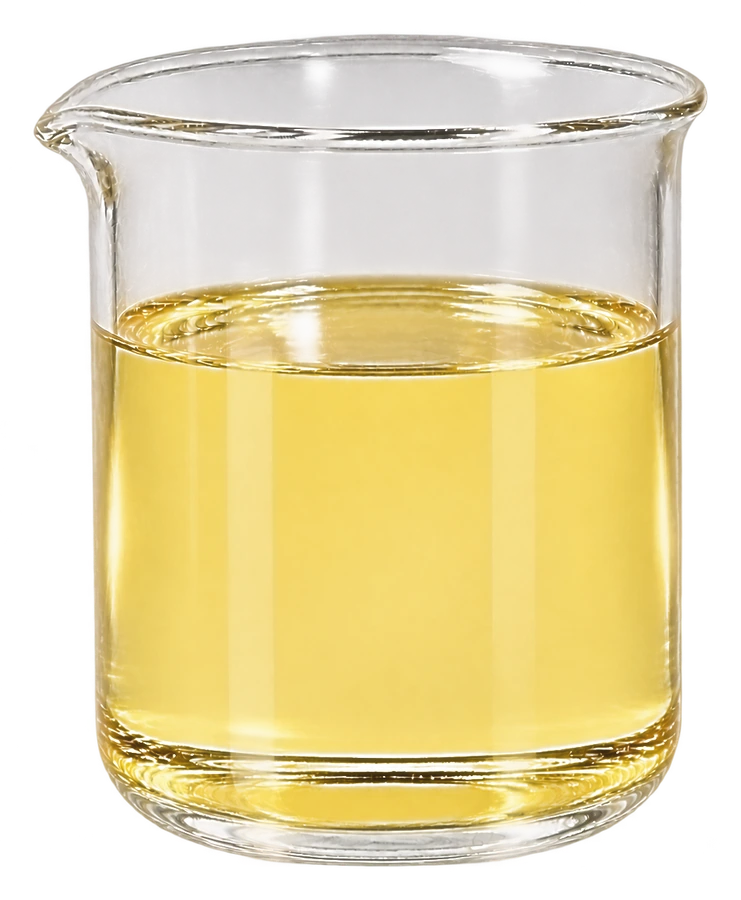
Image credits Laboratory glass samples are made from reference photos on Wikimedia Commons by Chemik10 (CC BY-SA 2.5) and a CC0 petroleum sample photo.
Slack Wax is a solid at normal temperature, so there is no liquid to stir.
How it looks
Pale yellow to light brown
Where it is used
- Feed for paraffin wax and Group III oil
- Fire logs
- Matches
- Corrugated board coating
Handling and safety
- Store at 60 to 80 C in heated tanks or as slabs. Keep dry.
- Combustible at high temperature. Hot product causes burns. Low acute toxicity; mist inhalation and prolonged skin contact should be avoided.
Typical properties
- Appearance
- Pale yellow to light brown
- Density at 15 °C
- 850 to 900 kg/m³
- Flash point
- Above 200 C
- Viscosity
- Not applicable (solid)
- Pour point
- Melting 40 to 65 C
- Typical sulphur
- Typically below 0.3%
◉What it is
Slack wax is a crude wax obtained when waxy lube distillate is chilled and filtered. It is a pasty, oily solid mixture of waxes and oil. Wikipedia says refining starts from slack wax and removes oil by crystallisation. Slack wax is sold as a raw material for refined wax, for hydroisomerisation into Group III base oil, and for use in matches, fire logs and rubber.
⬡What it is made of
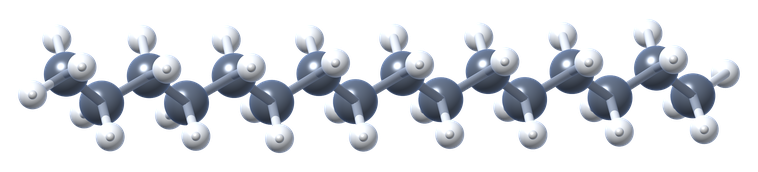
C20 to C50 n-paraffins and iso-paraffins, a variable share of oil.
⚛The chemistry
Long-chain n-alkanes crystallise at low temperature while oily naphthenes stay liquid. The balance gives a soft solid.
⚙How it is made
Waxy lube distillates are mixed with MEK/toluene solvent, chilled and filtered; the wax is the cake.
▶How it works
Used as feed for further refining or direct use in low-quality applications.
▣Storage, loading and inspection
Store at 60 to 80 C in heated tanks or as slabs. Keep dry.
★Why it matters in the Gulf
Slack wax is a by-product of lube oil refining. Gulf production and export volumes are not stated.
Key molecules

Standards and specifications
| ASTM D721 | Oil content of petroleum wax |
|---|---|
| ASTM D87 | Melting point |
Hazards
Combustible at high temperature. Hot product causes burns. Low acute toxicity; mist inhalation and prolonged skin contact should be avoided.
How it is traded
Units
Metric tonnes
Benchmarks
Platts slack wax assessments (Asia, Europe)
Typical cargo
Bulk liquid or containerised slabs
Incoterms
FOB, CFR, CIF; drums and ISO tanks FCA or DAP
Notes
Priced by oil content.
Refineries that make it: our suggestions
38 listed refineries make this product, 18 of them in the Gulf, Iran and Iraq. We rank Gulf plants first, then operating plants, then by capacity.
- 1Ruwais Refinery
 United Arab Emirates · 922,000 bpdLargest capacity among Gulf-first matchesGulf locationOperatingDeep conversionExport access
- 2Daura Refinery
 Iraq · 140,000 bpdGulf locationOperating
- 3Pearl GTL
 Qatar · 140,000 bpdGulf locationOperatingExport access
- 4Najaf Refinery Iraq · 30,000 bpdGulf locationOperating
- 5Bahrain Lube Base Oil Plant (BLBOC)
 Bahrain · 8,000 bpdGulf locationOperatingExport access
- 6Sepahan Oil Company
 Iran · Not publishedGulf locationOperatingExport access




Terminals that handle it
- Gulf Petrochem Hamriyah terminal United Arab Emirates
- Regal Petro Trading terminal, Hamriyah United Arab Emirates
- Sharafco Petroleum terminal, Hamriyah United Arab Emirates
- Sharlu base oil terminal, Hamriyah United Arab Emirates
Did you know
💡 Slack wax is described as a mixture of oil and wax (Wikipedia).
💡 The oil content defines grade and price.
Test yourself on Slack Wax
What is slack wax?
More in this group
- Base Oil Group I (SN 150, SN 500, Bright Stock)
- Base Oil Group II
- Base Oil Group III
- White Oil (Medicinal and Technical)
- Paraffin Wax
Sources
Written in PST's own words from the sources above. Confidence in the data: medium. Typical values vary by origin and contract, so always read the specification in your own contract.