Lubricants and waxes
White Oil (Medicinal and Technical)
White oil is a highly refined, colourless, odourless mineral oil. It is used in cosmetics, pharmaceuticals, food processing and plastics.
← All productsAlso called: Mineral oil, Liquid paraffin, Paraffinum liquidum, White mineral oil
- Flash pointAbove 150 C
- Density830 to 880 kg/m³
- ViscosityGrades from about 5 to 200 mm2/s at 40 C
- Cold flow-9 to -20 C typical
- Boiling range250 to 550 °C
- HazardNot regulated, Not classified as dangerous goods for transport
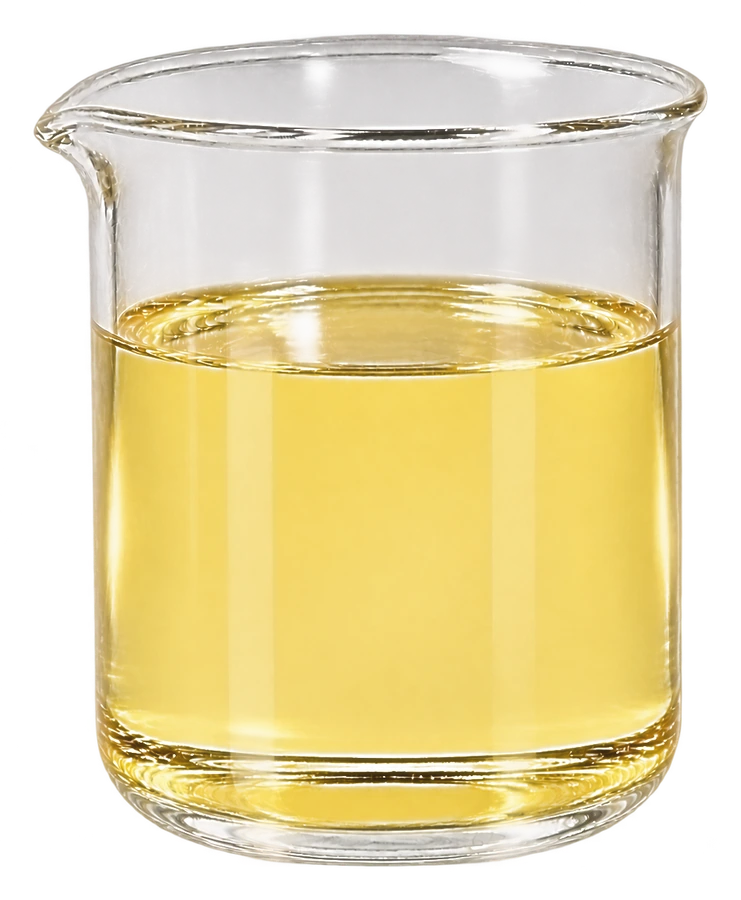
Image credits Laboratory glass samples are made from reference photos on Wikimedia Commons by Chemik10 (CC BY-SA 2.5) and a CC0 petroleum sample photo.
Stir the liquid to feel how thick it is
Move the mouse or a finger across the liquid. Press and drag to stir harder. Keyboard: arrow keys stir, Space shakes.
Medium Oily. Waves are slower and rounder.
Typical viscosity from the dataGrades from about 5 to 200 mm2/s at 40 C
- Stir speed
- 0 px/s
- Liquid movement
- 0%
- Settled after
- -
- Surface
- Still
The class is a guide for feel. The viscosity figure shown is the one in the specification data.
How it looks
Colourless and odourless
Where it is used
- Cosmetics (baby oil)
- Pharmaceuticals
- Food-grade lubricants
- Polystyrene and PVC production
- Textile oils
Handling and safety
- Store in clean, dry closed tanks away from heat. Keep different grades separate to avoid contamination. Sample per ASTM D4057; inspect colour, viscosity, flash point and water. Drums, IBCs and flexitanks are common packaging.
- Combustible at high temperature. Hot product causes burns. Low acute toxicity; mist inhalation and prolonged skin contact should be avoided.
Typical properties
- Appearance
- Colourless and odourless
- Density at 15 °C
- 830 to 880 kg/m³
- Boiling range
- 250 to 550 °C
- Flash point
- Above 150 C
- Viscosity
- Grades from about 5 to 200 mm2/s at 40 C
- Pour point
- -9 to -20 C typical
- Typical sulphur
- Practically nil
◉What it is
White oil is made by severely refining lube distillate until aromatics and impurities are removed. Technical grades go into polymer processing, textiles and as carriers for pesticides. Medicinal or food grades meet strict purity tests and are used in laxatives, cosmetics and food machinery lubrication. The product is chemically a mixture of saturated paraffins and naphthenes, so it is stable and does not oxidise easily.
⬡What it is made of
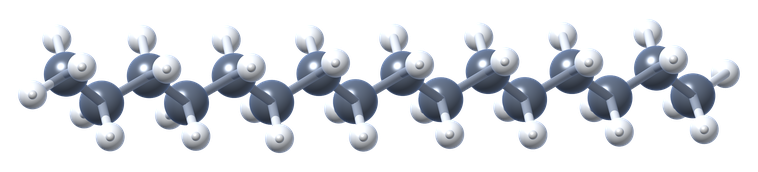
C15 to C50 saturated paraffinic and naphthenic hydrocarbons.
⚛The chemistry
The oil contains no aromatic rings or double bonds. Saturated hydrocarbons are chemically inert and colourless, so the oil does not discolour or taint products.
⚙How it is made
Lube distillate is hydrogenated at high pressure or treated with oleum (fuming sulphuric acid) to remove aromatics.
▶How it works
It provides lubrication without colour or smell, and is a safe carrier because of its purity.
▣Storage, loading and inspection
Store in clean, dry closed tanks away from heat. Keep different grades separate to avoid contamination. Sample per ASTM D4057; inspect colour, viscosity, flash point and water. Drums, IBCs and flexitanks are common packaging.
★Why it matters in the Gulf
White oil production in the Gulf is not stated. Jebel Ali is a re-export hub for packaged goods.
Key molecules

Standards and specifications
| USP and Ph. Eur. | Pharmacopoeia standards for mineral oil |
|---|---|
| FDA 21 CFR 178.3620 | US food-contact mineral oil |
| ASTM D156 Saybolt colour | Colour test |
Hazards
Combustible at high temperature. Hot product causes burns. Low acute toxicity; mist inhalation and prolonged skin contact should be avoided.
How it is traded
Units
Metric tonnes; drums; IBC
Benchmarks
Contract pricing against Group II base oil plus premium
Typical cargo
Parcels of 500 to 2,000 mt; packaged
Incoterms
FOB, CFR, CIF; drums and ISO tanks FCA or DAP
Notes
Price premium for food and pharma grades.
Refineries that make it: our suggestions
38 listed refineries make this product, 18 of them in the Gulf, Iran and Iraq. We rank Gulf plants first, then operating plants, then by capacity.
- 1Ruwais Refinery
 United Arab Emirates · 922,000 bpdLargest capacity among Gulf-first matchesGulf locationOperatingDeep conversionExport access
- 2Daura Refinery
 Iraq · 140,000 bpdGulf locationOperating
- 3Pearl GTL
 Qatar · 140,000 bpdGulf locationOperatingExport access
- 4Najaf Refinery Iraq · 30,000 bpdGulf locationOperating
- 5Bahrain Lube Base Oil Plant (BLBOC)
 Bahrain · 8,000 bpdGulf locationOperatingExport access
- 6Sepahan Oil Company
 Iran · Not publishedGulf locationOperatingExport access




Terminals that handle it
- Gulf Petrochem Hamriyah terminal United Arab Emirates
- Regal Petro Trading terminal, Hamriyah United Arab Emirates
- Sharafco Petroleum terminal, Hamriyah United Arab Emirates
- Sharlu base oil terminal, Hamriyah United Arab Emirates
Did you know
💡 White oil is the base of many baby oils and cosmetics.
💡 It can be made by acid treatment or by hydrogenation.
Test yourself on White Oil (Medicinal and Technical)
What is white oil?
More in this group
- Base Oil Group I (SN 150, SN 500, Bright Stock)
- Base Oil Group II
- Base Oil Group III
- Paraffin Wax
- Slack Wax
Sources
Written in PST's own words from the sources above. Confidence in the data: medium. Typical values vary by origin and contract, so always read the specification in your own contract.