Solvents and chemicals
White Spirit
White spirit is a petroleum solvent of C7 to C12 hydrocarbons used as paint thinner and degreaser. It comes in low flash, regular and high flash grades.
← Tutti i prodottiDetto anche: Mineral spirits, Stoddard solvent, Paint thinner, Naphtha solvent (type 0/1/2/3), Odourless mineral spirits
- Punto di infiammabilità21 to 30 C (low flash); 31 to 54 C (regular); above 55 C (high flash)
- Densità765 to 795 kg/m³
- ViscositàAbout 1 mm2/s at 20 C
- Flusso a freddoBelow -40 C
- ZolfoBelow 0.005 to 0.05% typical
- Intervallo di ebollizione130 to 200 °C
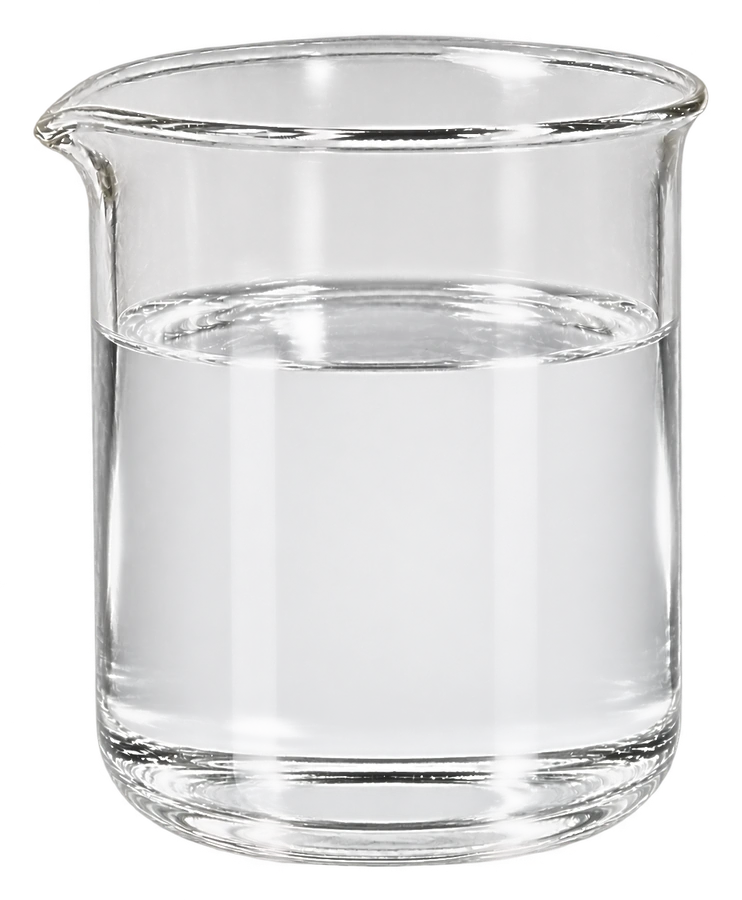
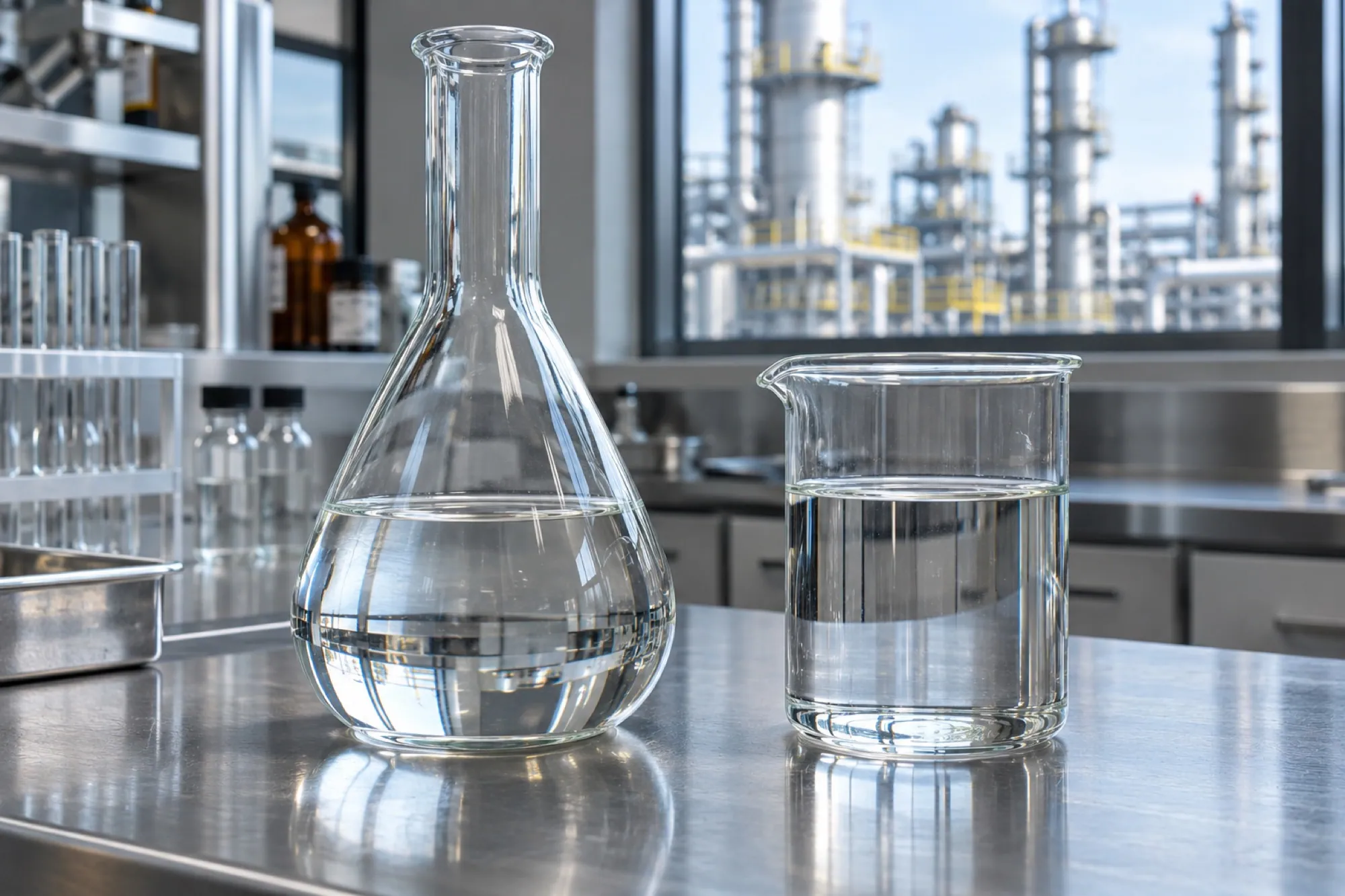
Crediti delle immagini I campioni in vetro da laboratorio sono realizzati da foto di riferimento su Wikimedia Commons di Chemik10 (CC BY-SA 2.5) e una foto di un campione di petrolio CC0.
Agitate il liquido per sentire quanto è denso
Muovete il mouse o un dito sul liquido. Premete e trascinate per agitare più forte. Tastiera: le frecce agitano, Spazio scuote.
Fluido Leggero e scorrevole. Le onde si propagano veloci e si smorzano lentamente.
Viscosità tipica dai datiAbout 1 mm2/s at 20 C
- Velocità di agitazione
- 0 px/s
- Movimento del liquido
- 0%
- Si calma dopo
- -
- Superficie
- Fermo
La classe è solo una guida alla sensazione. Il valore di viscosità mostrato è quello dei dati di specifica.
Aspetto
Water-white and thin, with a mild hydrocarbon smell. Colour is measured on the Saybolt scale, and any haze, yellow tint or strong odour counts against it.
Dove si usa
- Paint thinner
- Degreasing and cleaning
- Dry cleaning
- Printing inks
- Aerosols
Manipolazione e sicurezza
- Store in closed, grounded steel or lined tanks with nitrogen blanketing or vapour recovery; no ignition sources; use flameproof equipment and earthing during loading to limit static. Sample under closed conditions (ASTM D4057 or D5842), test purity, colour, water and distillation. Inspectors check tank cleanliness and prior cargo history before loading.
- Vapour harmful; chronic exposure can affect the nervous system. Flammable.
Proprietà tipiche
- Aspetto
- Colourless clear liquid
- Densità a 15 °C
- 765 to 795 kg/m³
- Intervallo di ebollizione
- 130 to 200 °C
- Punto di infiammabilità
- 21 to 30 C (low flash); 31 to 54 C (regular); above 55 C (high flash)
- Viscosità
- About 1 mm2/s at 20 C
- Punto di scorrimento
- Below -40 C
- Zolfo tipico
- Below 0.005 to 0.05% typical
◉What it is
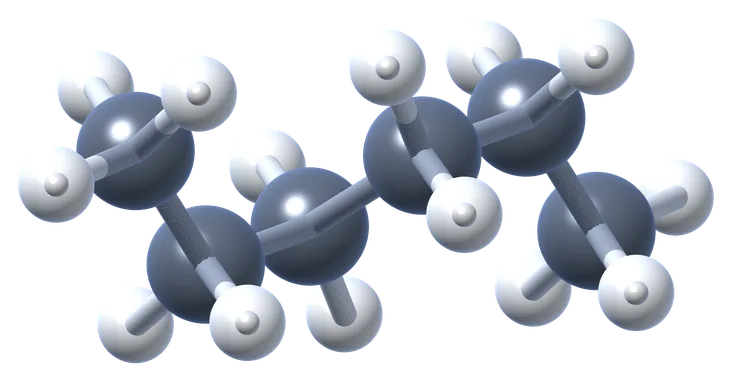
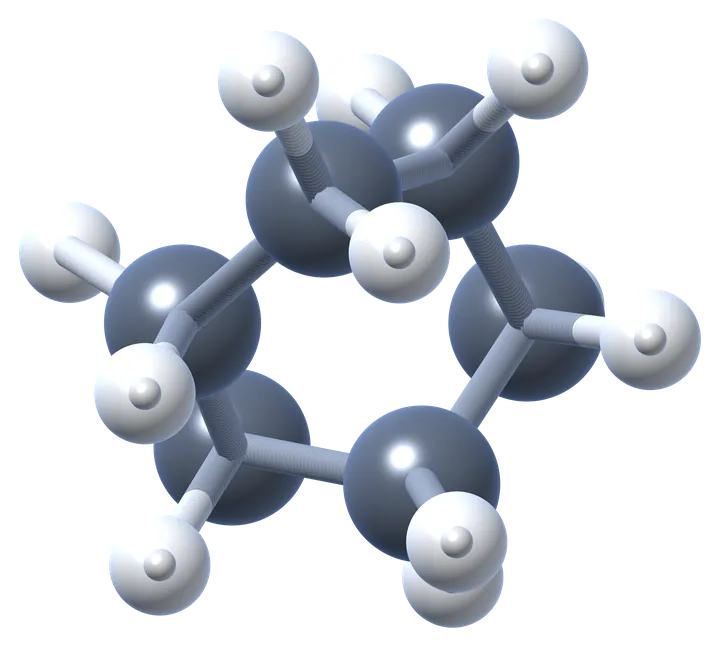
White spirit is a clear, volatile hydrocarbon mixture of aliphatic and alicyclic compounds with 7 to 12 carbon atoms. It is a distillation cut between naphtha and kerosene. Grades differ in flash point: low flash 21 to 30 C, regular 31 to 54 C and high flash above 55 C. Types 1 to 3 describe how it is treated: hydrodesulphurised, solvent extracted or hydrogenated. Dearomatised grades are used where odour and toxicity matter. Stoddard solvent is a related grade developed in 1924 as a safer dry-cleaning solvent.
⬡What it is made of
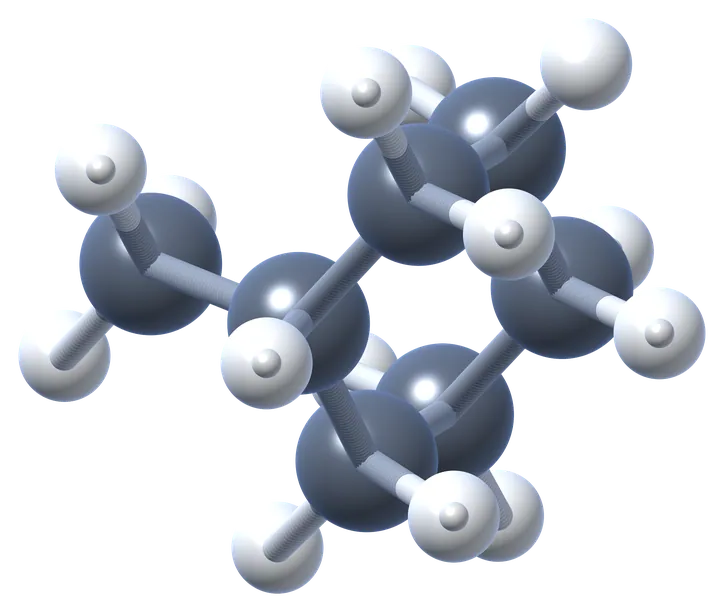
C7 to C12 paraffins, naphthenes and 0 to 20% aromatics (dearomatised below 1%).
⚛La chimica
The molecules are non-polar, so white spirit dissolves oils, resins and alkyd paints but not water. Removing aromatics reduces odour and toxicity.
⚙How it is made
A straight-run kerosene or naphtha cut is hydrotreated to remove sulphur and aromatics, then fractionated to the required boiling range.
▶How it works
It dissolves binders and evaporates at a controlled rate set by its boiling range. Higher boiling grades evaporate more slowly.
▣Storage, loading and inspection
Store in closed, grounded steel or lined tanks with nitrogen blanketing or vapour recovery; no ignition sources; use flameproof equipment and earthing during loading to limit static. Sample under closed conditions (ASTM D4057 or D5842), test purity, colour, water and distillation. Inspectors check tank cleanliness and prior cargo history before loading.
★Why it matters in the Gulf
Solvent trade through Jebel Ali to Africa and South Asia is common, but Gulf production sources are not stated.
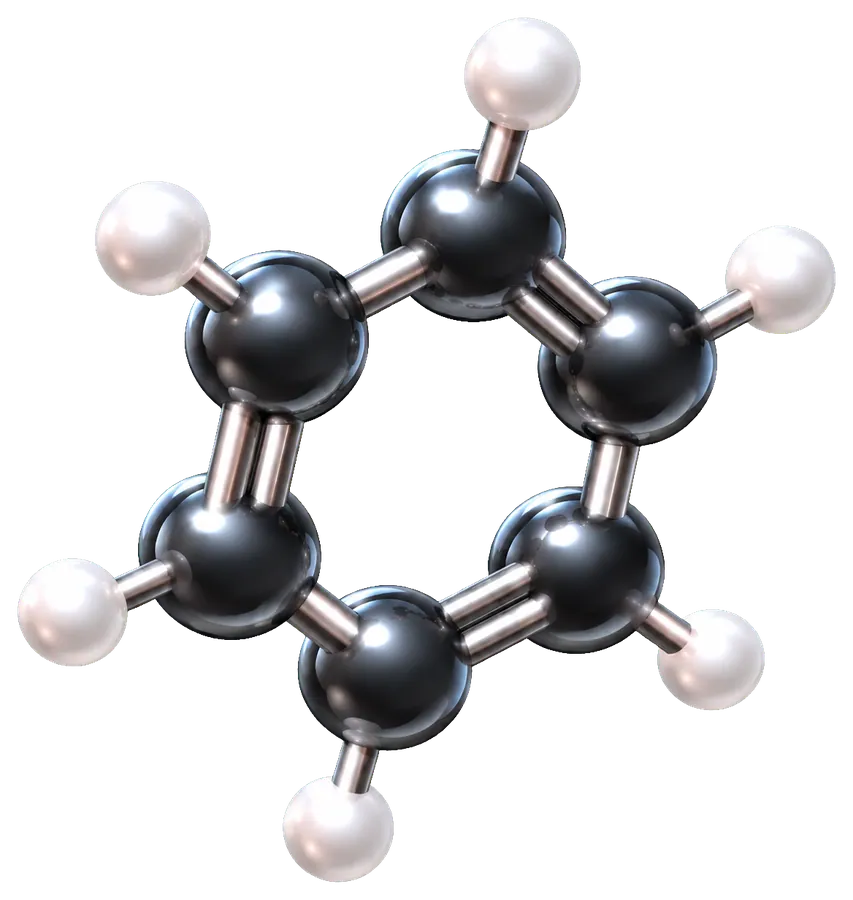
Molecole chiave
Norme e specifiche
| BS 245 and DIN 51632 | UK and German white spirit standards. |
|---|---|
| ASTM D235 | US specification for mineral spirits (petroleum spirits). |
Pericoli
Vapour harmful; chronic exposure can affect the nervous system. Flammable.
Come si commercializza
Units
Metric tonnes; drums; IBCs
Benchmarks
Contract; reference to naphtha and kerosene
Typical cargo
Parcels of 1,000 to 10,000 mt; ISO tanks; drums
Incoterms
FOB, CFR, CIF; DAP for packaged or road deliveries
Notes
Price follows naphtha with premium for dearomatised grades.
Raffinerie che lo producono: i nostri suggerimenti
7 raffinerie censite producono questo prodotto, 3 delle quali nel Golfo, in Iran e in Iraq. Diamo la precedenza agli impianti del Golfo, poi a quelli in esercizio, poi a quelli per capacità.
- 1Ruwais Refinery
 United Arab Emirates · 922,000 bpdLargest capacity among Gulf-first matchesGulf locationOperatingDeep conversionAccesso all'esportazione
- 2Khangiran Gas Refinery (Shahid Hasheminejad)
 Iran · Not publishedGulf locationOperatingAccesso all'esportazione
- 3Sepahan Oil Company Iran · Not publishedGulf locationOperatingAccesso all'esportazione
- 4Kirishi Refinery (KINEF)
 Russia · 402,000 bpdOperatingDeep conversion
- 5Attock Refinery Limited (Morgah)
 Pakistan · 53,400 bpdOperatingAccesso all'esportazione
- 6Yaroslavl Mendeleev Experimental Oil and Lubricants Plant Russia · 9,600 bpdOperating
Lo sapeva?
💡 The name covers several grades, from low flash (21 to 30 C) to high flash (above 55 C).
💡 Stoddard solvent was developed in 1924 as a less flammable dry-cleaning fluid (Wikipedia).
Si metta alla prova su White Spirit
Carbon range?
Vedere la pagina delle specifiche PST
Altro in questo gruppo
- Hexane (n-Hexane, Commercial Hexane)
- Benzene
- Toluene
- Mixed Xylene
- Para-Xylene (PX)
- MTBE (Methyl Tert-Butyl Ether)
- Ethylene (Refinery and Petrochemical Stream)
- Propylene (Refinery and Petrochemical Stream)
Fonti
Redatto con parole proprie di PST a partire dalle fonti sopra. Affidabilità dei dati: medium. I valori tipici variano in base all'origine e al contratto, quindi legga sempre la specifica nel Suo contratto.