Delayed coking
Refinery process
Delayed coking heats vacuum residue in a furnace and lets it crack and turn to solid petroleum coke in large drums. It converts the worst heavy residue into lighter liquids and a solid by-product.
- Feed
- Vacuum residue and other very heavy oils
- Makes
- Petroleum coke, Coker gas, Coker naphtha, Coker gas oils
- Temperature
- About 480 to 505 at the furnace outlet
- Catalyst
- None (thermal process)
Process flow
What it does
Residue from the vacuum unit is first fed to the bottom of a fractionator and then pumped through a furnace that raises it to about 480 to 505 degrees Celsius. Steam is injected in the tubes to limit coke forming in the furnace. The hot feed flows into one of a pair of coke drums where the cracking reactions continue and coke accumulates over 12 to 24 hours. Vapours leave overhead and are separated into gas, naphtha and gas oils. When a drum is full, flow switches to the second drum and the first is steamed, quenched with water and cut with high-pressure water jets to remove the coke. Coke is about 18 to 30 percent of the feed by weight.
Step by step
- Residue is preheated in the fractionator bottom
- A furnace heats the oil to about 480 to 505 C
- Steam is added to the tubes to slow fouling
- Hot feed enters a coke drum and cracks
- Vapour leaves overhead to the fractionator
- Coke builds in the drum over 12 to 24 hours
- Flow switches drums; the full drum is steamed, quenched and decoked with water jets
The chemistry
Heat splits large carbon-carbon bonds to give smaller alkane and alkene fragments, while the hydrogen-poor remainder condenses into polyaromatic structures that harden into coke. The process rejects carbon as solid coke so the lighter liquids are richer in hydrogen.
Reactions, drawn atom by atom

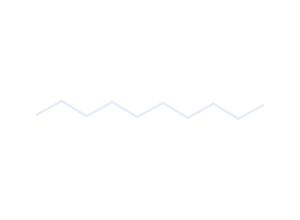
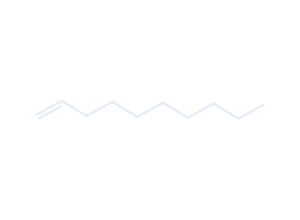 C20H42 -> C10H22 + C10H20Light liquid fragments; the leftover carbon forms coke.
Main equipment
- Coker furnace
- Paired coke drums
- Main fractionator
- Water cutting system
- Coke handling and storage
Safety
Opening a full drum can release hot coke and steam, and cutting operations have caused serious accidents. Hot residue and furnace coking are fire risks.
In the Gulf
The Ruwais Refinery opened a carbon black and delayed coker plant in 2018, per the facility history summarised on Wikipedia.
Test yourself
About what furnace temperature?
Related
- Vacuum distillation (VDU)Refinery process
- VisbreakingRefinery process
- Flexicoking and fluid cokingRefinery process
- Solvent deasphaltingRefinery process
Sources
Written in PST's own words from the sources above. Confidence in the data: high. Real plants differ in design and operating conditions.