Marine & heavy · EN 12591 paving grade bitumen
Bitumen 50/70 and 70/100
The binder in road asphalt. Paving grades are named by penetration: 50/70 is harder, 70/100 is softer. They are shipped hot in heated tanks and tested on penetration and softening point.
- 8Parameters
- 8With a limit
- 8Off-spec causes explained
- Flash pointmin 230 °C
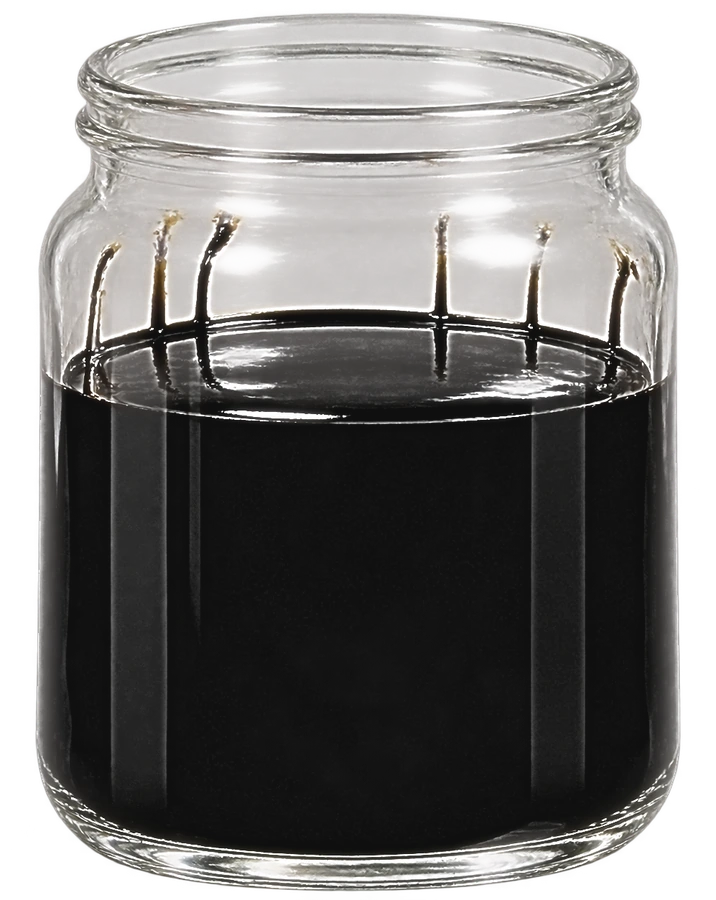

Image credits Laboratory glass samples are made from reference photos on Wikimedia Commons by Chemik10 (CC BY-SA 2.5) and a CC0 petroleum sample photo.
Stir the liquid to feel how thick it is
Move the mouse or a finger across the liquid. Press and drag to stir harder. Keyboard: arrow keys stir, Space shakes.
Semi-solid Semi-solid at normal temperature. It only creeps and has to be heated to pump.
- Stir speed
- 0 px/s
- Liquid movement
- 0%
- Settled after
- -
- Surface
- Still
The class is a guide for feel. The viscosity figure shown is the one in the specification data.
How it looks
Black and glossy. It is a thick liquid when hot and a solid at normal temperature. Colour is not a test; the penetration and softening point are.
Where it is used
- Road paving and asphalt
- Industrial and waterproofing uses
Handling and safety
- Heated tanks with temperature control and no direct flame.
- Avoid overheating, which hardens and damages the binder.
- Keep water out: water makes hot bitumen foam violently.
Typical properties
- Penetration at 25 °C (50/70)
- 50 to 70 0.1 mm
- Softening point (50/70)
- 46 to 54 °C
- Flash point (COC)
- min 230 °C
- Solubility
- min 99 % m/m
- Change of mass after RTFOT
- max 0.5 % m/m
- Retained penetration after RTFOT
- min 50 %
- Rise in softening point after RTFOT
- max 9 °C
- Fraass breaking point
- max -8 °C
The specification
EN 12591 paving grade bitumen. Limits are the commonly published ones. Your contract and the current edition of the standard decide.
| Parameter | Limit | Test method | What it protects |
|---|---|---|---|
| Penetration at 25 °C (50/70) | 50 to 70 0.1 mm | EN 1426 | The hardness of the binder, and the name of the grade. |
| Softening point (50/70) | 46 to 54 °C | EN 1427 | How the binder behaves in warm weather. |
| Flash point (COC) | min 230 °C | EN ISO 2592 | Safety at hot storage temperatures. |
| Solubility | min 99 % m/m | EN 12592 | Shows the bitumen is free of dirt and carbon. |
| Change of mass after RTFOT | max 0.5 % m/m | EN 12607-1 | Loss on heating shows volatile content. |
| Retained penetration after RTFOT | min 50 % | EN 1426 | How much the bitumen hardens when aged in mixing. |
| Rise in softening point after RTFOT | max 9 °C | EN 1427 | Ageing resistance. |
| Fraass breaking point | max -8 °C | EN 12593 | Cracking in cold weather. |
Why a cargo goes off spec
When one parameter fails, it usually points to one cause. Here is what to look for.
Penetration at 25 °C (50/70)50 to 70 0.1 mm
Too highToo soft, a lighter cut or flux added.
Too lowOver-hardened or air-blown.
Why it mattersThe hardness of the binder, and the name of the grade.
Softening point (50/70)46 to 54 °C
Too highHard, with a low penetration.
Too lowSoft, with a high penetration.
Why it mattersHow the binder behaves in warm weather.
Flash point (COC)min 230 °C
Too lowLight oils or a solvent mixed in.
Why it mattersSafety at hot storage temperatures.
Solubilitymin 99 % m/m
Too lowContamination or overheating.
Why it mattersShows the bitumen is free of dirt and carbon.
Change of mass after RTFOTmax 0.5 % m/m
Too highVolatile oils in the bitumen.
Why it mattersLoss on heating shows volatile content.
Retained penetration after RTFOTmin 50 %
Too lowBitumen that ages quickly.
Why it mattersHow much the bitumen hardens when aged in mixing.
Rise in softening point after RTFOTmax 9 °C
Too highBitumen that ages quickly.
Why it mattersAgeing resistance.
Fraass breaking pointmax -8 °C
Too highA brittle bitumen in the cold.
Why it mattersCracking in cold weather.
Check your own certificate
Type the values, paste the certificate text, or upload a PDF or photo. The checker names every parameter that is off spec and the usual reason.
| Parameter | Limit | Your value | Result |
|---|---|---|---|
| Penetration at 25 °C (50/70)EN 1426 | 50 to 70 0.1 mm | enter a value | |
| Softening point (50/70)EN 1427 | 46 to 54 °C | enter a value | |
| Flash point (COC)EN ISO 2592 | min 230 °C | enter a value | |
| SolubilityEN 12592 | min 99 % m/m | enter a value | |
| Change of mass after RTFOTEN 12607-1 | max 0.5 % m/m | enter a value | |
| Retained penetration after RTFOTEN 1426 | min 50 % | enter a value | |
| Rise in softening point after RTFOTEN 1427 | max 9 °C | enter a value | |
| Fraass breaking pointEN 12593 | max -8 °C | enter a value |
Sources
Indicative information for professional users. Not a substitute for the standard, a contract or an independent inspector.