Marine & heavy · ISO 8217 residual grades (RMD 80, RME 180, RMG 380) with 0.50% sulphur. 2017 edition limits shown; check the edition in your contract
VLSFO 0.5%
Very low sulphur fuel oil, the main bunker fuel since the 2020 global sulphur cap. It is a blend, so compatibility and stability matter more than they did with the old high sulphur fuel. Inside emission control areas, including the Mediterranean since 1 May 2025, ships need 0.10% sulphur fuel (or a scrubber).
- 14Parameters
- 14With a limit
- 14Off-spec causes explained
- Flash pointmin 60 °C
- Densitymax 991 kg/m³
- Viscositymax 380 mm²/s
- Cold flowmax 30 °C
- Sulphurmax 0.5 % m/m
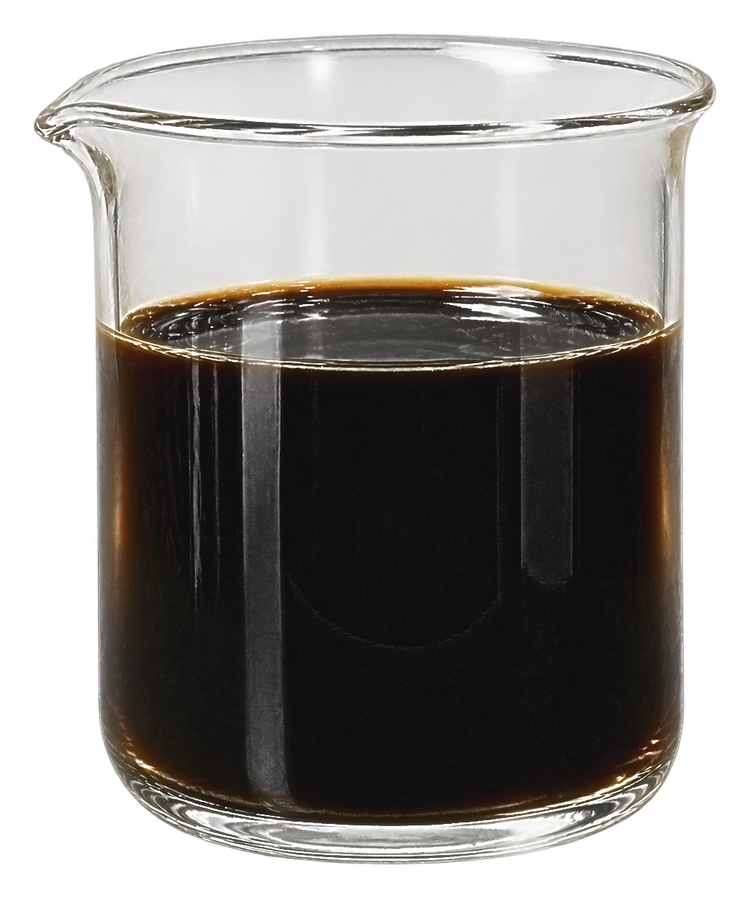

Image credits Laboratory glass samples are made from reference photos on Wikimedia Commons by Chemik10 (CC BY-SA 2.5) and a CC0 petroleum sample photo.
Stir the liquid to feel how thick it is
Move the mouse or a finger across the liquid. Press and drag to stir harder. Keyboard: arrow keys stir, Space shakes.
Very thick Very heavy. It barely moves and flows back slowly.
Typical viscosity from the dataViscosity at 50 °C (RMG 380): max 380 mm²/s
- Stir speed
- 0 px/s
- Liquid movement
- 0%
- Settled after
- -
- Surface
- Still
The class is a guide for feel. The viscosity figure shown is the one in the specification data.
How it looks
Dark brown to black, opaque, and viscous like treacle at room temperature. It must be heated to pump. Appearance is not a quality test: a good and a bad VLSFO look the same, which is why laboratory results matter.
Where it is used
- Main fuel for ocean-going ships
- Bunkering at ports and offshore
Handling and safety
- Test the retained sample at delivery, at a lab, against these limits.
- Watch stability and compatibility when mixing different bunkers.
- Keep a sealed MARPOL sample for 12 months.
Typical properties
- Sulphur
- max 0.5 % m/m
- Viscosity at 50 °C (RMG 380)
- max 380 mm²/s
- Density at 15 °C
- max 991 kg/m³
- CCAI
- max 870
- Flash point
- min 60 °C
- Pour point (upper)
- max 30 °C
- Water
- max 0.5 % vol
- Total sediment, aged
- max 0.1 % m/m
The specification
ISO 8217 residual grades (RMD 80, RME 180, RMG 380) with 0.50% sulphur. 2017 edition limits shown; check the edition in your contract. Limits are the commonly published ones. Your contract and the current edition of the standard decide.
| Parameter | Limit | Test method | What it protects |
|---|---|---|---|
| Sulphur | max 0.5 % m/m | ISO 8754 / ISO 14596 | Meets the MARPOL global cap of 0.50%. Higher sulphur is illegal outside scrubber use. Inside emission control areas, including the Mediterranean since 1 May 2025, ships need 0.10% sulphur fuel (or a scrubber). |
| Viscosity at 50 °C (RMG 380) | max 380 mm²/s | ISO 3104 | The engine must be able to pump and atomise the fuel at the heater temperature. |
| Density at 15 °C | max 991 kg/m³ | ISO 3675 / 12185 | Purifier capacity and a check on aromatic content. |
| CCAI | max 870 | ISO 8217 Annex F | Calculated ignition quality: a high number means poor ignition and late burning. |
| Flash point | min 60 °C | ISO 2719 | Safety and a SOLAS requirement. |
| Pour point (upper) | max 30 °C | ISO 3016 | Fuel must stay pumpable in cold tanks and lines. |
| Water | max 0.5 % vol | ISO 3733 | Water damages purifiers and can corrode. |
| Total sediment, aged | max 0.1 % m/m | ISO 10307-2 | A key stability test: sediment blocks filters and purifiers. |
| Ash | max 0.1 % m/m | ISO 6245 | Abrasive and fouling solids. |
| Carbon residue (MCR) | max 18 % m/m | ISO 10370 | Tendency to form deposits. |
| Vanadium | max 350 mg/kg | ISO 14597 / IP 501 | High temperature corrosion of valves and turbochargers. |
| Aluminium plus silicon (cat fines) | max 60 mg/kg | ISO 10478 / IP 501 | Catalyst fines wear cylinders, liners and pumps very fast. |
| Hydrogen sulphide | max 2 mg/kg | IP 570 | A toxic gas risk in tank spaces. |
| Acid number | max 2.5 mg KOH/g | ASTM D664 | Corrosion. |
Why a cargo goes off spec
When one parameter fails, it usually points to one cause. Here is what to look for.
Sulphurmax 0.5 % m/m
Too highBlended with, or contaminated by, high sulphur fuel; tank not cleaned after HSFO.
Why it mattersMeets the MARPOL global cap of 0.50%. Higher sulphur is illegal outside scrubber use. Inside emission control areas, including the Mediterranean since 1 May 2025, ships need 0.10% sulphur fuel (or a scrubber).
Viscosity at 50 °C (RMG 380)max 380 mm²/s
Too highToo much residue in the blend.
Why it mattersThe engine must be able to pump and atomise the fuel at the heater temperature.
Density at 15 °Cmax 991 kg/m³
Too highHeavy cutter stock or high aromatic blend.
Why it mattersPurifier capacity and a check on aromatic content.
CCAImax 870
Too highAromatic cutter stock, such as cracked refinery streams.
Why it mattersCalculated ignition quality: a high number means poor ignition and late burning.
Flash pointmin 60 °C
Too lowLight product contamination.
Why it mattersSafety and a SOLAS requirement.
Pour point (upper)max 30 °C
Too highA waxy fuel.
Why it mattersFuel must stay pumpable in cold tanks and lines.
Watermax 0.5 % vol
Too highPoor settling, leaking heating coils, rain.
Why it mattersWater damages purifiers and can corrode.
Total sediment, agedmax 0.1 % m/m
Too highIncompatible blend components that precipitate asphaltenes.
Why it mattersA key stability test: sediment blocks filters and purifiers.
Ashmax 0.1 % m/m
Too highContamination or poor quality residue.
Why it mattersAbrasive and fouling solids.
Carbon residue (MCR)max 18 % m/m
Too highHeavy residue in the blend.
Why it mattersTendency to form deposits.
Vanadiummax 350 mg/kg
Too highResidue from vanadium-rich crude.
Why it mattersHigh temperature corrosion of valves and turbochargers.
Aluminium plus silicon (cat fines)max 60 mg/kg
Too highSlurry oil from a catalytic cracker in the blend.
Why it mattersCatalyst fines wear cylinders, liners and pumps very fast.
Hydrogen sulphidemax 2 mg/kg
Too highSulphur compounds released during blending or heating.
Why it mattersA toxic gas risk in tank spaces.
Acid numbermax 2.5 mg KOH/g
Too highContamination with acidic components.
Why it mattersCorrosion.
Check your own certificate
Type the values, paste the certificate text, or upload a PDF or photo. The checker names every parameter that is off spec and the usual reason.
| Parameter | Limit | Your value | Result |
|---|---|---|---|
| SulphurISO 8754 / ISO 14596 | max 0.5 % m/m | enter a value | |
| Viscosity at 50 °C (RMG 380)ISO 3104 | max 380 mm²/s | enter a value | |
| Density at 15 °CISO 3675 / 12185 | max 991 kg/m³ | enter a value | |
| CCAIISO 8217 Annex F | max 870 | enter a value | |
| Flash pointISO 2719 | min 60 °C | enter a value | |
| Pour point (upper)ISO 3016 | max 30 °C | enter a value | |
| WaterISO 3733 | max 0.5 % vol | enter a value | |
| Total sediment, agedISO 10307-2 | max 0.1 % m/m | enter a value | |
| AshISO 6245 | max 0.1 % m/m | enter a value | |
| Carbon residue (MCR)ISO 10370 | max 18 % m/m | enter a value | |
| VanadiumISO 14597 / IP 501 | max 350 mg/kg | enter a value | |
| Aluminium plus silicon (cat fines)ISO 10478 / IP 501 | max 60 mg/kg | enter a value | |
| Hydrogen sulphideIP 570 | max 2 mg/kg | enter a value | |
| Acid numberASTM D664 | max 2.5 mg KOH/g | enter a value |
Sources
Indicative information for professional users. Not a substitute for the standard, a contract or an independent inspector.