Marine & heavy · ISO 8217 RMG 380, trade fuel oil 380 cSt. 2017 edition limits shown; check the edition in your contract
Fuel oil 380 CST (RMG 380, M100 type)
Heavy fuel oil with a viscosity up to 380 cSt at 50 °C. It is bought by power stations, industry and bunker suppliers across the Gulf, Africa and Asia. Also traded as fuel oil No. 6 (ASTM D396) and, in some markets, as 380 cSt HFO.
- 11Parameters
- 11With a limit
- 11Off-spec causes explained
- Flash pointmin 60 °C
- Densitymax 991 kg/m³
- Viscositymax 380 mm²/s
- Cold flowmax 30 °C
- Sulphurmax 3.5 % m/m
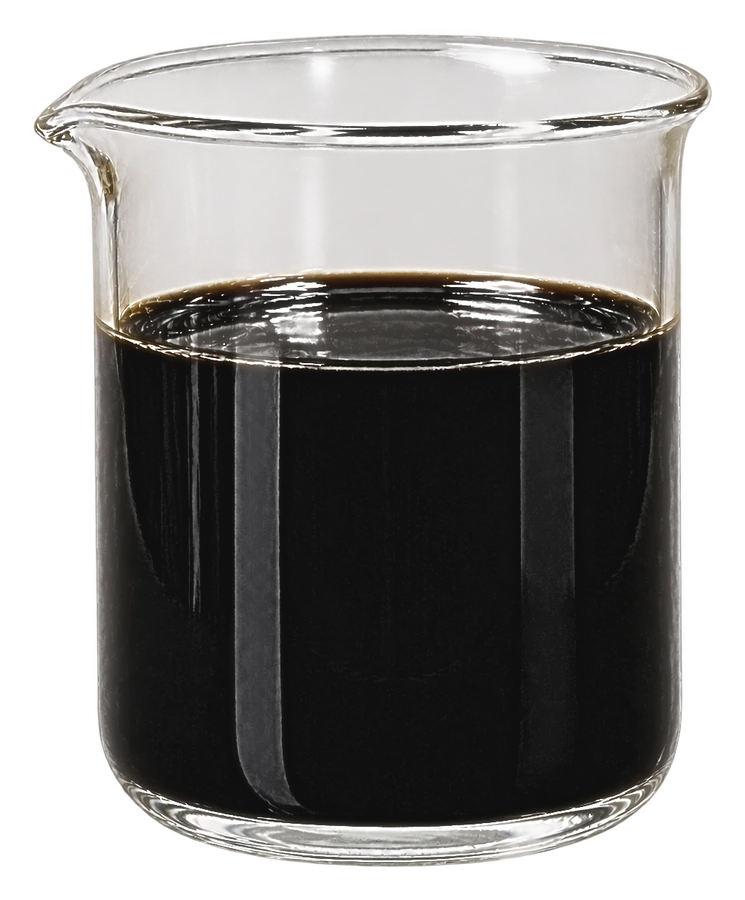
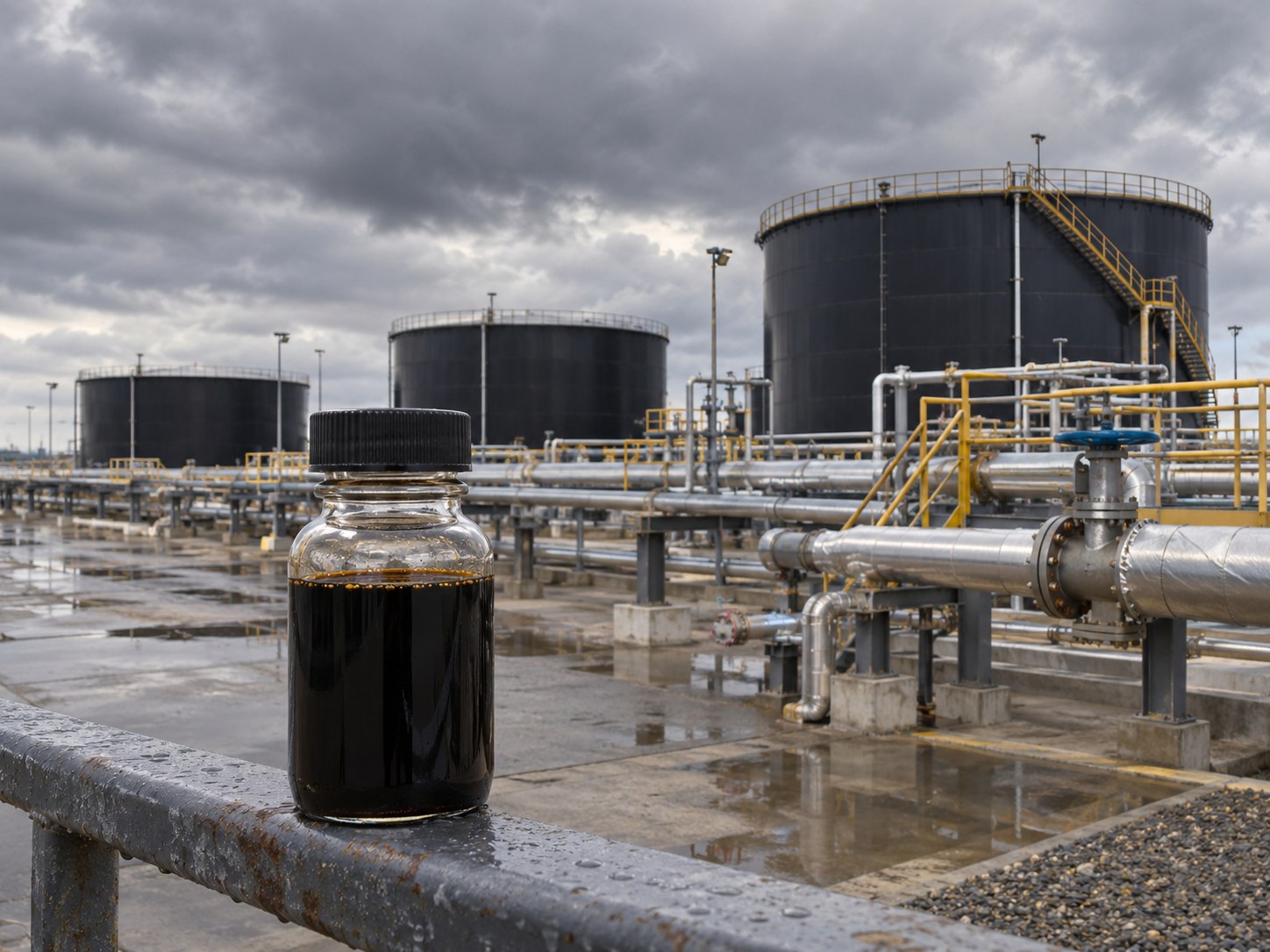
Image credits Laboratory glass samples are made from reference photos on Wikimedia Commons by Chemik10 (CC BY-SA 2.5) and a CC0 petroleum sample photo.
Stir the liquid to feel how thick it is
Move the mouse or a finger across the liquid. Press and drag to stir harder. Keyboard: arrow keys stir, Space shakes.
Very thick Very heavy. It barely moves and flows back slowly.
Typical viscosity from the dataViscosity at 50 °C: max 380 mm²/s
- Stir speed
- 0 px/s
- Liquid movement
- 0%
- Settled after
- -
- Surface
- Still
The class is a guide for feel. The viscosity figure shown is the one in the specification data.
How it looks
Black and opaque, thick at room temperature and heated for pumping. Colour does not tell quality, so judge by the certificate and by the inspector's samples.
Where it is used
- Power stations and industrial boilers
- Bunkering as high-sulphur fuel where allowed
- Blending feedstock
Handling and safety
- Heated tanks and lines, with the loading temperature agreed.
- Independent quantity and quality inspection with sealed samples at loading and discharge.
- Use the sulphur and the delivery country's rules, not only the ISO limit.
Typical properties
- Viscosity at 50 °C
- max 380 mm²/s
- Density at 15 °C
- max 991 kg/m³
- Sulphur
- max 3.5 % m/m
- Flash point
- min 60 °C
- Pour point (summer)
- max 30 °C
- Carbon residue
- max 18 % m/m
- Ash
- max 0.1 % m/m
- Water
- max 0.5 % vol
The specification
ISO 8217 RMG 380, trade fuel oil 380 cSt. 2017 edition limits shown; check the edition in your contract. Limits are the commonly published ones. Your contract and the current edition of the standard decide.
| Parameter | Limit | Test method | What it protects |
|---|---|---|---|
| Viscosity at 50 °C | max 380 mm²/s | ISO 3104 / ASTM D445 | Pumping, heating and atomising. |
| Density at 15 °C | max 991 kg/m³ | ISO 3675 / ASTM D4052 | Purification on board and energy content. |
| Sulphur | max 3.5 % m/m | ISO 8754 / ASTM D4294 | Emissions. Use the limit of the contract: 3.5%, 1% or 0.5%. |
| Flash point | min 60 °C | ISO 2719 | Fire safety. |
| Pour point (summer) | max 30 °C | ISO 3016 | Handling at low temperature. |
| Carbon residue | max 18 % m/m | ISO 10370 | Combustion quality and deposits. |
| Ash | max 0.1 % m/m | ISO 6245 | Wear and deposits. |
| Water | max 0.5 % vol | ISO 3733 | Sludge and corrosion. |
| Vanadium | max 350 mg/kg | ISO 14597 / IP 501 | High-temperature corrosion. |
| Aluminium plus silicon | max 60 mg/kg | ISO 10478 / IP 501 | Abrasive catalyst fines wear engines. |
| Total sediment, potential | max 0.1 % m/m | ISO 10307-2 | Stability and filter blocking. |
Why a cargo goes off spec
When one parameter fails, it usually points to one cause. Here is what to look for.
Viscosity at 50 °Cmax 380 mm²/s
Too highHeavy cut, or too little cutter stock.
Why it mattersPumping, heating and atomising.
Density at 15 °Cmax 991 kg/m³
Too highAromatic or cracked residue.
Why it mattersPurification on board and energy content.
Sulphurmax 3.5 % m/m
Too highSour crude residue.
Why it mattersEmissions. Use the limit of the contract: 3.5%, 1% or 0.5%.
Flash pointmin 60 °C
Too lowLight ends or contamination.
Why it mattersFire safety.
Pour point (summer)max 30 °C
Too highWaxy crude residue.
Why it mattersHandling at low temperature.
Carbon residuemax 18 % m/m
Too highHeavy residue.
Why it mattersCombustion quality and deposits.
Ashmax 0.1 % m/m
Too highSalt or catalyst fines.
Why it mattersWear and deposits.
Watermax 0.5 % vol
Too highTank water or poor settling.
Why it mattersSludge and corrosion.
Vanadiummax 350 mg/kg
Too highHeavy crude origin.
Why it mattersHigh-temperature corrosion.
Aluminium plus siliconmax 60 mg/kg
Too highCatalyst fines from the cracker.
Why it mattersAbrasive catalyst fines wear engines.
Total sediment, potentialmax 0.1 % m/m
Too highUnstable blend.
Why it mattersStability and filter blocking.
Check your own certificate
Type the values, paste the certificate text, or upload a PDF or photo. The checker names every parameter that is off spec and the usual reason.
| Parameter | Limit | Your value | Result |
|---|---|---|---|
| Viscosity at 50 °CISO 3104 / ASTM D445 | max 380 mm²/s | enter a value | |
| Density at 15 °CISO 3675 / ASTM D4052 | max 991 kg/m³ | enter a value | |
| SulphurISO 8754 / ASTM D4294 | max 3.5 % m/m | enter a value | |
| Flash pointISO 2719 | min 60 °C | enter a value | |
| Pour point (summer)ISO 3016 | max 30 °C | enter a value | |
| Carbon residueISO 10370 | max 18 % m/m | enter a value | |
| AshISO 6245 | max 0.1 % m/m | enter a value | |
| WaterISO 3733 | max 0.5 % vol | enter a value | |
| VanadiumISO 14597 / IP 501 | max 350 mg/kg | enter a value | |
| Aluminium plus siliconISO 10478 / IP 501 | max 60 mg/kg | enter a value | |
| Total sediment, potentialISO 10307-2 | max 0.1 % m/m | enter a value |
Sources
- ISO 8217:2017 Petroleum products, fuels (class F), specifications of marine fuels
- ASTM International, petroleum standards
Indicative information for professional users. Not a substitute for the standard, a contract or an independent inspector.