Middle distillates · EN 590 and ASTM D975 S15
Diesel EN 590 (10 ppm ULSD)
Ultra-low sulphur diesel for road use, with at most 10 ppm sulphur. It is one of the most bought products in the Middle East, East Africa and Europe, often as Gulf-refined or Mediterranean-refined EN 590.
- 17Parameters
- 16With a limit
- 17Off-spec causes explained
- Flash pointmin 55 °C
- Density820 to 845 kg/m³
- Viscosity2 to 4.5 mm²/s
- Cold flowreport °C
- Sulphurmax 10 mg/kg
- Boiling endmax 360 °C
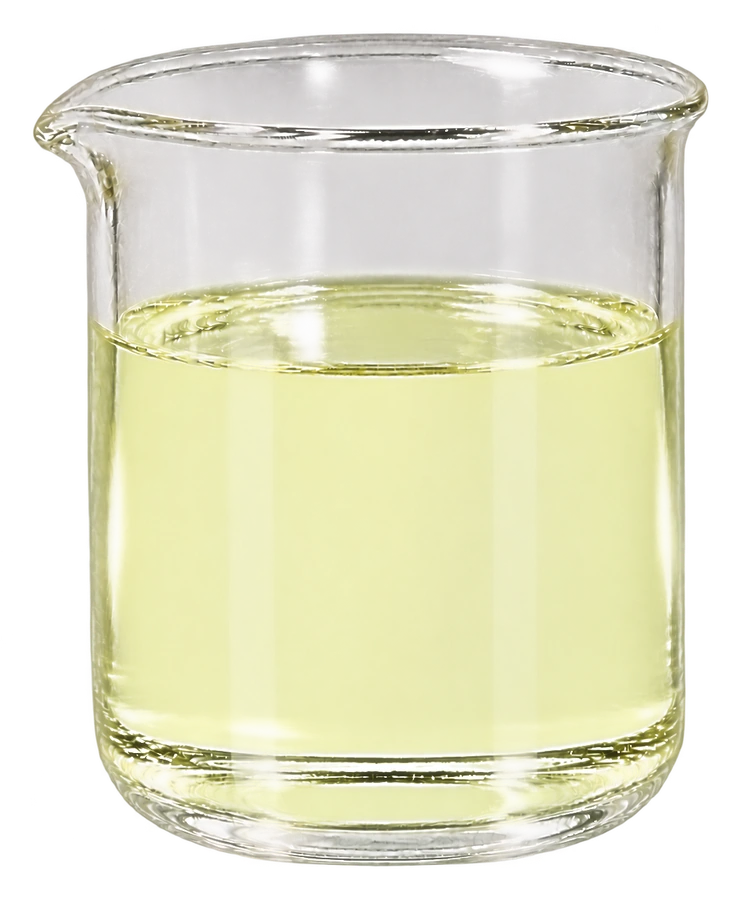

Image credits Laboratory glass samples are made from reference photos on Wikimedia Commons by Chemik10 (CC BY-SA 2.5) and a CC0 petroleum sample photo. Photograph: made from a reference photo by DanTD, CC BY-SA 3.0, via Wikimedia Commons.
Stir the liquid to feel how thick it is
Move the mouse or a finger across the liquid. Press and drag to stir harder. Keyboard: arrow keys stir, Space shakes.
Thin Light and free flowing. Waves travel quickly and fade slowly.
Typical viscosity from the dataViscosity at 40 °C: 2 to 4.5 mm²/s
- Stir speed
- 0 px/s
- Liquid movement
- 0%
- Settled after
- -
- Surface
- Still
The class is a guide for feel. The viscosity figure shown is the one in the specification data.
How it looks
Clear and bright, colourless to pale yellow. Haze means water. A dark or brown colour points to contamination or oxidation. Red dye means off-road or tax-marked fuel and is not EN 590 road diesel.
Where it is used
- Road diesel for trucks, buses and cars
- Rail and agricultural machinery
- Generators and industrial burners
Handling and safety
- Confirm the cold-flow class for the delivery country and month.
- Keep FAME-free tanks if the contract says so.
- Joint samples at loading and discharge, sealed and retained.
Typical properties
- Sulphur
- max 10 mg/kg
- Cetane number
- min 51
- Cetane index
- min 46
- Density at 15 °C
- 820 to 845 kg/m³
- Flash point
- min 55 °C
- Distillation, 95% recovered
- max 360 °C
- Viscosity at 40 °C
- 2 to 4.5 mm²/s
- FAME content
- max 7 % vol
The specification
EN 590 and ASTM D975 S15. Limits are the commonly published ones. Your contract and the current edition of the standard decide.
| Parameter | Limit | Test method | What it protects |
|---|---|---|---|
| Sulphur | max 10 mg/kg | EN ISO 20846 / 20884 / ASTM D5453 | Emissions, and protection of exhaust after-treatment. |
| Cetane number | min 51 | EN ISO 5165 / ASTM D613 | How easily the fuel ignites. |
| Cetane index | min 46 | EN ISO 4264 | A calculated check on the cetane number. |
| Density at 15 °C | 820 to 845 kg/m³ | EN ISO 12185 / ASTM D4052 | Energy per litre and loading by volume. |
| Flash point | min 55 °C | EN ISO 2719 | Fire safety. |
| Distillation, 95% recovered | max 360 °C | EN ISO 3405 / ASTM D86 | Limits heavy ends that leave deposits. |
| Viscosity at 40 °C | 2 to 4.5 mm²/s | EN ISO 3104 / ASTM D445 | Injector lubrication and spray. |
| FAME content | max 7 % vol | EN 14078 | Biodiesel above the limit harms older engines and storage. |
| Polycyclic aromatic hydrocarbons | max 8 % m/m | EN 12916 | Soot and emissions. |
| Lubricity, HFRR wear scar at 60 °C | max 460 µm | EN ISO 12156-1 | Very low sulphur fuels need additive to protect pumps. |
| Water content | max 200 mg/kg | EN ISO 12937 | Rust and microbial growth. |
| Total contamination | max 24 mg/kg | EN 12662 | Clean fuel for filters and injectors. |
| Carbon residue on 10% bottoms | max 0.3 % m/m | EN ISO 10370 | Tendency to leave deposits. |
| Ash | max 0.01 % m/m | EN ISO 6245 | Abrasive solids. |
| Copper strip corrosion (3 h, 50 °C) | max 1 class | EN ISO 2160 | Shows corrosive sulphur. |
| Oxidation stability | max 25 g/m³ | EN ISO 12205 | Storage life. |
| Cold filter plugging point (grade by season) | report °C | EN 116 | Whether the fuel flows in the cold; the limit depends on the country and season. |
Why a cargo goes off spec
When one parameter fails, it usually points to one cause. Here is what to look for.
Sulphurmax 10 mg/kg
Too highCross-contamination with a higher-sulphur product, or a poorly hydrotreated stream.
Why it mattersEmissions, and protection of exhaust after-treatment.
Cetane numbermin 51
Too lowAromatic or cracked components, or no cetane improver.
Why it mattersHow easily the fuel ignites.
Cetane indexmin 46
Too lowAromatic cut.
Why it mattersA calculated check on the cetane number.
Density at 15 °C820 to 845 kg/m³
Too highA heavy cut.
Too lowA light cut or kerosene blend.
Why it mattersEnergy per litre and loading by volume.
Flash pointmin 55 °C
Too lowGasoline or naphtha contamination.
Why it mattersFire safety.
Distillation, 95% recoveredmax 360 °C
Too highA heavy cut or fuel oil carry-over.
Why it mattersLimits heavy ends that leave deposits.
Viscosity at 40 °C2 to 4.5 mm²/s
Too highHeavy cut.
Too lowLight cut.
Why it mattersInjector lubrication and spray.
FAME contentmax 7 % vol
Too highBlended biodiesel or cross-contamination.
Why it mattersBiodiesel above the limit harms older engines and storage.
Polycyclic aromatic hydrocarbonsmax 8 % m/m
Too highCracked, aromatic stream.
Why it mattersSoot and emissions.
Lubricity, HFRR wear scar at 60 °Cmax 460 µm
Too highLubricity additive missing or too little.
Why it mattersVery low sulphur fuels need additive to protect pumps.
Water contentmax 200 mg/kg
Too highTank bottoms, condensation, poor settling.
Why it mattersRust and microbial growth.
Total contaminationmax 24 mg/kg
Too highRust and scale from tanks.
Why it mattersClean fuel for filters and injectors.
Carbon residue on 10% bottomsmax 0.3 % m/m
Too highA heavy cut.
Why it mattersTendency to leave deposits.
Ashmax 0.01 % m/m
Too highDirt or residual fuel.
Why it mattersAbrasive solids.
Copper strip corrosion (3 h, 50 °C)max 1 class
Too highActive sulphur compounds.
Why it mattersShows corrosive sulphur.
Oxidation stabilitymax 25 g/m³
Too highCracked components or age.
Why it mattersStorage life.
Cold filter plugging point (grade by season)report °C
Too highWax; a summer fuel sold for winter.
Why it mattersWhether the fuel flows in the cold; the limit depends on the country and season.
Check your own certificate
Type the values, paste the certificate text, or upload a PDF or photo. The checker names every parameter that is off spec and the usual reason.
| Parameter | Limit | Your value | Result |
|---|---|---|---|
| SulphurEN ISO 20846 / 20884 / ASTM D5453 | max 10 mg/kg | enter a value | |
| Cetane numberEN ISO 5165 / ASTM D613 | min 51 | enter a value | |
| Cetane indexEN ISO 4264 | min 46 | enter a value | |
| Density at 15 °CEN ISO 12185 / ASTM D4052 | 820 to 845 kg/m³ | enter a value | |
| Flash pointEN ISO 2719 | min 55 °C | enter a value | |
| Distillation, 95% recoveredEN ISO 3405 / ASTM D86 | max 360 °C | enter a value | |
| Viscosity at 40 °CEN ISO 3104 / ASTM D445 | 2 to 4.5 mm²/s | enter a value | |
| FAME contentEN 14078 | max 7 % vol | enter a value | |
| Polycyclic aromatic hydrocarbonsEN 12916 | max 8 % m/m | enter a value | |
| Lubricity, HFRR wear scar at 60 °CEN ISO 12156-1 | max 460 µm | enter a value | |
| Water contentEN ISO 12937 | max 200 mg/kg | enter a value | |
| Total contaminationEN 12662 | max 24 mg/kg | enter a value | |
| Carbon residue on 10% bottomsEN ISO 10370 | max 0.3 % m/m | enter a value | |
| AshEN ISO 6245 | max 0.01 % m/m | enter a value | |
| Copper strip corrosion (3 h, 50 °C)EN ISO 2160 | max 1 class | enter a value | |
| Oxidation stabilityEN ISO 12205 | max 25 g/m³ | enter a value | |
| Cold filter plugging point (grade by season)EN 116 | report °C | enter a value |
Sources
Indicative information for professional users. Not a substitute for the standard, a contract or an independent inspector.