Middle distillates · DEF STAN 91-091 and ASTM D1655
Jet A-1
Kerosene-type turbine fuel used by airlines worldwide. It is the most tightly controlled product PST handles, because a failure is a safety matter.
- 18Parameters
- 18With a limit
- 18Off-spec causes explained
- Flash pointmin 38 °C
- Density775 to 840 kg/m³
- Viscositymax 8 mm²/s
- Cold flowmax -47 °C
- Sulphurmax 0.3 % m/m
- Boiling endmax 205 °C
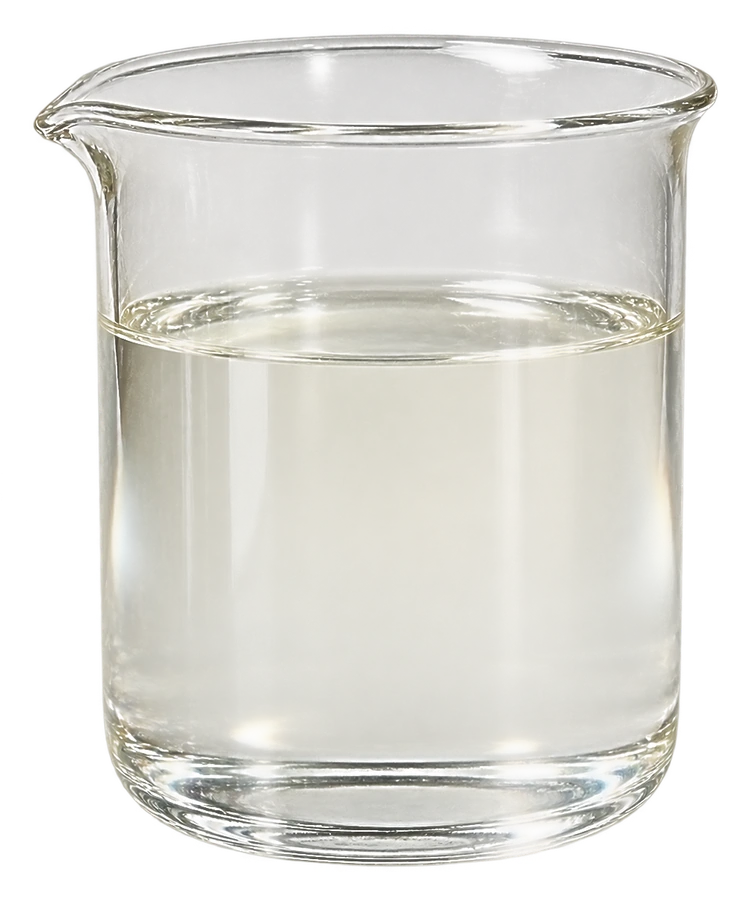

Image credits Laboratory glass samples are made from reference photos on Wikimedia Commons by Chemik10 (CC BY-SA 2.5) and a CC0 petroleum sample photo.
Stir the liquid to feel how thick it is
Move the mouse or a finger across the liquid. Press and drag to stir harder. Keyboard: arrow keys stir, Space shakes.
Thin Light and free flowing. Waves travel quickly and fade slowly.
Typical viscosity from the dataViscosity at −20 °C: max 8 mm²/s
- Stir speed
- 0 px/s
- Liquid movement
- 0%
- Settled after
- -
- Surface
- Still
The class is a guide for feel. The viscosity figure shown is the one in the specification data.
How it looks
Clear and bright, colourless to pale straw. Free of visible water, dirt and haze. Colour is measured on the Saybolt scale: +30 is water-white, and a fuel that has turned yellow or dark has usually been contaminated or has aged.
Where it is used
- Commercial and military aviation turbine engines
- Airport hydrant and refueller supply
- Blended with approved SAF components up to 50%
Handling and safety
- Dedicated, cleaned tanks and lines. Any shared line needs a documented cleaning.
- Release against a refinery certificate and a Certificate of Quality at loading.
- Joint samples at the manifold, sealed and retained.
Typical properties
- Flash point
- min 38 °C
- Density at 15 °C
- 775 to 840 kg/m³
- Freezing point
- max -47 °C
- Distillation, 10% recovered
- max 205 °C
- Final boiling point
- max 300 °C
- Viscosity at −20 °C
- max 8 mm²/s
- Net heat of combustion
- min 42.8 MJ/kg
- Aromatics
- max 25 % vol
The specification
DEF STAN 91-091 and ASTM D1655. Limits are the commonly published ones. Your contract and the current edition of the standard decide.
| Parameter | Limit | Test method | What it protects |
|---|---|---|---|
| Flash point | min 38 °C | IP 170 / ASTM D56 / D3828 | Fire safety in storage, handling and on the apron. |
| Density at 15 °C | 775 to 840 kg/m³ | ASTM D4052 / IP 365 | Fixes the energy per litre and fuel loading by volume. |
| Freezing point | max -47 °C | ASTM D2386 / IP 16 | Wax crystals can block filters at altitude where the fuel is very cold. |
| Distillation, 10% recovered | max 205 °C | ASTM D86 / IP 123 | Controls easy starting and evaporation losses. |
| Final boiling point | max 300 °C | ASTM D86 / IP 123 | Limits heavy ends that burn poorly and leave deposits. |
| Viscosity at −20 °C | max 8 mm²/s | ASTM D445 / IP 71 | Pumpability and spray pattern in the cold. |
| Net heat of combustion | min 42.8 MJ/kg | ASTM D4529 / D3338 | Energy available to the engine. |
| Aromatics | max 25 % vol | ASTM D1319 / IP 156 | High aromatics burn with more smoke and soot. |
| Total sulphur | max 0.3 % m/m | ASTM D4294 / IP 336 | Corrosion and emissions. |
| Mercaptan sulphur | max 0.003 % m/m | ASTM D3227 / IP 342 | Odour and attack on rubber parts. |
| Smoke point | min 25 mm | ASTM D1322 / IP 57 | A clean flame means less soot in the combustor. |
| JFTOT thermal stability, ΔP | max 25 mm Hg | ASTM D3241 / IP 323 (260 °C) | Shows whether the fuel forms deposits when heated in the engine. |
| Existent gum | max 7 mg/100 ml | ASTM D381 / IP 540 | Deposits in the fuel system. |
| Total acidity | max 0.015 mg KOH/g | ASTM D3242 / IP 354 | Corrosion and thermal stability. |
| Copper strip corrosion (2 h, 100 °C) | max 1 class | ASTM D130 / IP 154 | Shows corrosive sulphur compounds. |
| Water separation index, MSEP | min 85 rating | ASTM D3948 | Shows whether the fuel gives up its water at the filters. |
| Electrical conductivity | 50 to 600 pS/m | ASTM D2624 / IP 274 | Static charge must drain away safely during fuelling. |
| Particulate contamination | max 1 mg/l | ASTM D5452 / IP 423 | Clean fuel at the filters. |
Why a cargo goes off spec
When one parameter fails, it usually points to one cause. Here is what to look for.
Flash pointmin 38 °C
Too highRarely a problem. A very high flash point can point to a heavy cut and a high freezing point.
Too lowContamination with gasoline, naphtha or a light cut; cutting too light in the refinery.
Why it mattersFire safety in storage, handling and on the apron.
Density at 15 °C775 to 840 kg/m³
Too highA heavy cut, or contamination with diesel or heavier kerosene.
Too lowA light cut, naphtha contamination or a mislabelled sample.
Why it mattersFixes the energy per litre and fuel loading by volume.
Freezing pointmax -47 °C
Too highA heavy cut, gasoil contamination, or water and wax forming in the sample.
Why it mattersWax crystals can block filters at altitude where the fuel is very cold.
Distillation, 10% recoveredmax 205 °C
Too highToo heavy a front end, or a diesel contamination.
Why it mattersControls easy starting and evaporation losses.
Final boiling pointmax 300 °C
Too highA heavy cut or diesel cross-contamination.
Why it mattersLimits heavy ends that burn poorly and leave deposits.
Viscosity at −20 °Cmax 8 mm²/s
Too highA heavy cut or wax.
Why it mattersPumpability and spray pattern in the cold.
Net heat of combustionmin 42.8 MJ/kg
Too lowToo many aromatics or an off-cut.
Why it mattersEnergy available to the engine.
Aromaticsmax 25 % vol
Too highCut from aromatic crude or too little hydroprocessing.
Why it mattersHigh aromatics burn with more smoke and soot.
Total sulphurmax 0.3 % m/m
Too highUntreated or poorly hydrotreated stream.
Why it mattersCorrosion and emissions.
Mercaptan sulphurmax 0.003 % m/m
Too highSweetening unit (Merox) not working well.
Why it mattersOdour and attack on rubber parts.
Smoke pointmin 25 mm
Too lowAromatic or naphthenic fuel.
Why it mattersA clean flame means less soot in the combustor.
JFTOT thermal stability, ΔPmax 25 mm Hg
Too highSurfactants, trace metals such as copper, oxidised or contaminated product.
Why it mattersShows whether the fuel forms deposits when heated in the engine.
Existent gummax 7 mg/100 ml
Too highOxidation or contamination with gasoline-range gum.
Why it mattersDeposits in the fuel system.
Total aciditymax 0.015 mg KOH/g
Too highNaphthenic acid carry-over or oxidation.
Why it mattersCorrosion and thermal stability.
Copper strip corrosion (2 h, 100 °C)max 1 class
Too highActive sulphur compounds or contamination.
Why it mattersShows corrosive sulphur compounds.
Water separation index, MSEPmin 85 rating
Too lowSurfactants, detergents or biodiesel traces, and cross-contamination in shared lines.
Why it mattersShows whether the fuel gives up its water at the filters.
Electrical conductivity50 to 600 pS/m
Too lowStatic dissipator additive missing or depleted.
Why it mattersStatic charge must drain away safely during fuelling.
Particulate contaminationmax 1 mg/l
Too highRust and scale from tanks or pipelines.
Why it mattersClean fuel at the filters.
Check your own certificate
Type the values, paste the certificate text, or upload a PDF or photo. The checker names every parameter that is off spec and the usual reason.
| Parameter | Limit | Your value | Result |
|---|---|---|---|
| Flash pointIP 170 / ASTM D56 / D3828 | min 38 °C | enter a value | |
| Density at 15 °CASTM D4052 / IP 365 | 775 to 840 kg/m³ | enter a value | |
| Freezing pointASTM D2386 / IP 16 | max -47 °C | enter a value | |
| Distillation, 10% recoveredASTM D86 / IP 123 | max 205 °C | enter a value | |
| Final boiling pointASTM D86 / IP 123 | max 300 °C | enter a value | |
| Viscosity at −20 °CASTM D445 / IP 71 | max 8 mm²/s | enter a value | |
| Net heat of combustionASTM D4529 / D3338 | min 42.8 MJ/kg | enter a value | |
| AromaticsASTM D1319 / IP 156 | max 25 % vol | enter a value | |
| Total sulphurASTM D4294 / IP 336 | max 0.3 % m/m | enter a value | |
| Mercaptan sulphurASTM D3227 / IP 342 | max 0.003 % m/m | enter a value | |
| Smoke pointASTM D1322 / IP 57 | min 25 mm | enter a value | |
| JFTOT thermal stability, ΔPASTM D3241 / IP 323 (260 °C) | max 25 mm Hg | enter a value | |
| Existent gumASTM D381 / IP 540 | max 7 mg/100 ml | enter a value | |
| Total acidityASTM D3242 / IP 354 | max 0.015 mg KOH/g | enter a value | |
| Copper strip corrosion (2 h, 100 °C)ASTM D130 / IP 154 | max 1 class | enter a value | |
| Water separation index, MSEPASTM D3948 | min 85 rating | enter a value | |
| Electrical conductivityASTM D2624 / IP 274 | 50 to 600 pS/m | enter a value | |
| Particulate contaminationASTM D5452 / IP 423 | max 1 mg/l | enter a value |
Sources
Indicative information for professional users. Not a substitute for the standard, a contract or an independent inspector.