Marine & heavy · ISO 8217 DMA. 2017 edition limits shown; check the edition in your contract
Marine gasoil (MGO, DMA)
Distillate marine fuel for ships. ISO 8217 allows up to 1.0% sulphur in the product specification, but ships must burn at most 0.50% worldwide and 0.10% in emission control areas, including the Mediterranean since 1 May 2025. Fujairah, Singapore and Rotterdam are the big bunkering hubs.
- 11Parameters
- 10With a limit
- 11Off-spec causes explained
- Flash pointmin 60 °C
- Densitymax 890 kg/m³
- Viscosity2 to 6 mm²/s
- Cold flowmax -16 °C
- Sulphurmax 1 % m/m
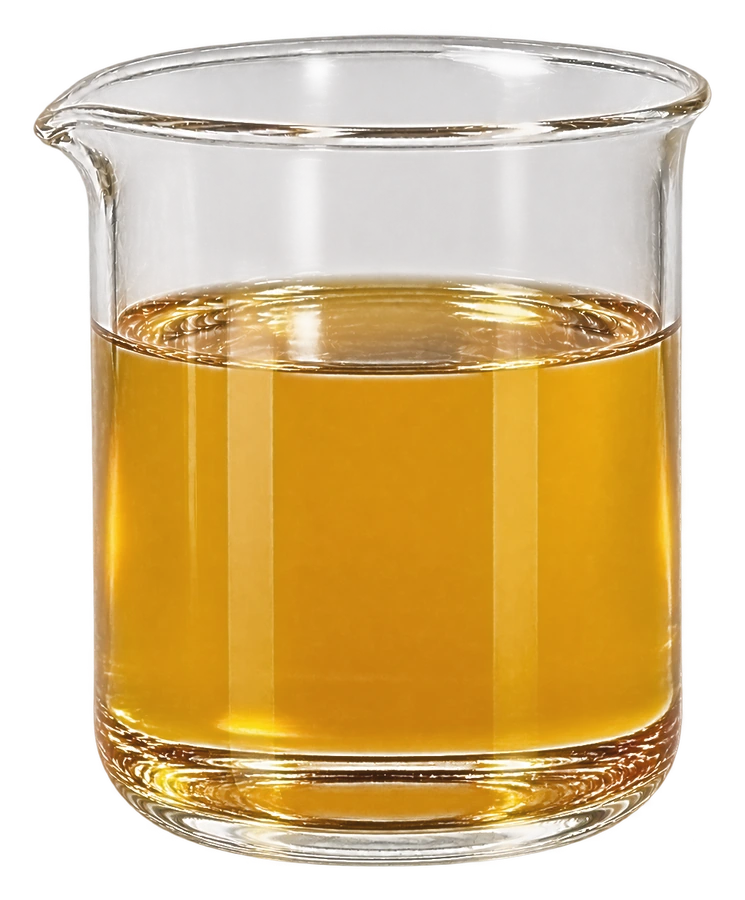
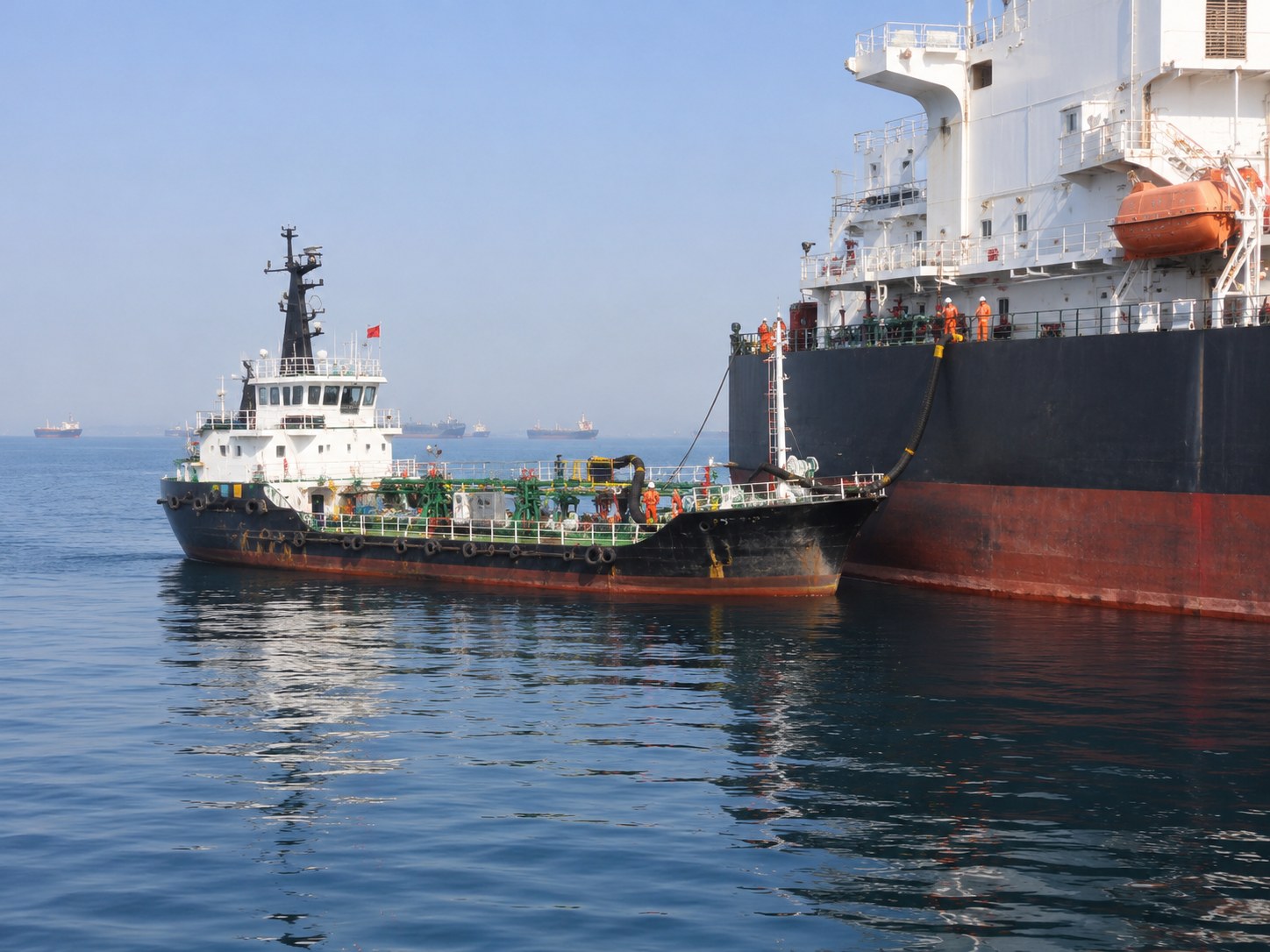
Image credits Laboratory glass samples are made from reference photos on Wikimedia Commons by Chemik10 (CC BY-SA 2.5) and a CC0 petroleum sample photo. Photograph: made from a reference photo by Грищук ЮН, CC BY-SA 3.0, via Wikimedia Commons.
Stir the liquid to feel how thick it is
Move the mouse or a finger across the liquid. Press and drag to stir harder. Keyboard: arrow keys stir, Space shakes.
Thin Light and free flowing. Waves travel quickly and fade slowly.
Typical viscosity from the dataViscosity at 40 °C: 2 to 6 mm²/s
- Stir speed
- 0 px/s
- Liquid movement
- 0%
- Settled after
- -
- Surface
- Still
The class is a guide for feel. The viscosity figure shown is the one in the specification data.
How it looks
Clear and bright, pale yellow to amber. Haze means water. A dark colour means contamination or a heavy blend.
Where it is used
- Ship engines and auxiliaries
- Fuel inside emission control areas (0.1% sulphur)
- Generators and industry
Handling and safety
- Bunker delivery notes and sealed samples (MARPOL Annex VI) are mandatory.
- Confirm the sulphur limit of the ship's route.
- Keep apart from residual fuel to avoid contamination.
Typical properties
- Viscosity at 40 °C
- 2 to 6 mm²/s
- Density at 15 °C
- max 890 kg/m³
- Sulphur
- max 1 % m/m
- Flash point
- min 60 °C
- Cetane index
- min 40
- Carbon residue on 10% bottoms
- max 0.3 % m/m
- Ash
- max 0.01 % m/m
- Lubricity, wear scar at 60 °C
- max 520 µm
The specification
ISO 8217 DMA. 2017 edition limits shown; check the edition in your contract. Limits are the commonly published ones. Your contract and the current edition of the standard decide.
| Parameter | Limit | Test method | What it protects |
|---|---|---|---|
| Viscosity at 40 °C | 2 to 6 mm²/s | ISO 3104 | Injection and lubrication. |
| Density at 15 °C | max 890 kg/m³ | ISO 3675 / ISO 12185 | Purification and energy. |
| Sulphur | max 1 % m/m | ISO 8754 / ISO 14596 | Use 0.50% worldwide, 0.10% in emission control areas (including the Mediterranean). |
| Flash point | min 60 °C | ISO 2719 | Safety on board, set by SOLAS. |
| Cetane index | min 40 | ISO 4264 | Ignition quality. |
| Carbon residue on 10% bottoms | max 0.3 % m/m | ISO 10370 | Deposits. |
| Ash | max 0.01 % m/m | ISO 6245 | Abrasive solids. |
| Water | report % vol | ISO 3733 | Corrosion and growth. |
| Lubricity, wear scar at 60 °C | max 520 µm | ISO 12156-1 | Protects pumps and injectors. |
| Cloud point (winter) | max -16 °C | ISO 3015 | Filter blocking in the cold. |
| Pour point (summer) | max 0 °C | ISO 3016 | Handling in the cold. |
Why a cargo goes off spec
When one parameter fails, it usually points to one cause. Here is what to look for.
Viscosity at 40 °C2 to 6 mm²/s
Too highHeavy cut.
Too lowLight cut.
Why it mattersInjection and lubrication.
Density at 15 °Cmax 890 kg/m³
Too highHeavy cut.
Why it mattersPurification and energy.
Sulphurmax 1 % m/m
Too highHigher-sulphur blend.
Why it mattersUse 0.50% worldwide, 0.10% in emission control areas (including the Mediterranean).
Flash pointmin 60 °C
Too lowLight ends.
Why it mattersSafety on board, set by SOLAS.
Cetane indexmin 40
Too lowAromatic cut.
Why it mattersIgnition quality.
Carbon residue on 10% bottomsmax 0.3 % m/m
Too highHeavy cut.
Why it mattersDeposits.
Ashmax 0.01 % m/m
Too highResidual fuel.
Why it mattersAbrasive solids.
Waterreport % vol
Too highTank water.
Why it mattersCorrosion and growth.
Lubricity, wear scar at 60 °Cmax 520 µm
Too highNo lubricity additive.
Why it mattersProtects pumps and injectors.
Cloud point (winter)max -16 °C
Too highWax.
Why it mattersFilter blocking in the cold.
Pour point (summer)max 0 °C
Too highWax.
Why it mattersHandling in the cold.
Check your own certificate
Type the values, paste the certificate text, or upload a PDF or photo. The checker names every parameter that is off spec and the usual reason.
| Parameter | Limit | Your value | Result |
|---|---|---|---|
| Viscosity at 40 °CISO 3104 | 2 to 6 mm²/s | enter a value | |
| Density at 15 °CISO 3675 / ISO 12185 | max 890 kg/m³ | enter a value | |
| SulphurISO 8754 / ISO 14596 | max 1 % m/m | enter a value | |
| Flash pointISO 2719 | min 60 °C | enter a value | |
| Cetane indexISO 4264 | min 40 | enter a value | |
| Carbon residue on 10% bottomsISO 10370 | max 0.3 % m/m | enter a value | |
| AshISO 6245 | max 0.01 % m/m | enter a value | |
| WaterISO 3733 | report % vol | enter a value | |
| Lubricity, wear scar at 60 °CISO 12156-1 | max 520 µm | enter a value | |
| Cloud point (winter)ISO 3015 | max -16 °C | enter a value | |
| Pour point (summer)ISO 3016 | max 0 °C | enter a value |
Sources
Indicative information for professional users. Not a substitute for the standard, a contract or an independent inspector.