Heavy fuels
VLSFO 0.5% (Very Low Sulphur Fuel Oil)
VLSFO is marine fuel with sulphur of 0.50 percent or less, created for the IMO 2020 global cap. It is now the main bunker fuel for ocean-going ships.
← Todos os produtosTambém chamado de: VLSFO, 0.5% sulphur fuel oil, IMO 2020 fuel, Compliant fuel
- Ponto de fulgorMin 60 C
- Densidade900 to 991 kg/m³
- Viscosidade30 to 380 mm2/s at 50 C depending on blend
- Fluidez a frioVaries by blend; many are above 0 C and up to 30 C
- EnxofreMax 0.50% m/m (typically 0.40 to 0.50%)
- PerigoUsually none. Depending on the description and temperature, shippers may use UN3082 or UN3257., Often not classified as dangerous goods for transport (flash point above 60 C). Class 9 if shipped under UN3082 (environmentally hazardous substance, liquid, n.o.s.) or UN3257 (elevated temperature liquid, n.o.s.). Check the supplier's safety data sheet.
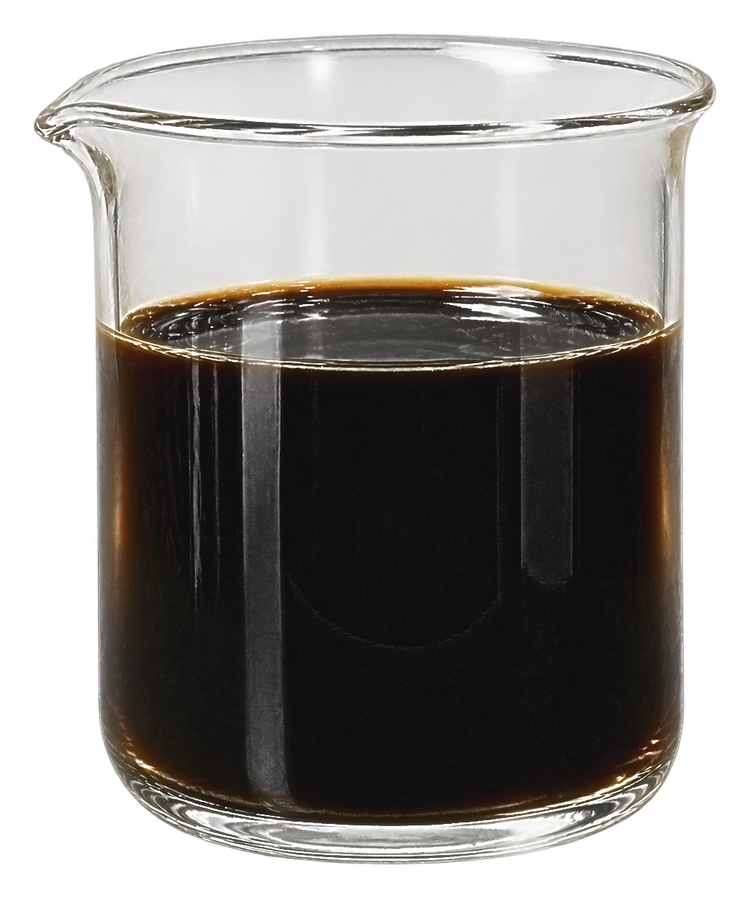
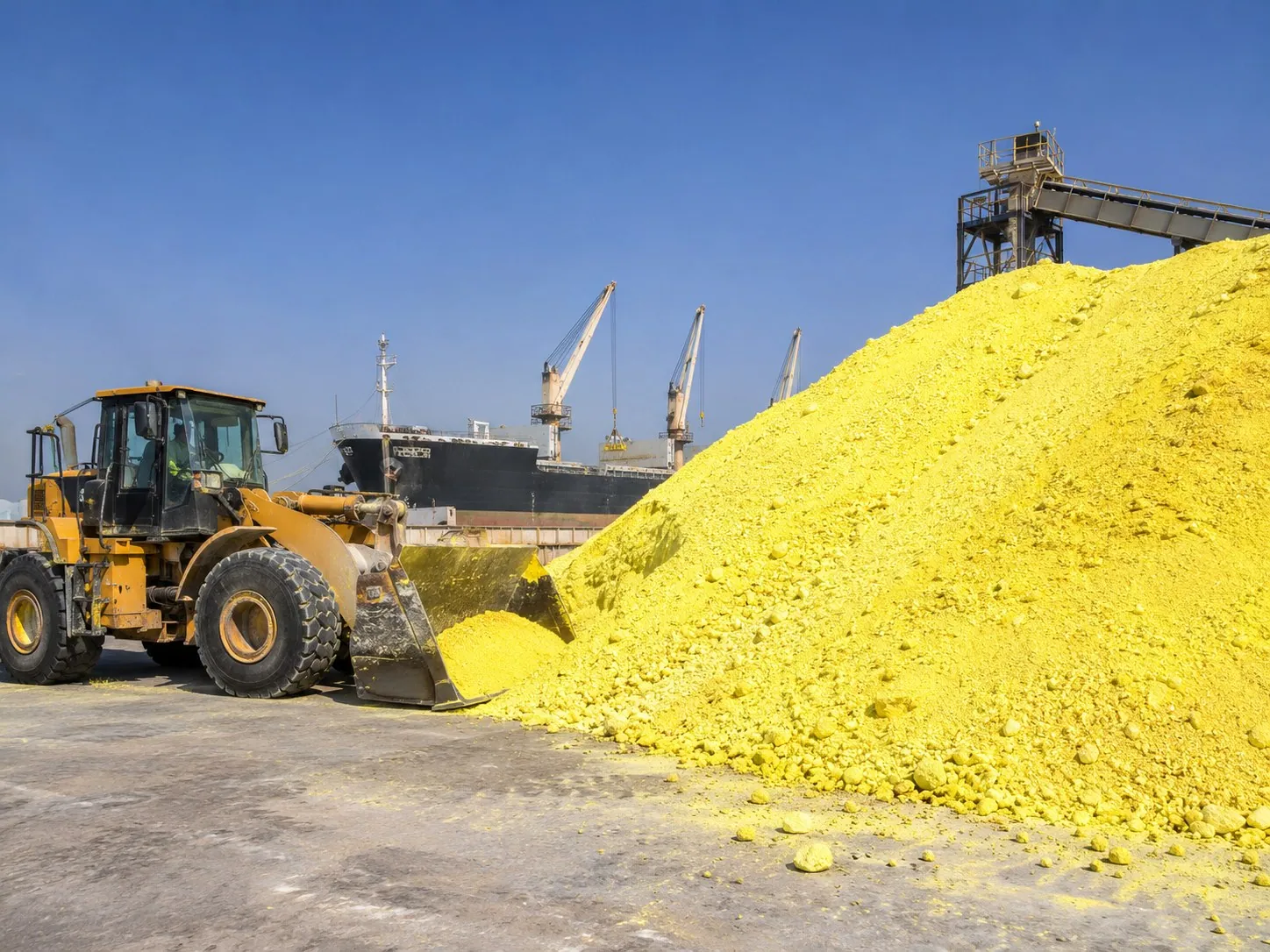
Créditos das imagens As amostras em vidro de laboratório foram feitas a partir de fotografias de referência da Wikimedia Commons por Chemik10 (CC BY-SA 2.5) e uma foto de amostra de petróleo em CC0.
VLSFO 0.5% (Very Low Sulphur Fuel Oil) é sólido à temperatura normal, por isso não há líquido para agitar. 30 to 380 mm2/s at 50 C depending on blend
Aspecto esperado
Dark brown to black, opaque, and viscous like treacle at room temperature. It must be heated to pump. Appearance is not a quality test: a good and a bad VLSFO look the same, which is why laboratory results matter.
Onde é usado
- Deep-sea vessels without scrubbers
- Container ships and tankers
Manuseamento e segurança
- Store in heated tanks, typically 40 to 50 C for pumping and 100 to 150 C for centrifuge and injection, with the temperature kept at least 10 C above the pour point and below 20 C under flash point. Avoid overheating that causes coking. Check for incompatibility when mixing batches (ASTM D4740 spot test or D7060). Sampling follows ISO 3170 or ISO 3171 with MARPOL retained sample. Inspect for water, catalytic fines (aluminium plus silicon) and total sediment.
- Hot product can cause burns. Residual fuels contain polycyclic aromatics and can release hydrogen sulphide in tank headspace. Spills are very damaging to marine life.
Propriedades típicas
- Aparência
- Black, may be waxy
- Densidade a 15 °C
- 900 to 991 kg/m³
- Ponto de fulgor
- Min 60 C
- Viscosidade
- 30 to 380 mm2/s at 50 C depending on blend
- Ponto de fluidez
- Varies by blend; many are above 0 C and up to 30 C
- Enxofre típico
- Max 0.50% m/m (typically 0.40 to 0.50%)
◉What it is
VLSFO is a blend of residual and distillate components that meets the 0.50 percent global sulphur limit that took effect on 1 January 2020. Ships without scrubbers must use VLSFO or a more expensive distillate. The composition varies by supplier: some blends are waxy, some are aromatic, and some contain cracked material. That variety makes compatibility checking important. Many VLSFO grades meet ISO 8217 RMG 380 or RME 180 viscosity limits, but the parameters differ from the traditional high-sulphur fuel.
⬡What it is made of
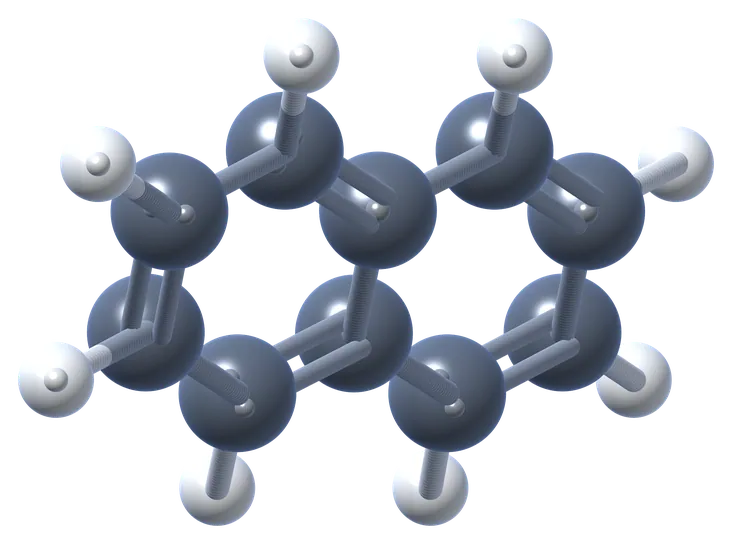
C20 to C70+ hydrocarbons: aromatics, naphthenes, resins and asphaltenes, with sulphur, nitrogen and metals.
⚛A química
VLSFO blends are made from low-sulphur residues, hydrocracker bottoms and distillates. Paraffinic blends can precipitate wax at low temperature, while aromatic blends have better stability but higher density. Low sulphur means fewer sulphur-containing heteroatoms but not necessarily better stability.
⚙How it is made
Low sulphur residue from refining low sulphur crudes or hydrotreating residues is blended with distillate or cracked streams to meet viscosity and sulphur limits.
▶How it works
Heated as other residual fuels. Some blends need extra heating to avoid wax, and mixing batches can cause sludge. Combustion quality (CCAI or CII) varies.
▣Storage, loading and inspection
Store in heated tanks, typically 40 to 50 C for pumping and 100 to 150 C for centrifuge and injection, with the temperature kept at least 10 C above the pour point and below 20 C under flash point. Avoid overheating that causes coking. Check for incompatibility when mixing batches (ASTM D4740 spot test or D7060). Sampling follows ISO 3170 or ISO 3171 with MARPOL retained sample. Inspect for water, catalytic fines (aluminium plus silicon) and total sediment.
★Why it matters in the Gulf
VLSFO is a main bunker fuel sold at Fujairah. Fujairah is one of the world's largest bunkering hubs, alongside Singapore and Rotterdam, and lies just outside the Strait of Hormuz on the Gulf of Oman (Wikipedia). Its oil industry zone has about 10 million cubic metres of refined-product storage (Wikipedia, year not given). Current bunker volumes by grade are not stated.
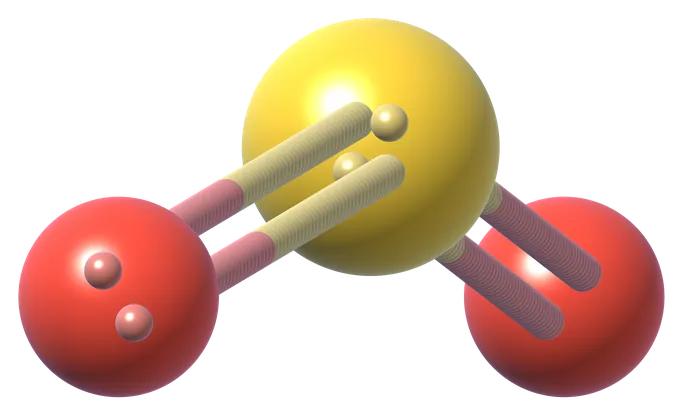
Moléculas principais


Normas e especificações
| ISO 8217 | Residual grades such as RMG 380 or RME 180; sulphur is set by MARPOL, not by the viscosity grade. |
|---|---|
| MARPOL Annex VI Reg. 14 | 0.50% global sulphur limit from 1 January 2020 (IMO). |
Riscos
Hot product can cause burns. Residual fuels contain polycyclic aromatics and can release hydrogen sulphide in tank headspace. Spills are very damaging to marine life.
Como é negociado
Units
Metric tonnes (bunkers priced per mt); barrels for refinery trade at about 6.3 bbl per mt.
Benchmarks
Platts VLSFO assessments at Fujairah, Singapore, Rotterdam, Houston
Typical cargo
Barge or bunker tanker deliveries of 500 to 5,000 mt
Incoterms
FOB (load port), CIF or CFR, DAP at bunker port or delivered ex-wharf (barge).
Notes
VLSFO is quoted per mt; prices track low sulphur residue and gasoil.
Refinarias que o produzem: nossas sugestões
121 refinarias listadas produzem este produto, 40 delas no Golfo, no Irã e no Iraque. Ordenamos primeiro as unidades do Golfo, depois as em operação e, por fim, por capacidade.
- 1Ruwais Refinery
 United Arab Emirates · 922,000 bpdLargest capacity among Gulf-first matchesGulf locationOperatingDeep conversionAcesso de exportação
- 2Al-Zour Refinery
 Kuwait · 615,000 bpdGulf locationOperatingAcesso de exportação
- 3Ras Tanura Refinery
 Saudi Arabia · 550,000 bpdGulf locationOperatingDeep conversionAcesso de exportação
- 4SATORP Jubail Refinery Saudi Arabia · 465,000 bpdGulf locationOperatingDeep conversionAcesso de exportação
- 5SAMREF Yanbu Refinery Saudi Arabia · 400,000 bpdGulf locationOperatingAcesso de exportação
- 6YASREF Yanbu Refinery Saudi Arabia · 400,000 bpdGulf locationOperatingDeep conversionAcesso de exportação


Terminais que o movimentam
- Port of Fujairah (anchorage and bunkering) United Arab Emirates
- Ras Tanura terminal Saudi Arabia
- Vopak Horizon Fujairah United Arab Emirates
- Bapco Sitra tank farm and marine terminal
 Bahrain
- Yanbu oil terminals (Red Sea) Saudi Arabia
- VTTI Fujairah United Arab Emirates


Você sabia
💡 VLSFO is not a single product: each supplier blends it differently.
💡 The 0.50 percent global limit applied from 1 January 2020 (IMO).
Teste seus conhecimentos sobre VLSFO 0.5% (Very Low Sulphur Fuel Oil)
What is the VLSFO sulphur limit?
Ver a página de especificação da PST
Mais neste grupo
- HSFO 3.5% (High Sulphur Fuel Oil)
- ULSFO 0.1% (Ultra Low Sulphur Fuel Oil)
- IFO 380 and IFO 180
- Bunker Fuel (ISO 8217 Grades)
- Residual Fuel Oil (RFO / MFO)
- Vacuum Gasoil (VGO)
- Vacuum Residue
- Slurry Oil (Decant Oil)
- Cutter Stock
- Furnace Oil
Fontes
- Bunker fuel (Wikipedia)
- Fuel oil (Wikipedia)
- IMO: Sulphur oxides (SOx) and particulate matter, Regulation 14
- Port of Fujairah (Wikipedia)
- Fujairah (Wikipedia)
Redigido com as palavras da própria PST a partir das fontes acima. Confiabilidade dos dados: medium. Os valores típicos variam conforme a origem e o contrato, por isso leia sempre a especificação do seu próprio contrato.