Middle distillates
Diesel EN 590 (10 ppm)
EN 590 is the European specification for road diesel, limited to 10 mg/kg of sulphur. It is the most widely traded clean diesel grade outside North America.
← Todos los productosTambién llamado: EN 590 diesel, Euro diesel, ULSD 10 ppm, Gasoil 10 ppm
- Punto de inflamaciónAbove 55 C (EN 590 minimum)
- Densidad820 to 845 kg/m³
- Viscosidad2.0 to 4.5 mm2/s at 40 C
- Flujo en fríoSet by climate class. Temperate classes A to F have a maximum CFPP from +5 to minus 20 C; arctic classes 0 to 4 run from minus 20 to minus 44 C.
- AzufreMax 10 mg/kg (10 ppm)
- Rango de ebullición170 to 360 °C
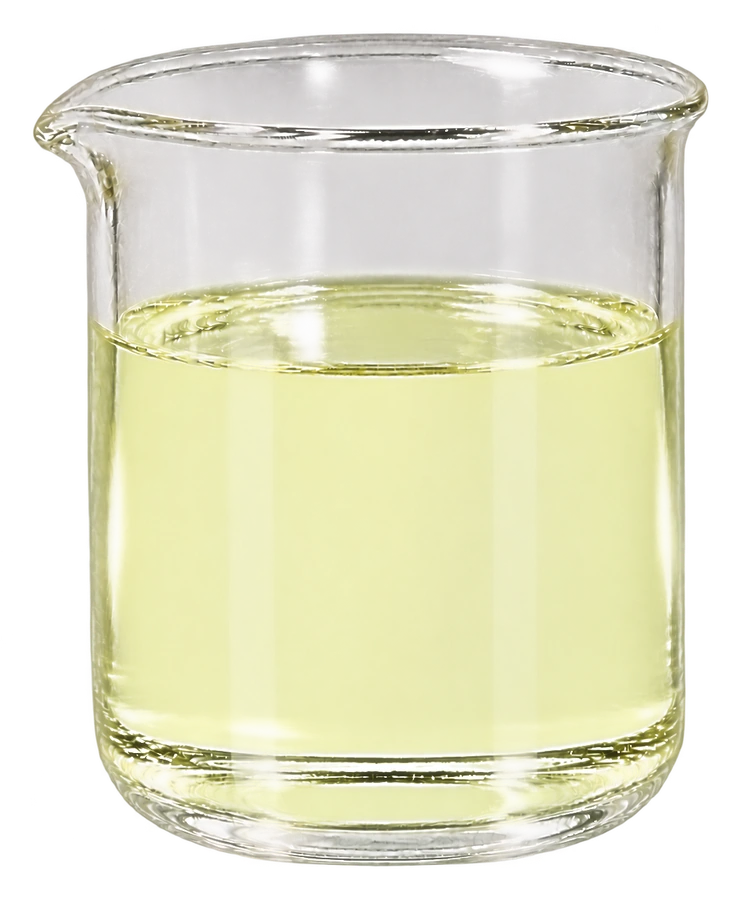
Créditos de las imágenes Las muestras en vidrio de laboratorio se elaboran a partir de fotos de referencia de Wikimedia Commons de Chemik10 (CC BY-SA 2.5) y una foto de muestra de petróleo CC0. Fotografía: elaborada a partir de una foto de referencia de DanTD, CC BY-SA 3.0, vía Wikimedia Commons.
Agite el líquido para sentir su espesor
Mueva el ratón o un dedo sobre el líquido. Mantenga pulsado y arrastre para agitar con más fuerza. Teclado: las flechas agitan, la barra espaciadora sacude.
Fino Ligero y fluido. Las ondas se propagan rápido y se apagan despacio.
Viscosidad típica según los datos2.0 to 4.5 mm2/s at 40 C
- Velocidad de agitación
- 0 px/s
- Movimiento del líquido
- 0%
- Se calma tras
- -
- Superficie
- Quieto
La clase es solo una guía de sensación. La viscosidad indicada es la de los datos de la especificación.
Aspecto
Clear to pale yellow liquid, bright and free of visible water
Dónde se utiliza
- Cars, vans, trucks and buses
- Rail locomotives and light marine engines
- Generators and construction machinery
- Blending base for biodiesel and HVO blends
Manipulación y seguridad
- Store in clean, water-free tanks with water drains and fuel-compatible coatings; keep away from copper and zinc surfaces that harm stability. Watch water and microbial growth at the tank bottom and sample from top, middle and bottom with an automatic or manual sampler under ASTM D4057 or ISO 3170. Independent inspectors normally check quantity, density, sulphur, flash point and appearance at loading and discharge. Cold-climate cargoes may need cold-flow additives.
- Combustible rather than highly flammable (flash point above 55 C for most specifications). Harmful to aquatic life. Vapours can form explosive mixtures when heated or misted.
Propiedades típicas
- Aspecto
- Clear to pale yellow liquid, bright and free of visible water
- Densidad a 15 °C
- 820 to 845 kg/m³
- Rango de ebullición
- 170 to 360 °C
- Punto de inflamación
- Above 55 C (EN 590 minimum)
- Viscosidad
- 2.0 to 4.5 mm2/s at 40 C
- Punto de fluidez
- Set by climate class. Temperate classes A to F have a maximum CFPP from +5 to minus 20 C; arctic classes 0 to 4 run from minus 20 to minus 44 C.
- Azufre típico
- Max 10 mg/kg (10 ppm)
◉What it is
EN 590 diesel is the standard automotive diesel in the European Union and is also referenced by many importing countries outside Europe. The standard sets limits for sulphur, cetane number, density, distillation, flash point, cold flow and lubricity. Its sulphur limit of 10 ppm matches Euro 5 and later vehicle standards and allows modern exhaust filters to work. The fuel may contain up to 7 percent by volume of fatty acid methyl ester (FAME) biodiesel. It is made mainly by hydrotreating middle distillate streams from crude distillation and cracking units.
⬡What it is made of
Typically C10 to C22 (mostly C12 to C20) paraffins, naphthenes and aromatics; boiling roughly 170 to 390 C.
⚛La química
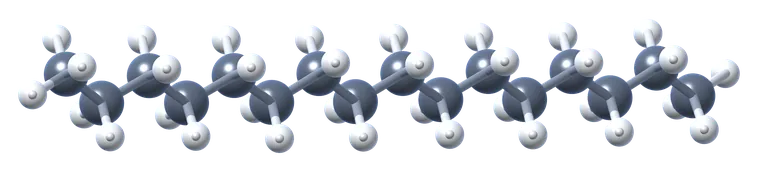
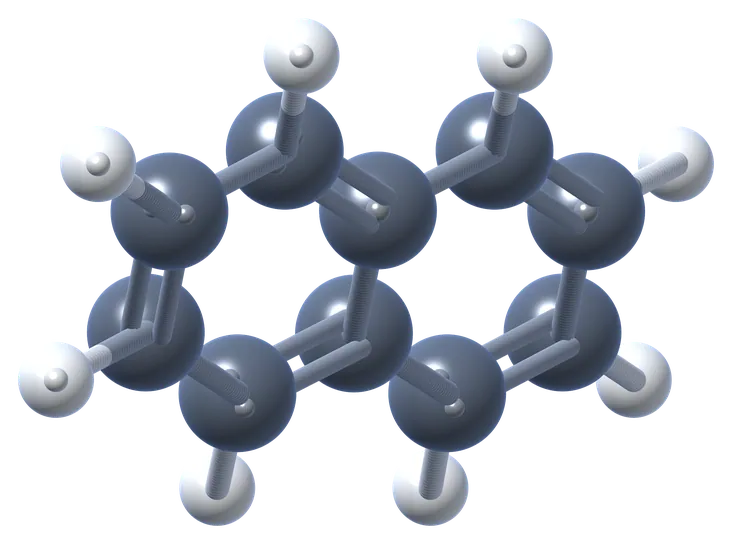
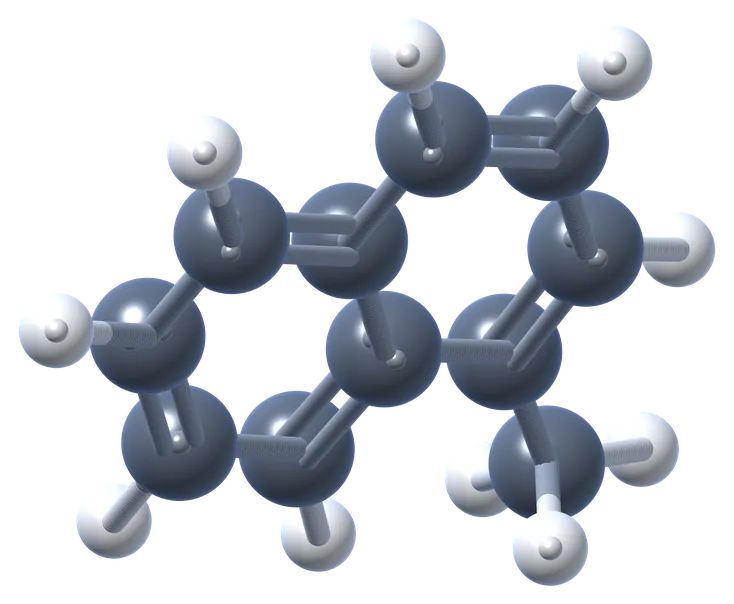
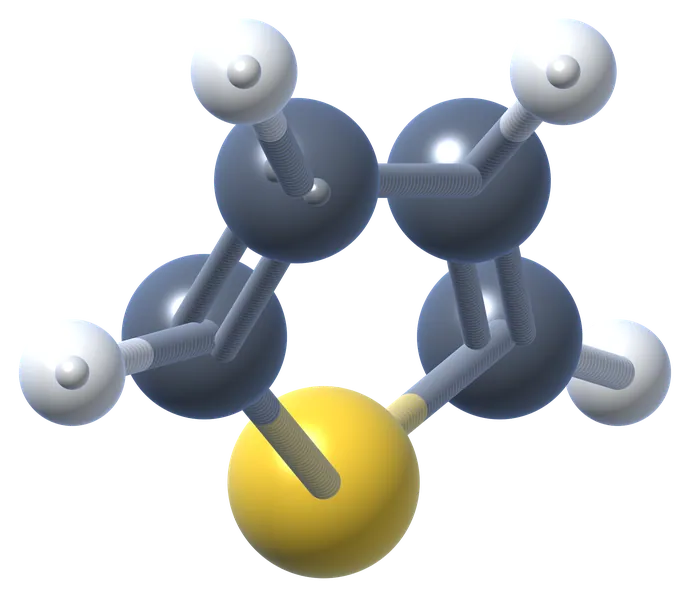
Diesel is mostly straight and branched alkanes such as hexadecane (C16H34, the cetane reference), plus cycloalkanes and alkylbenzenes. Long straight alkanes ignite easily under compression, which gives a high cetane number, but they also form wax crystals in cold weather. Aromatics and cycloalkanes ignite less readily and lower the cetane number but improve cold flow and density.
⚙How it is made
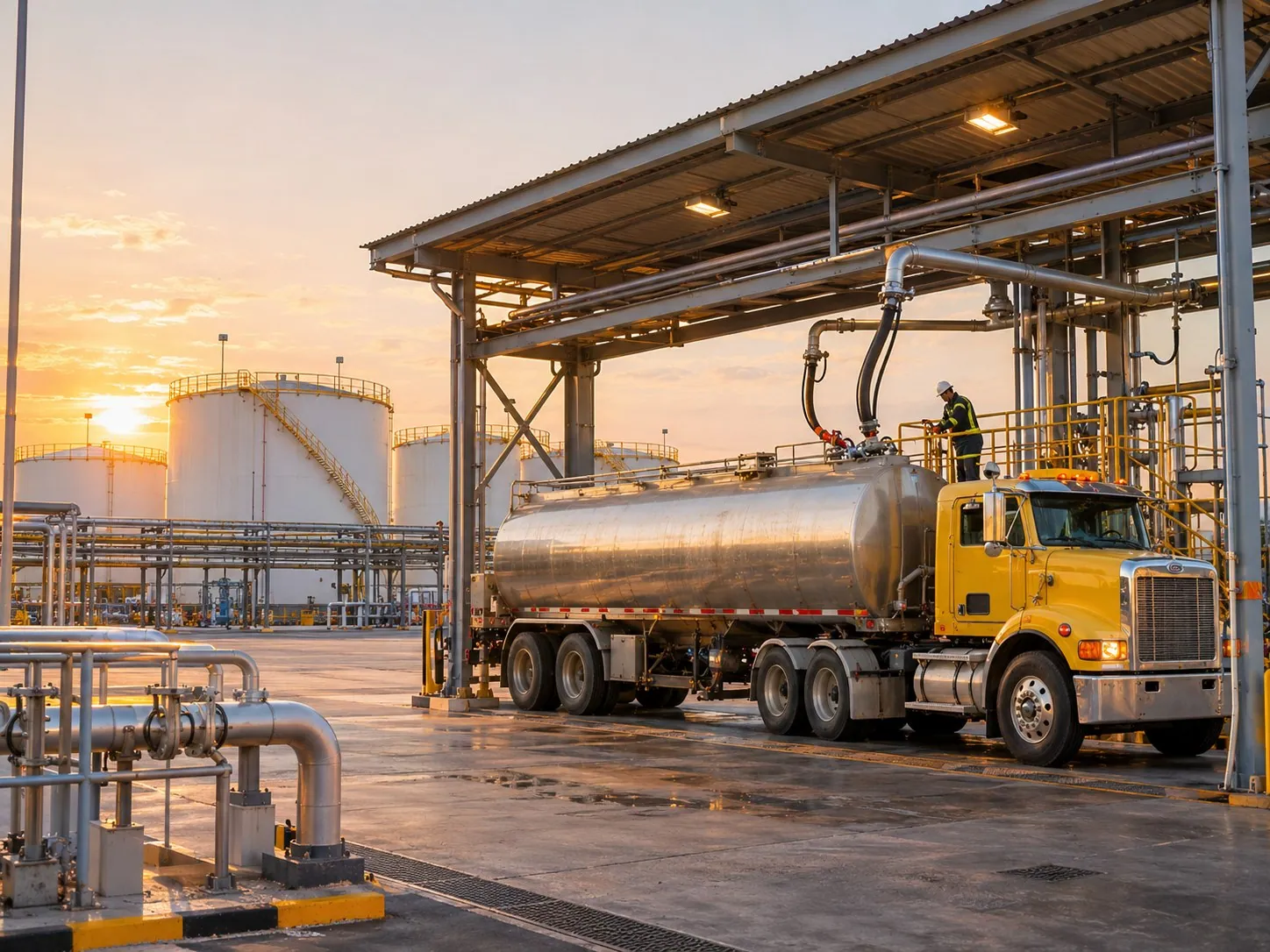
Crude oil is split in the atmospheric distillation unit (CDU). Straight-run gasoil, together with light cycle oil from FCC units and gasoil from hydrocrackers or cokers, is sent to a hydrotreater that uses hydrogen over a cobalt-molybdenum or nickel-molybdenum catalyst to remove sulphur and nitrogen. Cetane improvers, lubricity additives and cold-flow improvers are added in the blending stage.
▶How it works
In a diesel engine the fuel is injected into hot compressed air and ignites without a spark. Cetane number (minimum 51 in EN 590) measures ignition quality: a higher number means shorter ignition delay and smoother combustion. Low sulphur removes the sulphur dioxide that would poison catalysts and filters, but severe hydrotreating also removes natural lubricating compounds, so lubricity additives are added.
▣Storage, loading and inspection
Store in clean, water-free tanks with water drains and fuel-compatible coatings; keep away from copper and zinc surfaces that harm stability. Watch water and microbial growth at the tank bottom and sample from top, middle and bottom with an automatic or manual sampler under ASTM D4057 or ISO 3170. Independent inspectors normally check quantity, density, sulphur, flash point and appearance at loading and discharge. Cold-climate cargoes may need cold-flow additives.
★Why it matters in the Gulf
Gulf refineries export diesel to East Africa, Pakistan and Europe, and Fujairah and Jebel Ali are major storage and trading points. Wikipedia reports about 10 million cubic metres of refined-product storage at Fujairah. The sulphur grades of Gulf domestic road diesel are not stated.
Moléculas clave
Normas y especificaciones
| EN 590 | European road diesel specification: sulphur 10 mg/kg max, cetane number 51 min, density 820 to 845 kg/m3, up to 7% v/v FAME. |
|---|---|
| EN 14214 | Quality standard for the FAME biodiesel allowed as a blend component |
| ASTM D975 | US counterpart; not interchangeable with EN 590 limits |
Peligros
Combustible rather than highly flammable (flash point above 55 C for most specifications). Harmful to aquatic life. Vapours can form explosive mixtures when heated or misted.
Cómo se comercializa
Units
Metric tonnes, with barrels (about 7.5 bbl per tonne at typical density) and cubic metres used for pricing and storage.
Benchmarks
Platts and Argus assessments for ULSD 10 ppm in Northwest Europe and the Mediterranean; ICE Low Sulphur Gasoil futures (a 10 ppm contract) as the paper benchmark
Typical cargo
Commonly 30,000 to 37,000 mt on a Medium Range tanker or 5,000 to 10,000 mt barges for coastal trades
Incoterms
FOB (Arab Gulf load port), CFR or CIF (destination), DAP for inland deliveries; FCA for road or rail.
Notes
Quality is verified by independent surveyors against the EN 590 certificate of analysis at load port.
Refinerías que lo producen: nuestras sugerencias
152 refinerías de la lista producen este producto, 42 de ellas en el Golfo, Irán e Irak. Ordenamos primero las plantas del Golfo, después las que están en operación y luego por capacidad.
- 1Ruwais Refinery
 United Arab Emirates · 922,000 bpdLargest capacity among Gulf-first matchesGulf locationOperatingDeep conversionAcceso de exportación
- 2Al-Zour Refinery
 Kuwait · 615,000 bpdGulf locationOperatingAcceso de exportación
- 3Ras Tanura Refinery
 Saudi Arabia · 550,000 bpdGulf locationOperatingDeep conversionAcceso de exportación
- 4SATORP Jubail Refinery Saudi Arabia · 465,000 bpdGulf locationOperatingDeep conversionAcceso de exportación
- 5Mina Abdullah Refinery Kuwait · 454,000 bpdGulf locationOperatingAcceso de exportación
- 6SAMREF Yanbu Refinery Saudi Arabia · 400,000 bpdGulf locationOperatingAcceso de exportación



Terminales que lo manipulan
- Port of Fujairah (anchorage and bunkering) United Arab Emirates
- Ras Tanura terminal Saudi Arabia
- Vopak Horizon Fujairah United Arab Emirates
- Bapco Sitra tank farm and marine terminal
 Bahrain
- Yanbu oil terminals (Red Sea) Saudi Arabia
- VTTI Fujairah United Arab Emirates



¿Sabía que…?
💡 Cetane number minimum was 49 for Euro 1 and 2 diesel and rose to 51 for Euro 3 to 5 (Wikipedia).
💡 The sulphur limit fell from 0.2 percent (2,000 ppm) at Euro 1 to 10 mg/kg from 2009, a cut of 99.5 percent.
Póngase a prueba sobre Diesel EN 590 (10 ppm)
What is the maximum sulphur content in EN 590 diesel?
Más de este grupo
- Jet A-1
- Kerosene (illuminating)
- Ultra Low Sulphur Diesel (ULSD)
- Gasoil 500 ppm
- Gasoil 50 ppm
- Heating Oil
- Automotive Gasoil (AGO)
- Red Diesel (Marked Diesel)
- Marine Gasoil MGO (DMA)
- Marine Diesel DMB
- LSMGO (0.1% Sulphur ECA Fuel)
- Biodiesel Blends (FAME, B7 to B20)
Fuentes
Redactado con palabras propias de PST a partir de las fuentes anteriores. Fiabilidad de los datos: medium. Los valores típicos varían según el origen y el contrato, por lo que debe leer siempre la especificación de su propio contrato.