Bitumen and solids
Sulphur (Granular and Molten)
Sulphur is a yellow solid recovered from oil and gas processing. It is shipped molten in heated tanks or as solid granules or prills.
← Tutti i prodottiDetto anche: Sulfur, Elemental sulphur, Prilled sulphur, Formed sulphur, Liquid sulphur
- Densità1800 to 2070 kg/m³
- ViscositàLow when molten at about 130 to 150 C
- Flusso a freddoMelts at about 115 C
- ZolfoOver 99.5% S
- Intervallo di ebollizione444.6 to 444.6 °C
- PericoloUN1350 (sulphur) or UN2448 (sulphur, molten), Class 4.1 flammable solid
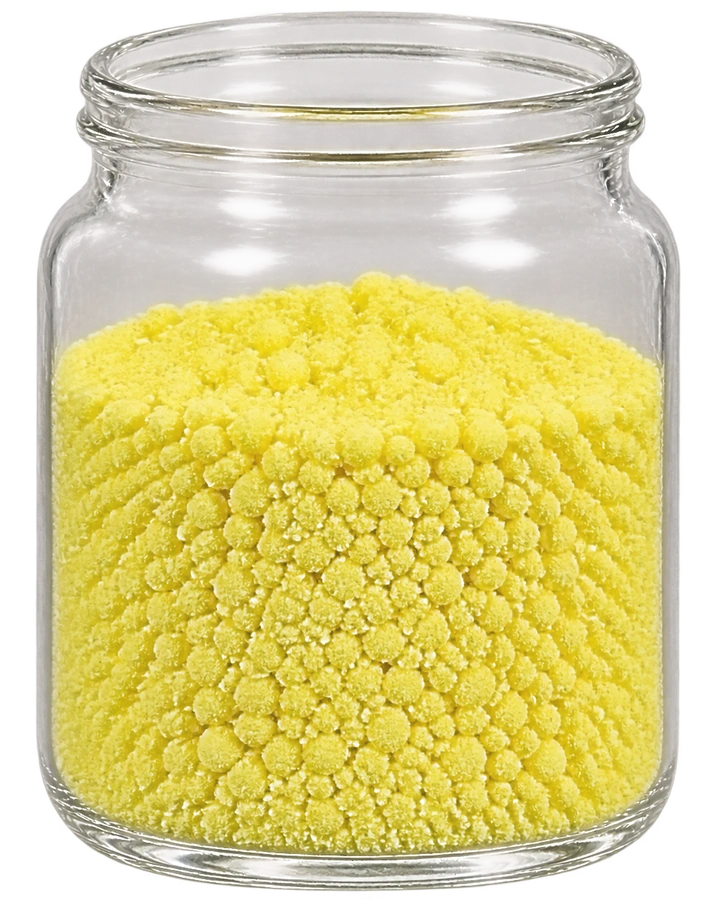
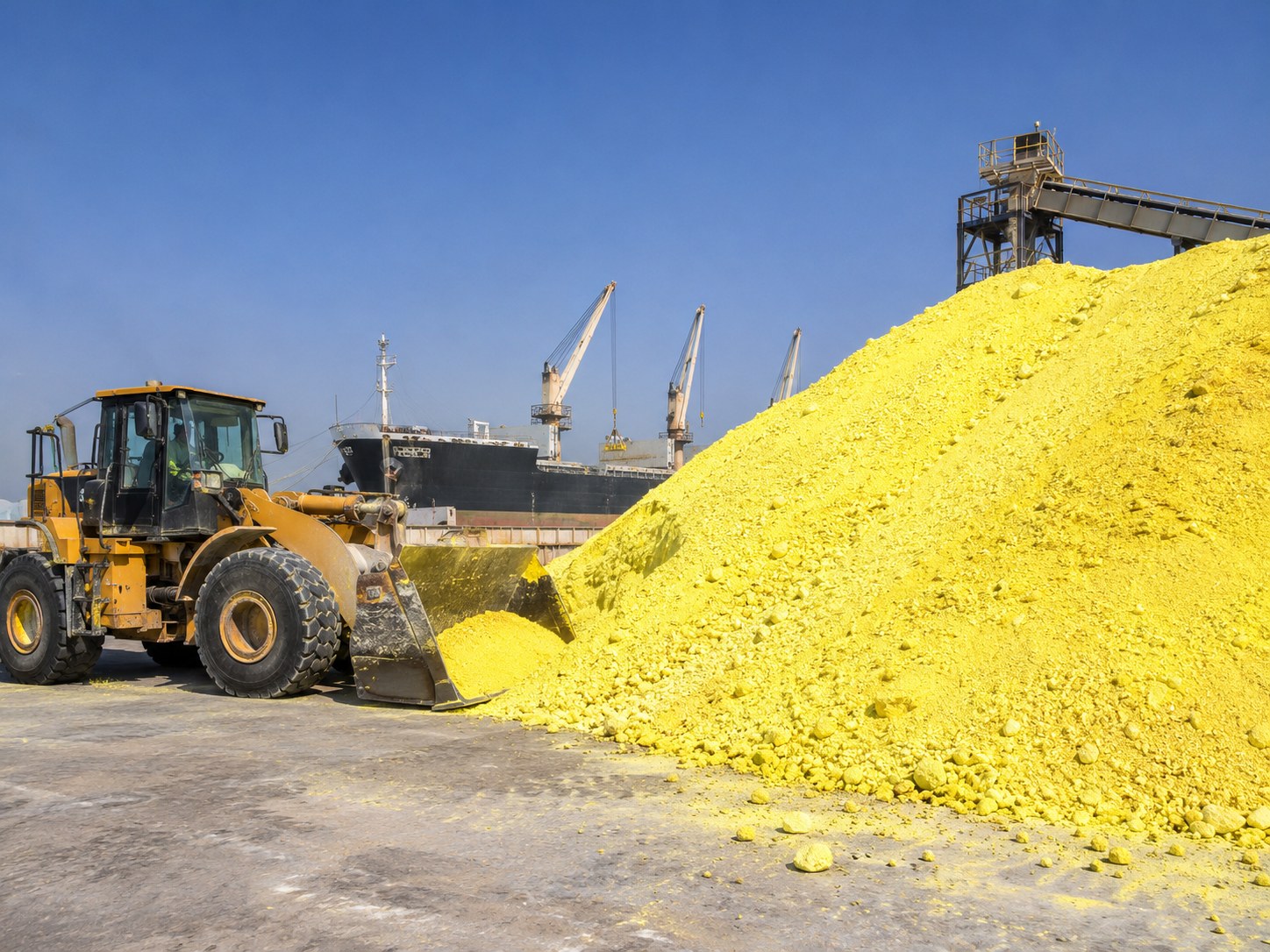
Crediti delle immagini I campioni in vetro da laboratorio sono realizzati da foto di riferimento su Wikimedia Commons di Chemik10 (CC BY-SA 2.5) e una foto di un campione di petrolio CC0.
Sulphur (Granular and Molten) è solido a temperatura ambiente, quindi non c'è liquido da agitare. Low when molten at about 130 to 150 C
Aspetto
Yellow solid; yellow to orange when molten
Dove si usa
- Sulphuric acid for fertilisers
- Chemicals
- Rubber vulcanisation
- Pharma
Manipolazione e sicurezza
- Store dry; keep away from ignition; ventilate. For molten sulphur keep at 130 to 145 C in steam-heated tanks with H2S monitoring. Sample by ASTM D4057; test purity and moisture.
- Dust explosion hazard. Molten sulphur releases H2S and can ignite; sulphur fires produce SO2.
Proprietà tipiche
- Aspetto
- Yellow solid; yellow to orange when molten
- Densità a 15 °C
- 1800 to 2070 kg/m³
- Intervallo di ebollizione
- 444.6 to 444.6 °C
- Viscosità
- Low when molten at about 130 to 150 C
- Punto di scorrimento
- Melts at about 115 C
- Zolfo tipico
- Over 99.5% S
◉What it is
Almost all elemental sulphur is made as a by-product of removing sulphur from natural gas and petroleum (Wikipedia). Refineries recover hydrogen sulphide (H2S) from gas and convert it to elemental sulphur in Claus plants. Molten sulphur is kept liquid at about 130 to 150 C and shipped in heated tanks and vessels. Solid forms include granules, pastilles and prills. Most sulphur is turned into sulphuric acid, mostly for phosphate fertiliser.
⬡What it is made of
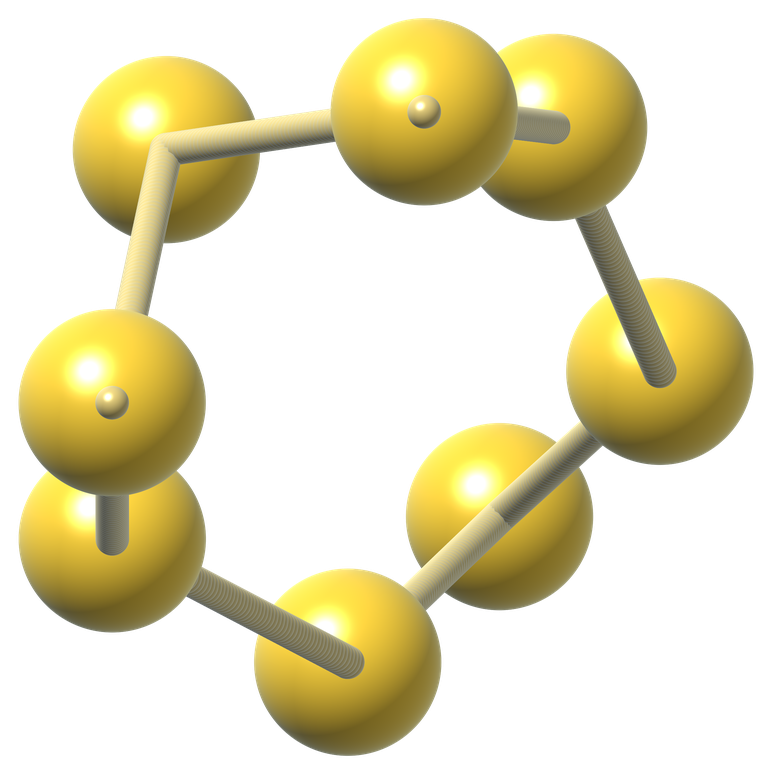
Elemental sulphur S8 rings, purity above 99.5%.
⚛La chimica
Sulphur forms S8 crown-shaped rings. It melts at 115 C and becomes very viscous around 160 to 190 C when rings open to form chains. Molten sulphur is a pale yellow, thin liquid at 120 to 140 C.
⚙How it is made
Gas treating uses amine to absorb H2S; Claus plant burns one third of H2S to SO2 then reacts them over alumina catalyst to form sulphur.
▶How it works
Solid sulphur is stable; molten sulphur releases small amounts of H2S and can ignite. Dust from granules is flammable.
▣Storage, loading and inspection
Store dry; keep away from ignition; ventilate. For molten sulphur keep at 130 to 145 C in steam-heated tanks with H2S monitoring. Sample by ASTM D4057; test purity and moisture.
★Why it matters in the Gulf
The Gulf is one of the world's largest sulphur exporting regions because of its sour oil and gas processing, and producer monthly prices act as global references. Producer volumes and export terminals are not stated.
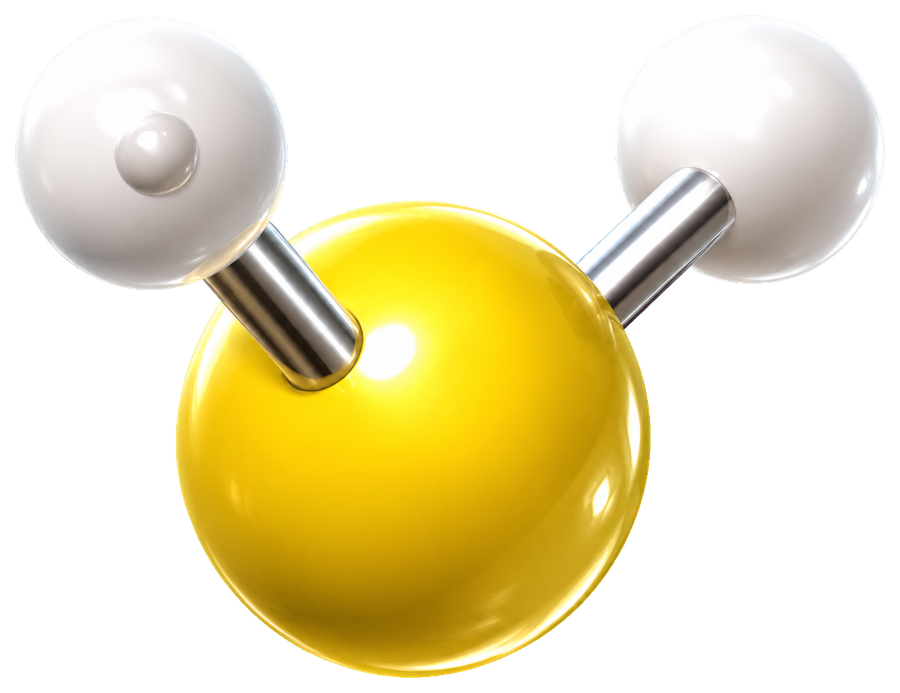
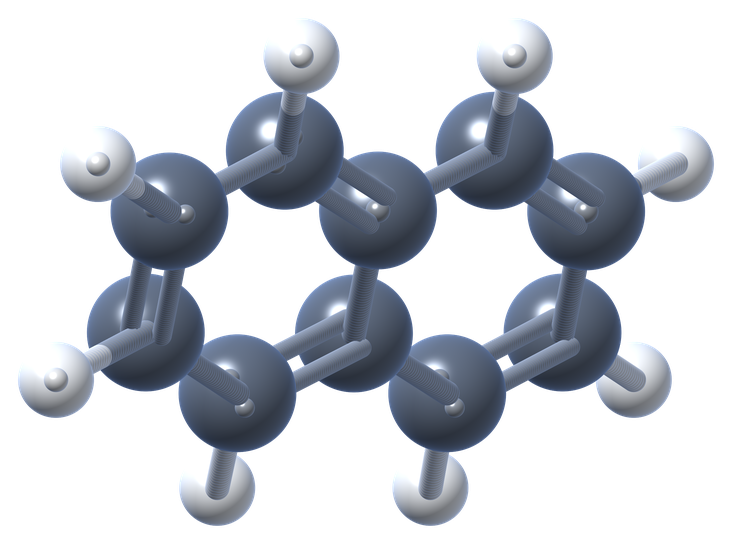
Molecole chiave
Norme e specifiche
| IMSBC Code | Governs carriage of solid bulk sulphur at sea. |
|---|---|
| Contract specifications | Purity, ash, acidity, moisture and H2S content. |
Pericoli
Dust explosion hazard. Molten sulphur releases H2S and can ignite; sulphur fires produce SO2.
Come si commercializza
Units
Metric tonnes
Benchmarks
Monthly Middle East producer prices such as the ADNOC sulphur price; Platts and other assessments
Typical cargo
Bulk vessels of 20,000 to 55,000 mt; molten tankers
Incoterms
FOB, CFR
Notes
Major buyers include China, Morocco, India and Indonesia.
Raffinerie che lo producono: i nostri suggerimenti
54 raffinerie censite producono questo prodotto, 27 delle quali nel Golfo, in Iran e in Iraq. Diamo la precedenza agli impianti del Golfo, poi a quelli in esercizio, poi a quelli per capacità.
- 1Ruwais Refinery
 United Arab Emirates · 922,000 bpdLargest capacity among Gulf-first matchesGulf locationOperatingDeep conversionAccesso all'esportazione
- 2Ras Tanura Refinery
 Saudi Arabia · 550,000 bpdGulf locationOperatingDeep conversionAccesso all'esportazione
- 3SATORP Jubail Refinery Saudi Arabia · 465,000 bpdGulf locationOperatingDeep conversionAccesso all'esportazione
- 4SAMREF Yanbu Refinery Saudi Arabia · 400,000 bpdGulf locationOperatingAccesso all'esportazione
- 5YASREF Yanbu Refinery Saudi Arabia · 400,000 bpdGulf locationOperatingDeep conversionAccesso all'esportazione
- 6Isfahan Refinery
 Iran · 375,000 bpdGulf locationOperatingDeep conversion



Terminal che lo movimentano
- Jazan refinery marine terminal Saudi Arabia
- Ras Al-Khair port (Aramco) Saudi Arabia
- SATORP refinery, Jubail Saudi Arabia

Lo sapeva?
💡 Sulphur melts at about 115 C and boils at about 445 C (Wikipedia).
💡 Almost all elemental sulphur is a by-product of removing sulphur from natural gas and petroleum (Wikipedia).
Si metta alla prova su Sulphur (Granular and Molten)
Where does most commercial sulphur come from?
Altro in questo gruppo
- Bitumen 40/50, 60/70 and 80/100 (Paving Grades)
- Polymer Modified Bitumen (PMB)
- Cutback Bitumen
- Bitumen Emulsion
- Oxidised Bitumen (Blown Bitumen)
- Petroleum Coke (Green, Calcined, Fuel Grade)
Fonti
- Sulfur (Wikipedia)
- List of UN numbers 1301 to 1400 (Wikipedia)
- List of UN numbers 2401 to 2500 (Wikipedia)
Redatto con parole proprie di PST a partire dalle fonti sopra. Affidabilità dei dati: medium. I valori tipici variano in base all'origine e al contratto, quindi legga sempre la specifica nel Suo contratto.