Heavy fuels
Furnace Oil
Furnace oil is a heavy residual fuel burned in industrial furnaces and boilers. It is a common name in South Asia for residual fuel oil.
← 全部产品又称: Furnace fuel oil, FO, LSHS, Fuel oil No. 5/6
- 闪点Min 66 C (IS 1593)
- 密度930 to 1010 kg/m³
- 黏度Up to 370 mm2/s at 50 C in some grades
- 硫1.0 to 4.0%
- 危险性Usually none. Depending on the description and temperature, shippers may use UN3082 or UN3257., Often not classified as dangerous goods for transport (flash point above 60 C). Class 9 if shipped under UN3082 (environmentally hazardous substance, liquid, n.o.s.) or UN3257 (elevated temperature liquid, n.o.s.). Check the supplier's safety data sheet.
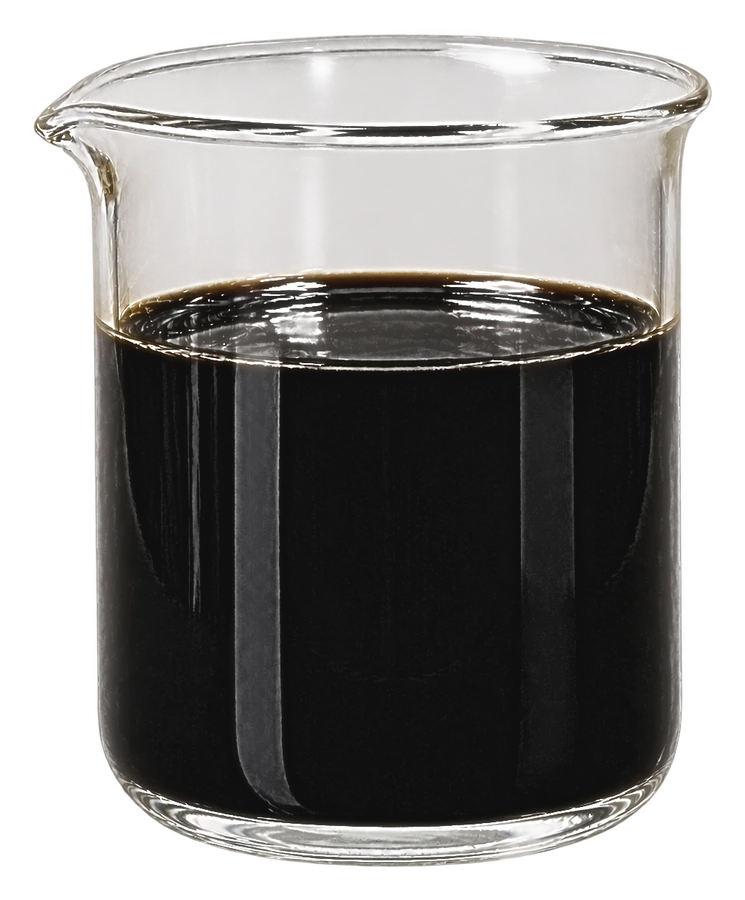

图片来源 实验室玻璃样品根据 Wikimedia Commons 上的参考照片制作,作者: Chemik10 (CC BY-SA 2.5) 以及一张 CC0 石油样品照片.
搅动液体,感受它有多稠
用鼠标或手指划过液体。按住并拖动可用力搅动。键盘:方向键搅动,空格键摇晃。
很稠 很重。几乎不动,回流也很慢。
数据中的典型粘度Up to 370 mm2/s at 50 C in some grades
- 搅动速度
- 0 像素/秒
- 液体运动
- 0%
- 静止所需时间
- -
- 表面
- 静止
该等级仅供手感参考。所示粘度数值以规格数据为准。
外观
Black, viscous
应用领域
- Industrial furnaces
- Boilers
- Power plants
装卸与安全
- Store in heated tanks, typically 40 to 50 C for pumping and 100 to 150 C for centrifuge and injection, with the temperature kept at least 10 C above the pour point and below 20 C under flash point. Avoid overheating that causes coking. Check for incompatibility when mixing batches (ASTM D4740 spot test or D7060). Sampling follows ISO 3170 or ISO 3171 with MARPOL retained sample. Inspect for water, catalytic fines (aluminium plus silicon) and total sediment.
- Hot product can cause burns. Residual fuels contain polycyclic aromatics and can release hydrogen sulphide in tank headspace. Spills are very damaging to marine life.
典型性质
- 外观
- Black, viscous
- 15 °C 密度
- 930 to 1010 kg/m³
- 闪点
- Min 66 C (IS 1593)
- 黏度
- Up to 370 mm2/s at 50 C in some grades
- 倾点
- Varies by grade and season
- 典型含硫量
- 1.0 to 4.0%
◉What it is
Furnace oil is another name for residual fuel oil used in industrial heating. In Wikipedia's fuel oil article, furnace fuel oil is listed as an alias for heavier grades such as No. 5 and No. 6. It must be preheated to 90 to 110 C before atomisation. Indian specification IS 1593 defines grades such as FO and LSHS (low sulphur heavy stock). Users include steel plants, textile mills and power stations.
⬡What it is made of
C20 to C70+ hydrocarbons: aromatics, naphthenes, resins and asphaltenes, with sulphur, nitrogen and metals.
⚛化学成分
Residual fuel contains large aromatic and naphthenic molecules, resins and asphaltenes, which are clusters of polycyclic aromatic rings with heteroatoms (S, N, O) and metals such as vanadium and nickel. Asphaltenes make the oil dense and viscous; resins keep them dispersed. Mixing incompatible fuels can precipitate asphaltenes as sludge.
⚙How it is made
Blended residual and cutter.
▶How it works
Preheated, atomised and burned in industrial burners.
▣Storage, loading and inspection
Store in heated tanks, typically 40 to 50 C for pumping and 100 to 150 C for centrifuge and injection, with the temperature kept at least 10 C above the pour point and below 20 C under flash point. Avoid overheating that causes coking. Check for incompatibility when mixing batches (ASTM D4740 spot test or D7060). Sampling follows ISO 3170 or ISO 3171 with MARPOL retained sample. Inspect for water, catalytic fines (aluminium plus silicon) and total sediment.
★Why it matters in the Gulf
Gulf residual fuel supplies South Asia and Africa. Central Asia may buy mazut-type fuel. Volumes are not stated.
主要分子



标准与规格
| IS 1593 | Indian furnace oil standard |
|---|---|
| ASTM D396 No. 6 | US counterpart |
危害
Hot product can cause burns. Residual fuels contain polycyclic aromatics and can release hydrogen sulphide in tank headspace. Spills are very damaging to marine life.
交易方式
Units
Metric tonnes (bunkers priced per mt); barrels for refinery trade at about 6.3 bbl per mt.
Benchmarks
Platts Singapore and Arab Gulf fuel oil assessments
Typical cargo
Tanker parcels
Incoterms
FOB (load port), CIF or CFR, DAP at bunker port or delivered ex-wharf (barge).
Notes
Used in South Asia.
可生产此产品的炼厂:我们的推荐
已收录 91 家炼厂生产此产品,其中 21 家位于海湾、伊朗和伊拉克。我们按以下顺序排列:海湾工厂优先,其次是在产工厂,再按产能。
- 1Ruwais Refinery
 United Arab Emirates · 922,000 bpdLargest capacity among Gulf-first matchesGulf locationOperatingDeep conversion导出权限
- 2Al-Zour Refinery
 Kuwait · 615,000 bpdGulf locationOperating导出权限
- 3Ras Tanura Refinery
 Saudi Arabia · 550,000 bpdGulf locationOperatingDeep conversion导出权限
- 4SAMREF Yanbu Refinery Saudi Arabia · 400,000 bpdGulf locationOperating导出权限
- 5Petro Rabigh Refinery Saudi Arabia · 400,000 bpdGulf locationOperating导出权限
- 6Abadan Refinery
 Iran · 400,000 bpdGulf locationOperatingDeep conversion导出权限




可处理该产品的码头
- Port of Fujairah (anchorage and bunkering) United Arab Emirates
- Ras Tanura terminal Saudi Arabia
- Vopak Horizon Fujairah United Arab Emirates
- Bapco Sitra tank farm and marine terminal
 Bahrain
- Yanbu oil terminals (Red Sea) Saudi Arabia
- VTTI Fujairah United Arab Emirates



你知道吗
💡 Furnace oil is sometimes called mazut in Russia.
💡 Furnace oil must be preheated before atomisation.
测验您对 Furnace Oil 的掌握
Furnace oil is a type of?
该组更多内容
- HSFO 3.5% (High Sulphur Fuel Oil)
- VLSFO 0.5% (Very Low Sulphur Fuel Oil)
- ULSFO 0.1% (Ultra Low Sulphur Fuel Oil)
- IFO 380 and IFO 180
- Bunker Fuel (ISO 8217 Grades)
- Residual Fuel Oil (RFO / MFO)
- Vacuum Gasoil (VGO)
- Vacuum Residue
- Slurry Oil (Decant Oil)
- Cutter Stock
来源
由 PST 依据上述来源自行撰写。数据可信度:medium。典型值因产地和合同而异,请务必以您自己合同中的规格为准。