Bitumen and solids
Cutback Bitumen
Cutback bitumen is bitumen thinned with a petroleum solvent so it can be applied cold. The solvent evaporates and leaves the hard bitumen.
← All productsAlso called: Cut-back bitumen, RC, MC, SC cutbacks, Road oil, Rapid curing cutback
- Density920 to 1000 kg/m³
- Sulphur1 to 4%
- HazardUN1999, Class 3 flammable liquid (tars, liquid, including road oils and cutback bitumens)
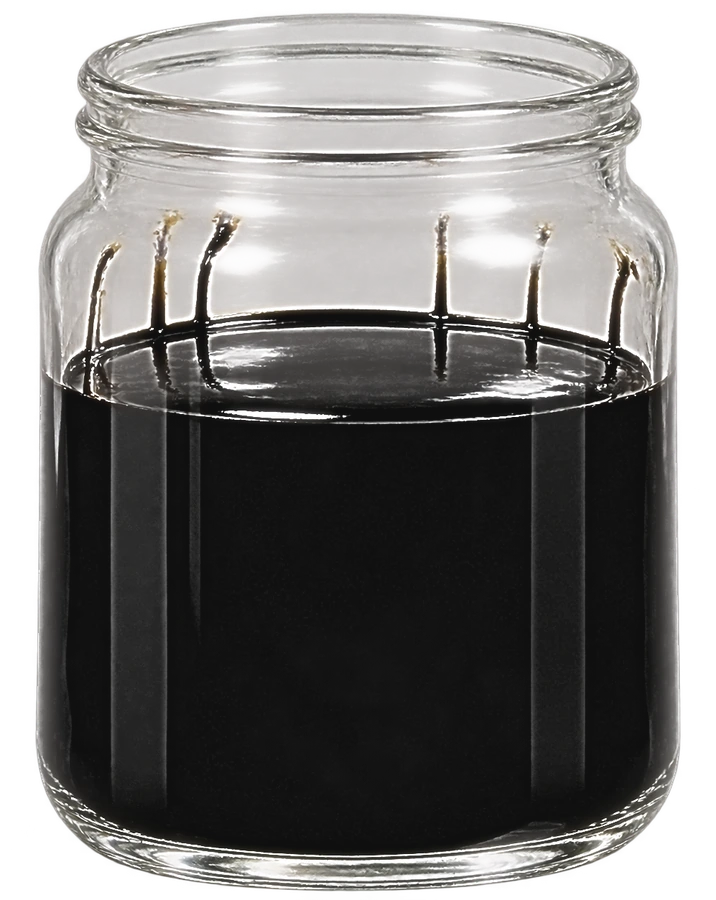
Image credits Laboratory glass samples are made from reference photos on Wikimedia Commons by Chemik10 (CC BY-SA 2.5) and a CC0 petroleum sample photo.
Stir the liquid to feel how thick it is
Move the mouse or a finger across the liquid. Press and drag to stir harder. Keyboard: arrow keys stir, Space shakes.
Thick Heavy. It resists the stirring and only moves slowly.
- Stir speed
- 0 px/s
- Liquid movement
- 0%
- Settled after
- -
- Surface
- Still
The class is a guide for feel. The viscosity figure shown is the one in the specification data.
How it looks
Dark brown to black liquid
Where it is used
- Prime coat on granular base
- Tack coat
- Cold mix patching
Handling and safety
- Store in insulated, heated tanks at 60 to 100 C; do not hold above 200 C for long because it ages and can foam if water is present. Avoid water contact (violent boiling). Sample with a heated sampler per ASTM D140 or EN 58 and test penetration, softening point and flash point. Trucks and ships need heating coils and loading arms with steam or thermal oil tracing. Flammable solvent: no open flame.
- Flammable vapour; keep away from ignition.
Typical properties
- Appearance
- Dark brown to black liquid
- Density at 15 °C
- 920 to 1000 kg/m³
- Viscosity
- Measured by Saybolt Furol or Engler viscosity
- Pour point
- Not applicable
- Typical sulphur
- 1 to 4%
◉What it is
Cutback bitumen is made by dissolving bitumen in a volatile solvent such as naphtha, kerosene or diesel. The solvent type decides the curing speed: rapid curing (RC) uses naphtha, medium curing (MC) uses kerosene and slow curing (SC) uses gasoil. It is used for tack coats, prime coats and cold patching. Cutbacks emit volatile organic compounds, so many countries have shifted to emulsions.
⬡What it is made of
Bitumen 60 to 80% plus solvent 20 to 40%.
⚛The chemistry
Solvent molecules lower the viscosity by breaking asphaltene clusters. After spraying, the solvent evaporates and the bitumen hardens.
⚙How it is made
Hot bitumen is blended with solvent at 100 to 140 C in tanks.
▶How it works
Applied by spray at 20 to 80 C, the solvent evaporates (cure) over minutes (RC) to days (SC).
▣Storage, loading and inspection
Store in insulated, heated tanks at 60 to 100 C; do not hold above 200 C for long because it ages and can foam if water is present. Avoid water contact (violent boiling). Sample with a heated sampler per ASTM D140 or EN 58 and test penetration, softening point and flash point. Trucks and ships need heating coils and loading arms with steam or thermal oil tracing. Flammable solvent: no open flame.
★Why it matters in the Gulf
Cutbacks are used in road works for prime coats, and VOC rules push use toward emulsions. Regional volumes are not stated.
Key molecules
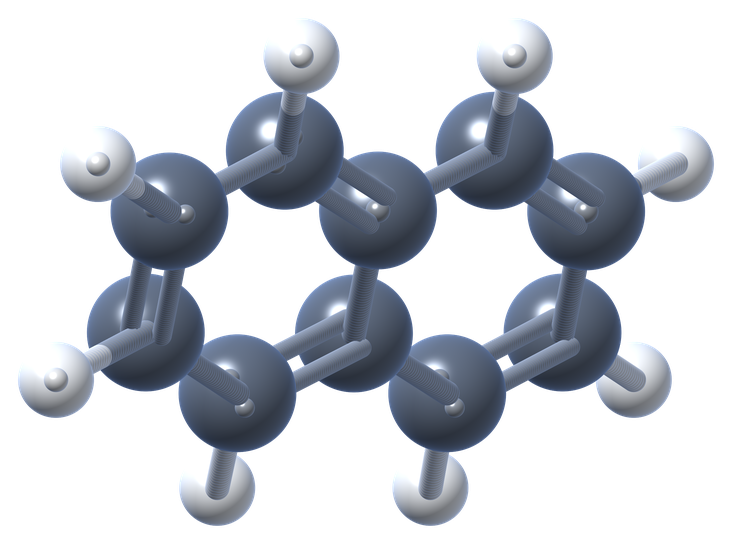
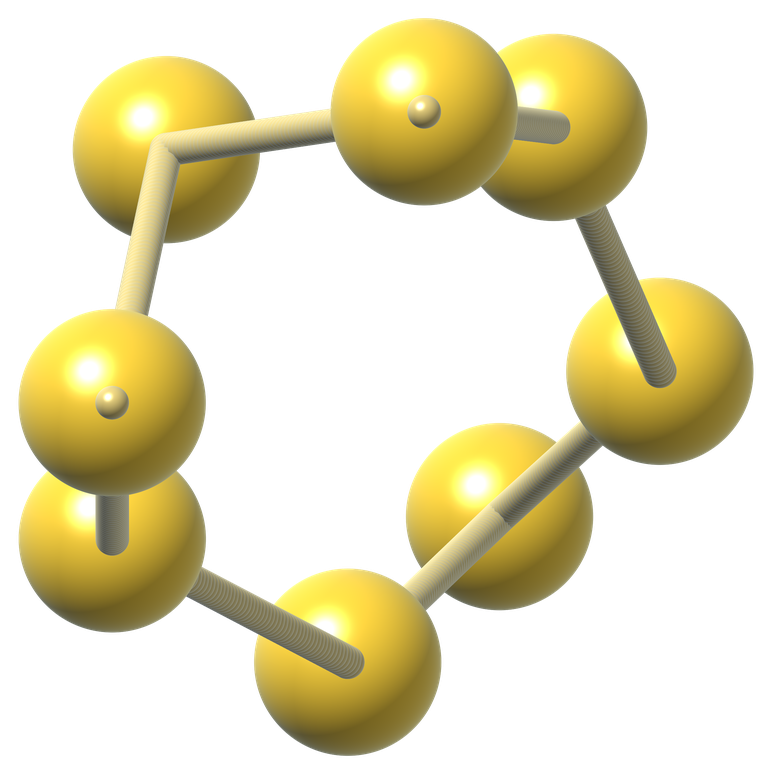
Standards and specifications
| ASTM D2028 | Rapid curing cutback |
|---|---|
| ASTM D2027 | Medium curing cutback |
| ASTM D2026 | Slow curing cutback |
| IS 217 | India cutback bitumen |
Hazards
Flammable vapour; keep away from ignition.
How it is traded
Units
Metric tonnes; drums
Benchmarks
Contract
Typical cargo
Bulk or drums
Incoterms
FOB, DAP
Notes
Trade is smaller than for bitumen.
Refineries that make it: our suggestions
54 listed refineries make this product, 17 of them in the Gulf, Iran and Iraq. We rank Gulf plants first, then operating plants, then by capacity.
- 1Ras Tanura Refinery
 Saudi Arabia · 550,000 bpdLargest capacity among Gulf-first matchesGulf locationOperatingDeep conversionExport access
- 2Mina Al-Ahmadi Refinery
 Kuwait · 346,000 bpdGulf locationOperatingExport access
- 3Arak (Imam Khomeini) Refinery
 Iran · 250,000 bpdGulf locationOperating
- 4Daura Refinery
 Iraq · 140,000 bpdGulf locationOperating
- 5Karbala Refinery Iraq · 140,000 bpdGulf locationOperating
- 6Riyadh Refinery Saudi Arabia · 126,000 bpdGulf locationOperatingDeep conversion



Terminals that handle it
- Torosport Ceyhan Bitumen Terminal
 Turkey
- Heydar Aliyev Baku Oil Refinery
 Azerbaijan
- Turkmenbashi Oil Refinery
 Turkmenistan
- Seydi Oil Refinery Turkmenistan

Did you know
💡 Cutback production is decreasing because solvents evaporate as VOCs.
💡 Bitumen is sometimes mixed with diesel oil or kerosene before shipping (Wikipedia).
Test yourself on Cutback Bitumen
What is cutback bitumen?
More in this group
- Bitumen 40/50, 60/70 and 80/100 (Paving Grades)
- Polymer Modified Bitumen (PMB)
- Bitumen Emulsion
- Oxidised Bitumen (Blown Bitumen)
- Petroleum Coke (Green, Calcined, Fuel Grade)
- Sulphur (Granular and Molten)
Sources
- Bitumen (Wikipedia)
- List of UN numbers 3201 to 3300 (Wikipedia)
- List of UN numbers 1901 to 2000 (Wikipedia)
Written in PST's own words from the sources above. Confidence in the data: medium. Typical values vary by origin and contract, so always read the specification in your own contract.