Bitumen and solids
Sulphur (Granular and Molten)
Sulphur is a yellow solid recovered from oil and gas processing. It is shipped molten in heated tanks or as solid granules or prills.
← All productsAlso called: Sulfur, Elemental sulphur, Prilled sulphur, Formed sulphur, Liquid sulphur
- Density1800 to 2070 kg/m³
- ViscosityLow when molten at about 130 to 150 C
- Cold flowMelts at about 115 C
- SulphurOver 99.5% S
- Boiling range444.6 to 444.6 °C
- HazardUN1350 (sulphur) or UN2448 (sulphur, molten), Class 4.1 flammable solid
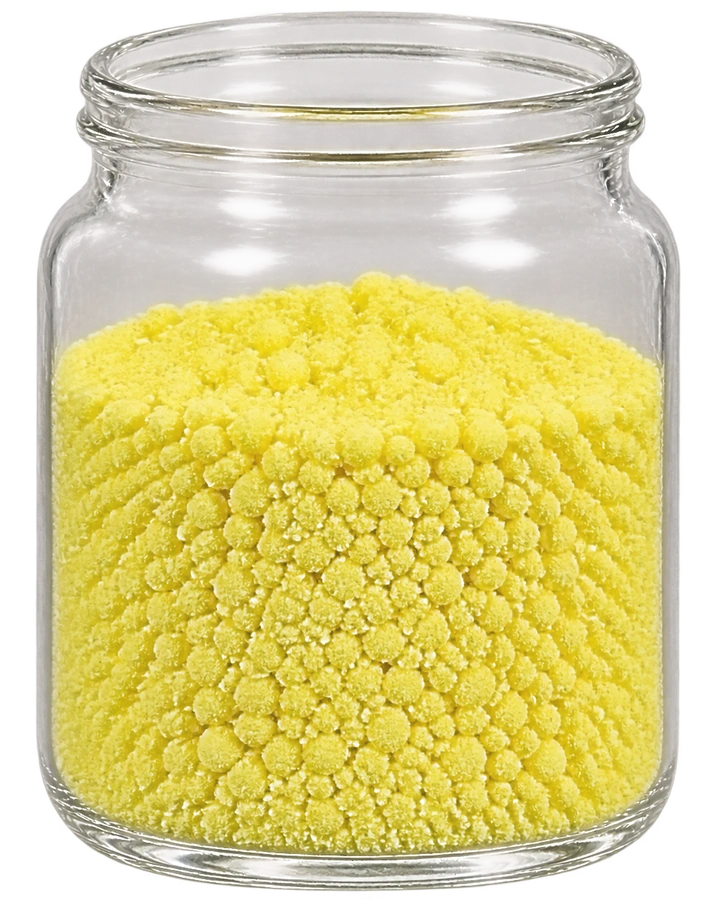
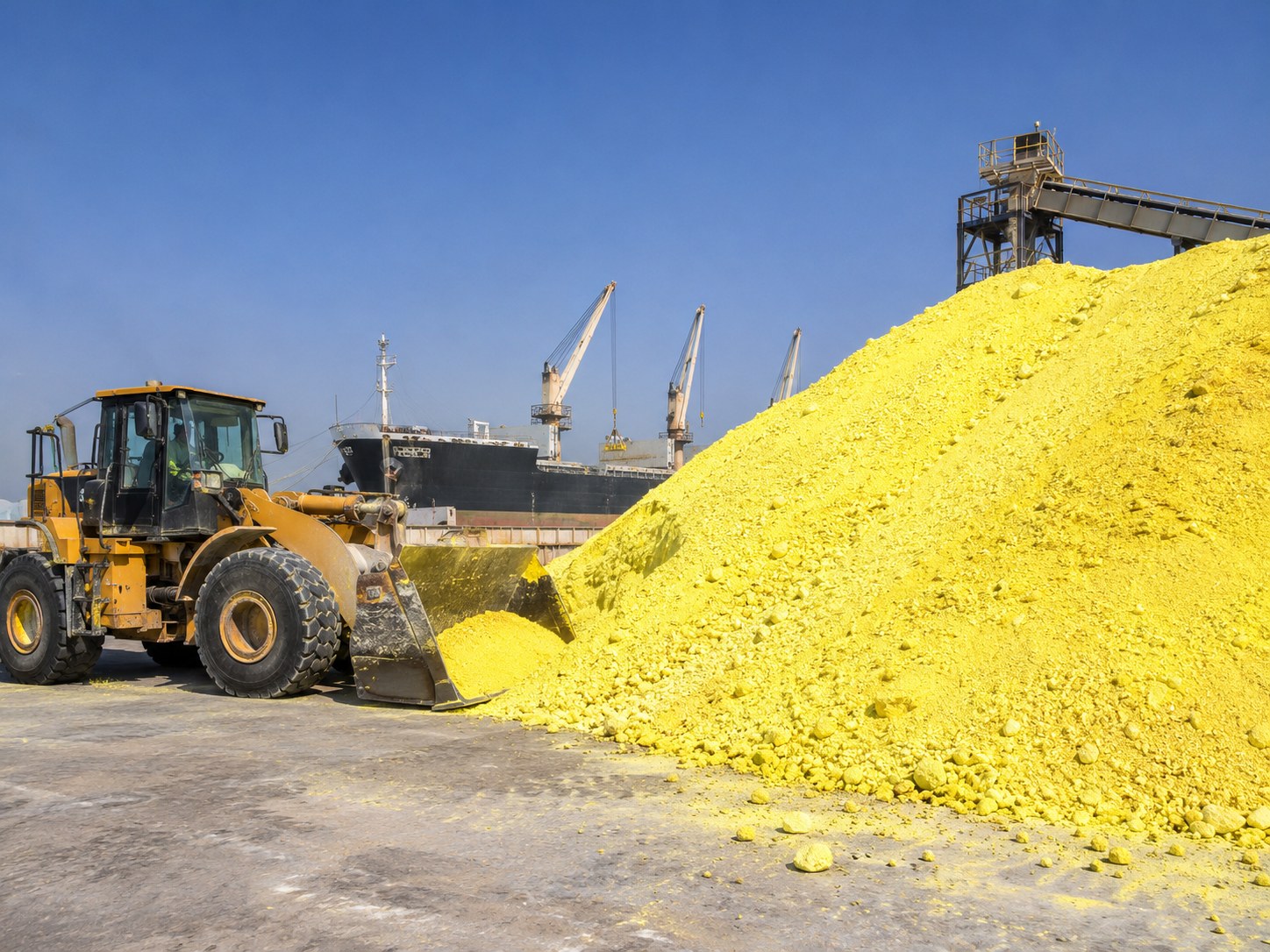
Image credits Laboratory glass samples are made from reference photos on Wikimedia Commons by Chemik10 (CC BY-SA 2.5) and a CC0 petroleum sample photo.
Sulphur (Granular and Molten) is a solid at normal temperature, so there is no liquid to stir. Low when molten at about 130 to 150 C
How it looks
Yellow solid; yellow to orange when molten
Where it is used
- Sulphuric acid for fertilisers
- Chemicals
- Rubber vulcanisation
- Pharma
Handling and safety
- Store dry; keep away from ignition; ventilate. For molten sulphur keep at 130 to 145 C in steam-heated tanks with H2S monitoring. Sample by ASTM D4057; test purity and moisture.
- Dust explosion hazard. Molten sulphur releases H2S and can ignite; sulphur fires produce SO2.
Typical properties
- Appearance
- Yellow solid; yellow to orange when molten
- Density at 15 °C
- 1800 to 2070 kg/m³
- Boiling range
- 444.6 to 444.6 °C
- Viscosity
- Low when molten at about 130 to 150 C
- Pour point
- Melts at about 115 C
- Typical sulphur
- Over 99.5% S
◉What it is
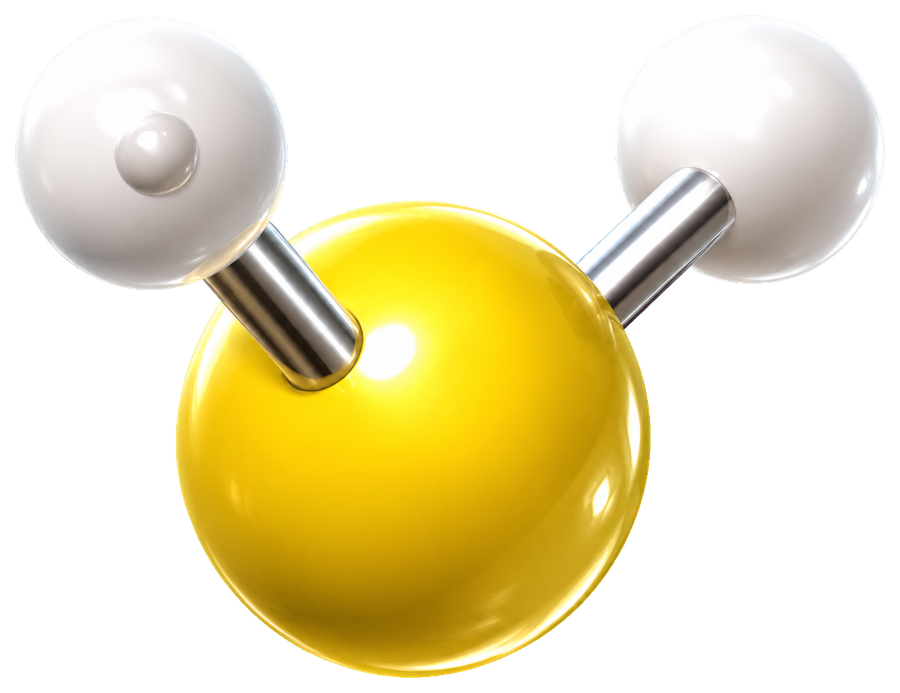
Almost all elemental sulphur is made as a by-product of removing sulphur from natural gas and petroleum (Wikipedia). Refineries recover hydrogen sulphide (H2S) from gas and convert it to elemental sulphur in Claus plants. Molten sulphur is kept liquid at about 130 to 150 C and shipped in heated tanks and vessels. Solid forms include granules, pastilles and prills. Most sulphur is turned into sulphuric acid, mostly for phosphate fertiliser.
⬡What it is made of
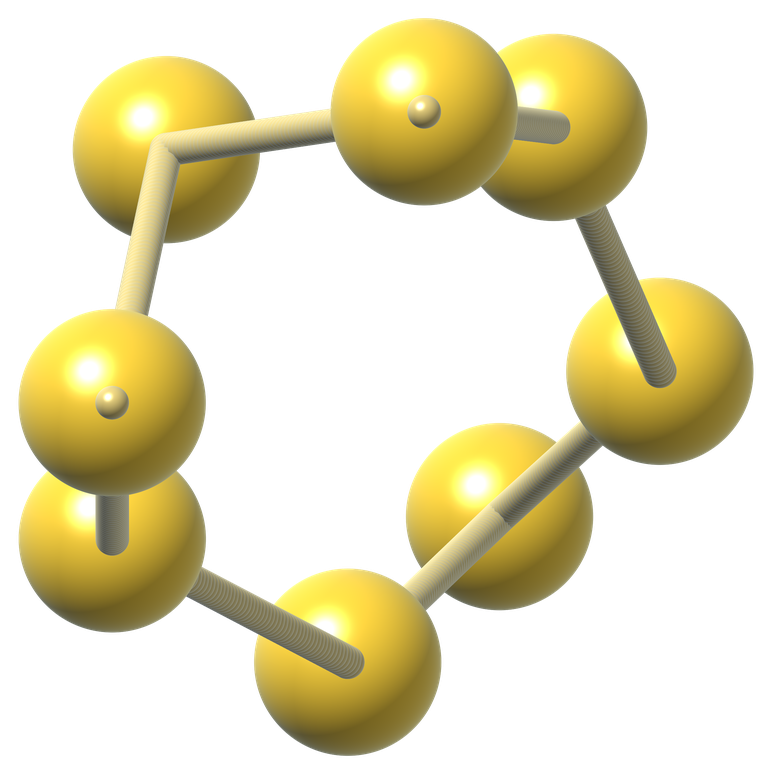
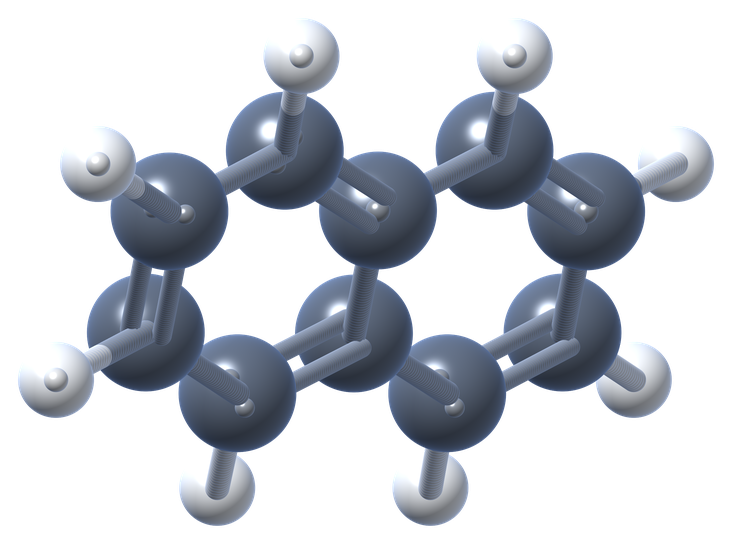
Elemental sulphur S8 rings, purity above 99.5%.
⚛The chemistry
Sulphur forms S8 crown-shaped rings. It melts at 115 C and becomes very viscous around 160 to 190 C when rings open to form chains. Molten sulphur is a pale yellow, thin liquid at 120 to 140 C.
⚙How it is made
Gas treating uses amine to absorb H2S; Claus plant burns one third of H2S to SO2 then reacts them over alumina catalyst to form sulphur.
▶How it works
Solid sulphur is stable; molten sulphur releases small amounts of H2S and can ignite. Dust from granules is flammable.
▣Storage, loading and inspection
Store dry; keep away from ignition; ventilate. For molten sulphur keep at 130 to 145 C in steam-heated tanks with H2S monitoring. Sample by ASTM D4057; test purity and moisture.
★Why it matters in the Gulf
The Gulf is one of the world's largest sulphur exporting regions because of its sour oil and gas processing, and producer monthly prices act as global references. Producer volumes and export terminals are not stated.
Key molecules
Standards and specifications
| IMSBC Code | Governs carriage of solid bulk sulphur at sea. |
|---|---|
| Contract specifications | Purity, ash, acidity, moisture and H2S content. |
Hazards
Dust explosion hazard. Molten sulphur releases H2S and can ignite; sulphur fires produce SO2.
How it is traded
Units
Metric tonnes
Benchmarks
Monthly Middle East producer prices such as the ADNOC sulphur price; Platts and other assessments
Typical cargo
Bulk vessels of 20,000 to 55,000 mt; molten tankers
Incoterms
FOB, CFR
Notes
Major buyers include China, Morocco, India and Indonesia.
Refineries that make it: our suggestions
54 listed refineries make this product, 27 of them in the Gulf, Iran and Iraq. We rank Gulf plants first, then operating plants, then by capacity.
- 1Ruwais Refinery
 United Arab Emirates · 922,000 bpdLargest capacity among Gulf-first matchesGulf locationOperatingDeep conversionExport access
- 2Ras Tanura Refinery
 Saudi Arabia · 550,000 bpdGulf locationOperatingDeep conversionExport access
- 3SATORP Jubail Refinery Saudi Arabia · 465,000 bpdGulf locationOperatingDeep conversionExport access
- 4SAMREF Yanbu Refinery Saudi Arabia · 400,000 bpdGulf locationOperatingExport access
- 5YASREF Yanbu Refinery Saudi Arabia · 400,000 bpdGulf locationOperatingDeep conversionExport access
- 6Isfahan Refinery
 Iran · 375,000 bpdGulf locationOperatingDeep conversion



Terminals that handle it
- Jazan refinery marine terminal Saudi Arabia
- Ras Al-Khair port (Aramco) Saudi Arabia
- SATORP refinery, Jubail Saudi Arabia

Did you know
💡 Sulphur melts at about 115 C and boils at about 445 C (Wikipedia).
💡 Almost all elemental sulphur is a by-product of removing sulphur from natural gas and petroleum (Wikipedia).
Test yourself on Sulphur (Granular and Molten)
Where does most commercial sulphur come from?
More in this group
- Bitumen 40/50, 60/70 and 80/100 (Paving Grades)
- Polymer Modified Bitumen (PMB)
- Cutback Bitumen
- Bitumen Emulsion
- Oxidised Bitumen (Blown Bitumen)
- Petroleum Coke (Green, Calcined, Fuel Grade)
Sources
- Sulfur (Wikipedia)
- List of UN numbers 1301 to 1400 (Wikipedia)
- List of UN numbers 2401 to 2500 (Wikipedia)
Written in PST's own words from the sources above. Confidence in the data: medium. Typical values vary by origin and contract, so always read the specification in your own contract.