Heavy fuels
ULSFO 0.1% (Ultra Low Sulphur Fuel Oil)
ULSFO is a residual or blended fuel with sulphur at or below 0.10 percent. It is used in emission control areas in place of distillate fuel.
← All productsAlso called: ULSFO, 0.1% sulphur fuel oil, ECA fuel oil
- Flash pointMin 60 C
- Density860 to 950 kg/m³
- Viscosity10 to 180 mm2/s at 50 C typical
- SulphurMax 0.10% m/m
- HazardUsually none. Depending on the description and temperature, shippers may use UN3082 or UN3257., Often not classified as dangerous goods for transport (flash point above 60 C). Class 9 if shipped under UN3082 (environmentally hazardous substance, liquid, n.o.s.) or UN3257 (elevated temperature liquid, n.o.s.). Check the supplier's safety data sheet.
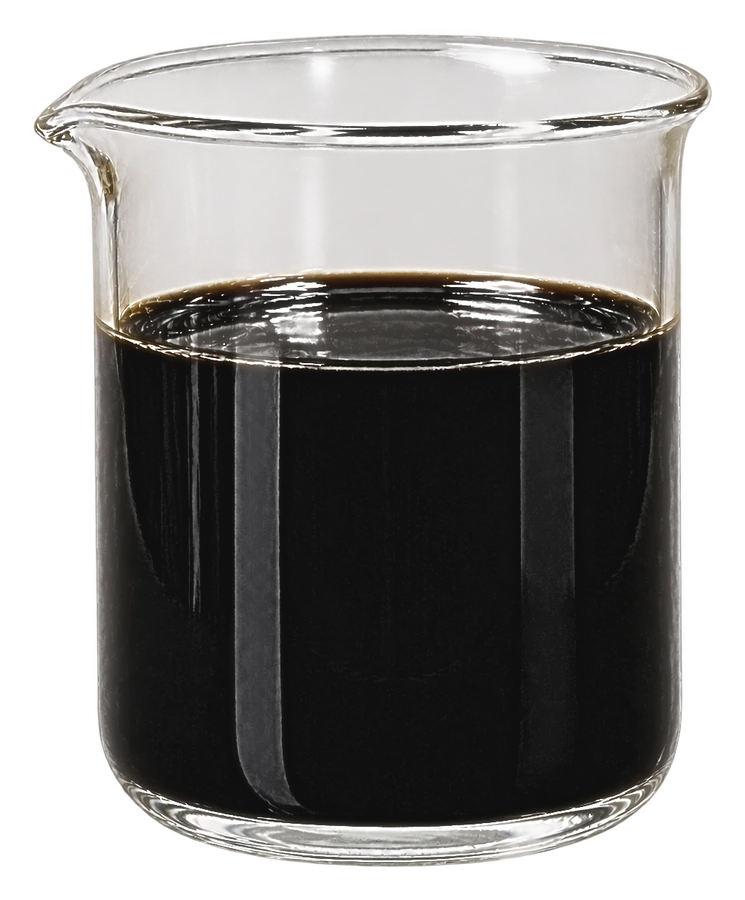
Image credits Laboratory glass samples are made from reference photos on Wikimedia Commons by Chemik10 (CC BY-SA 2.5) and a CC0 petroleum sample photo.
ULSFO 0.1% (Ultra Low Sulphur Fuel Oil) is a solid at normal temperature, so there is no liquid to stir. 10 to 180 mm2/s at 50 C typical
How it looks
Dark to black
Where it is used
- ECA fuel for ships without scrubbers
- Alternative to LSMGO
Handling and safety
- Store in heated tanks, typically 40 to 50 C for pumping and 100 to 150 C for centrifuge and injection, with the temperature kept at least 10 C above the pour point and below 20 C under flash point. Avoid overheating that causes coking. Check for incompatibility when mixing batches (ASTM D4740 spot test or D7060). Sampling follows ISO 3170 or ISO 3171 with MARPOL retained sample. Inspect for water, catalytic fines (aluminium plus silicon) and total sediment.
- Hot product can cause burns. Residual fuels contain polycyclic aromatics and can release hydrogen sulphide in tank headspace. Spills are very damaging to marine life.
Typical properties
- Appearance
- Dark to black
- Density at 15 °C
- 860 to 950 kg/m³
- Flash point
- Min 60 C
- Viscosity
- 10 to 180 mm2/s at 50 C typical
- Pour point
- Varies by blend
- Typical sulphur
- Max 0.10% m/m
◉What it is
ULSFO is a marine fuel designed to meet the 0.10 percent sulphur cap in ECAs without being a pure distillate. It is made from low sulphur components and is usually cheaper than LSMGO. Because the limit is so low, producing it from residue is challenging. It is not a formal ISO 8217 grade: it usually sits in the DMB or RMD/RME families with 0.10% sulphur. Supply is limited, and many ships simply use LSMGO.
⬡What it is made of
C15 to C50 mixture, mostly paraffinic and hydrotreated.
⚛The chemistry
ULSFO is made by blending highly hydrotreated components, so it contains fewer aromatic and sulphur-bearing molecules than other residual fuels. The low sulphur level is the result of hydrodesulphurisation, which converts sulphur in organic molecules to H2S that is removed.
⚙How it is made
Hydrotreated residue, hydrocracker bottoms and distillate are blended; supply depends on the refinery.
▶How it works
Heated as a residual fuel. Low sulphur reduces acid corrosion but also cylinder oil cold corrosion if the engine uses high BN oil.
▣Storage, loading and inspection
Store in heated tanks, typically 40 to 50 C for pumping and 100 to 150 C for centrifuge and injection, with the temperature kept at least 10 C above the pour point and below 20 C under flash point. Avoid overheating that causes coking. Check for incompatibility when mixing batches (ASTM D4740 spot test or D7060). Sampling follows ISO 3170 or ISO 3171 with MARPOL retained sample. Inspect for water, catalytic fines (aluminium plus silicon) and total sediment.
★Why it matters in the Gulf
Gulf demand is limited because there is no Gulf ECA, but ships heading to ECAs can buy low-sulphur fuels at Fujairah. ULSFO availability there is not stated.
Key molecules


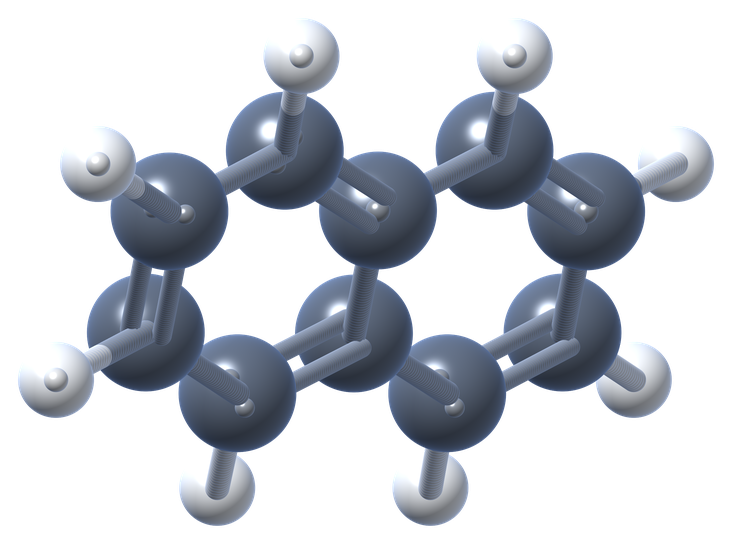
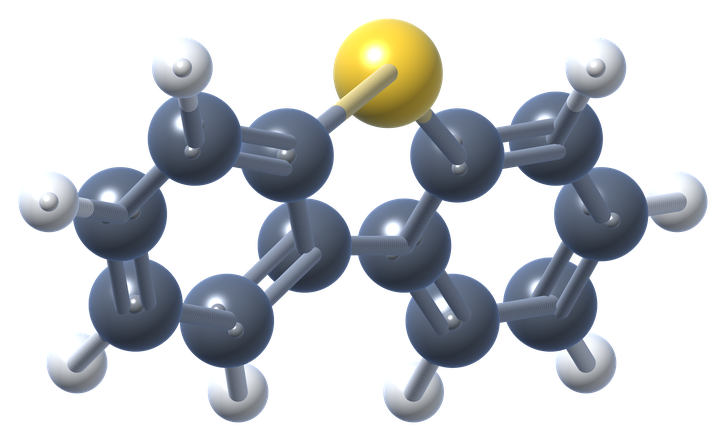
Standards and specifications
| MARPOL Annex VI Reg. 14 | 0.10% sulphur limit in ECAs from 1 January 2015 (IMO). |
|---|---|
| ISO 8217 | The applicable grade depends on viscosity; ULSFO is not a separate ISO grade. |
Hazards
Hot product can cause burns. Residual fuels contain polycyclic aromatics and can release hydrogen sulphide in tank headspace. Spills are very damaging to marine life.
How it is traded
Units
Metric tonnes (bunkers priced per mt); barrels for refinery trade at about 6.3 bbl per mt.
Benchmarks
Platts ULSFO assessments (Singapore, Rotterdam, Fujairah)
Typical cargo
Barge deliveries
Incoterms
FOB (load port), CIF or CFR, DAP at bunker port or delivered ex-wharf (barge).
Notes
Not widely traded; priced between LSMGO and VLSFO.
Refineries that make it: our suggestions
121 listed refineries make this product, 40 of them in the Gulf, Iran and Iraq. We rank Gulf plants first, then operating plants, then by capacity.
- 1Ruwais Refinery
 United Arab Emirates · 922,000 bpdLargest capacity among Gulf-first matchesGulf locationOperatingDeep conversionExport access
- 2Al-Zour Refinery
 Kuwait · 615,000 bpdGulf locationOperatingExport access
- 3Ras Tanura Refinery
 Saudi Arabia · 550,000 bpdGulf locationOperatingDeep conversionExport access
- 4SATORP Jubail Refinery Saudi Arabia · 465,000 bpdGulf locationOperatingDeep conversionExport access
- 5SAMREF Yanbu Refinery Saudi Arabia · 400,000 bpdGulf locationOperatingExport access
- 6YASREF Yanbu Refinery Saudi Arabia · 400,000 bpdGulf locationOperatingDeep conversionExport access



Terminals that handle it
- Port of Fujairah (anchorage and bunkering) United Arab Emirates
- Ras Tanura terminal Saudi Arabia
- Vopak Horizon Fujairah United Arab Emirates
- Bapco Sitra tank farm and marine terminal
 Bahrain
- Yanbu oil terminals (Red Sea) Saudi Arabia
- VTTI Fujairah United Arab Emirates




Did you know
💡 ULSFO volumes are small compared with VLSFO.
💡 The 0.10 percent ECA limit has applied since 1 January 2015 (IMO).
Test yourself on ULSFO 0.1% (Ultra Low Sulphur Fuel Oil)
What sulphur does ULSFO have?
More in this group
- HSFO 3.5% (High Sulphur Fuel Oil)
- VLSFO 0.5% (Very Low Sulphur Fuel Oil)
- IFO 380 and IFO 180
- Bunker Fuel (ISO 8217 Grades)
- Residual Fuel Oil (RFO / MFO)
- Vacuum Gasoil (VGO)
- Vacuum Residue
- Slurry Oil (Decant Oil)
- Cutter Stock
- Furnace Oil
Sources
- Bunker fuel (Wikipedia)
- Fuel oil (Wikipedia)
- IMO: Sulphur oxides (SOx) and particulate matter, Regulation 14
- Port of Fujairah (Wikipedia)
- Fujairah (Wikipedia)
Written in PST's own words from the sources above. Confidence in the data: medium. Typical values vary by origin and contract, so always read the specification in your own contract.