Heavy fuels
Vacuum Residue
Vacuum residue is the heaviest material left after vacuum distillation. It is the feed for cokers, visbreakers, bitumen and fuel oil blends.
← Todos los productosTambién llamado: Vacuum bottoms, VR, Vacuum tower bottoms, VTB, Short residue
- Punto de inflamaciónAbove 200 C typical
- Densidad1000 to 1060 kg/m³
- ViscosidadVery high; over 1,000 mm2/s at 100 C
- Flujo en fríoOver 30 C (often semi-solid)
- Azufre1 to 6%
- PeligroUsually none, Often not dangerous goods; hot product
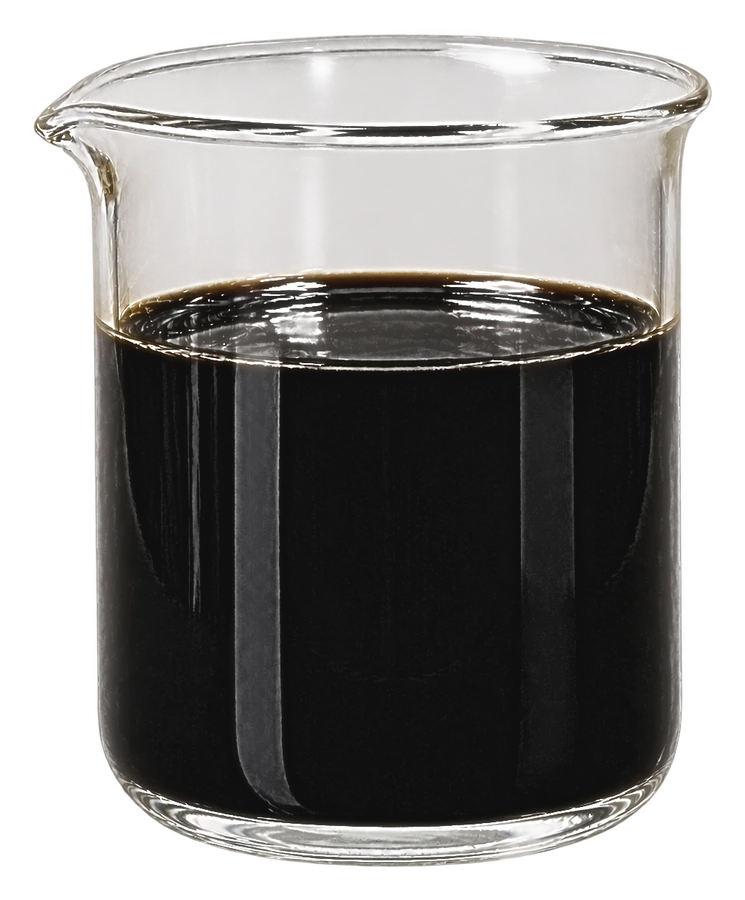
Créditos de las imágenes Las muestras en vidrio de laboratorio se elaboran a partir de fotos de referencia de Wikimedia Commons de Chemik10 (CC BY-SA 2.5) y una foto de muestra de petróleo CC0.
Agite el líquido para sentir su espesor
Mueva el ratón o un dedo sobre el líquido. Mantenga pulsado y arrastre para agitar con más fuerza. Teclado: las flechas agitan, la barra espaciadora sacude.
Semisólido Semisólido a temperatura normal. Solo se arrastra y hay que calentarlo para bombearlo.
Viscosidad típica según los datosVery high; over 1,000 mm2/s at 100 C
- Velocidad de agitación
- 0 px/s
- Movimiento del líquido
- 0%
- Se calma tras
- -
- Superficie
- Quieto
La clase es solo una guía de sensación. La viscosidad indicada es la de los datos de la especificación.
Aspecto
Black, tar-like
Dónde se utiliza
- Coker feed
- Visbreaker feed
- Bitumen feed
- Fuel oil blend
Manipulación y seguridad
- Store in heated tanks, typically 40 to 50 C for pumping and 100 to 150 C for centrifuge and injection, with the temperature kept at least 10 C above the pour point and below 20 C under flash point. Avoid overheating that causes coking. Check for incompatibility when mixing batches (ASTM D4740 spot test or D7060). Sampling follows ISO 3170 or ISO 3171 with MARPOL retained sample. Inspect for water, catalytic fines (aluminium plus silicon) and total sediment.
- Extremely viscous hot product; burns can occur.
Propiedades típicas
- Aspecto
- Black, tar-like
- Densidad a 15 °C
- 1000 to 1060 kg/m³
- Punto de inflamación
- Above 200 C typical
- Viscosidad
- Very high; over 1,000 mm2/s at 100 C
- Punto de fluidez
- Over 30 C (often semi-solid)
- Azufre típico
- 1 to 6%
◉What it is
Vacuum residue is the bottom product of a vacuum distillation unit, boiling above about 500 to 550 C. It is almost solid at room temperature and very rich in asphaltenes, metals and sulphur. Refiners upgrade it in delayed cokers, solvent deasphalters or hydrocrackers, or sell it as fuel oil blendstock or bitumen. Wikipedia describes bitumen as the heavy fraction boiling above about 500 C after vacuum distillation.
⬡What it is made of
C40+ hydrocarbons, asphaltenes, resins, heavy metals.
⚛La química
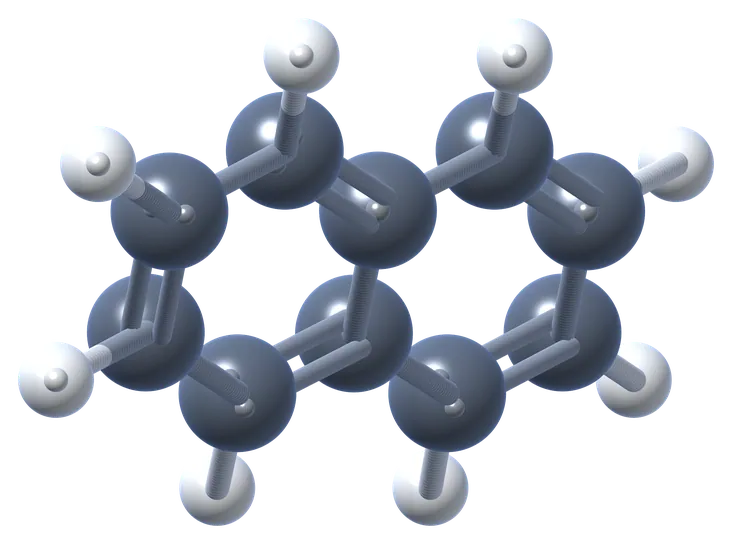
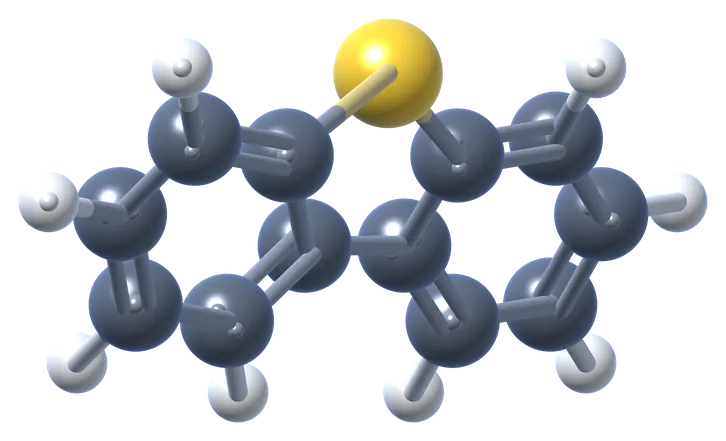
Vacuum residue contains large polycyclic aromatic structures with sulphur, nitrogen and metals (V, Ni). Asphaltenes are insoluble in n-heptane and make the oil stiff.
⚙How it is made
Bottom stream of a vacuum distillation unit operating at 380 to 410 C and under 10 to 40 mmHg.
▶How it works
Heated above 150 C to flow. Upgrading converts it to lighter products.
▣Storage, loading and inspection
Store in heated tanks, typically 40 to 50 C for pumping and 100 to 150 C for centrifuge and injection, with the temperature kept at least 10 C above the pour point and below 20 C under flash point. Avoid overheating that causes coking. Check for incompatibility when mixing batches (ASTM D4740 spot test or D7060). Sampling follows ISO 3170 or ISO 3171 with MARPOL retained sample. Inspect for water, catalytic fines (aluminium plus silicon) and total sediment.
★Why it matters in the Gulf
Gulf refiners process vacuum residue in coking and residue upgrading units. Specific projects are not stated.
Moléculas clave

Normas y especificaciones
| ASTM D5236 | Distillation of heavy hydrocarbon mixtures (vacuum potstill) |
|---|---|
| No standard grade | Sold under contract spec |
Peligros
Extremely viscous hot product; burns can occur.
Cómo se comercializa
Units
Metric tonnes
Benchmarks
Platts assessments for related fuel oil
Typical cargo
Tanker parcels
Incoterms
FOB, CIF
Notes
Quality varies widely.
Refinerías que lo producen: nuestras sugerencias
91 refinerías de la lista producen este producto, 21 de ellas en el Golfo, Irán e Irak. Ordenamos primero las plantas del Golfo, después las que están en operación y luego por capacidad.
- 1Ruwais Refinery
 United Arab Emirates · 922,000 bpdLargest capacity among Gulf-first matchesGulf locationOperatingDeep conversionAcceso de exportación
- 2Al-Zour Refinery
 Kuwait · 615,000 bpdGulf locationOperatingAcceso de exportación
- 3Ras Tanura Refinery
 Saudi Arabia · 550,000 bpdGulf locationOperatingDeep conversionAcceso de exportación
- 4SAMREF Yanbu Refinery Saudi Arabia · 400,000 bpdGulf locationOperatingAcceso de exportación
- 5Petro Rabigh Refinery Saudi Arabia · 400,000 bpdGulf locationOperatingAcceso de exportación
- 6Abadan Refinery
 Iran · 400,000 bpdGulf locationOperatingDeep conversionAcceso de exportación




Terminales que lo manipulan
- Port of Fujairah (anchorage and bunkering) United Arab Emirates
- Ras Tanura terminal Saudi Arabia
- Vopak Horizon Fujairah United Arab Emirates
- Bapco Sitra tank farm and marine terminal
 Bahrain
- Yanbu oil terminals (Red Sea) Saudi Arabia
- VTTI Fujairah United Arab Emirates



¿Sabía que…?
💡 It can be so thick that it behaves like a solid at room temperature.
💡 Bitumen is the heavy fraction left after vacuum distillation.
Póngase a prueba sobre Vacuum Residue
Vacuum residue is the bottom product of which unit?
Más de este grupo
- HSFO 3.5% (High Sulphur Fuel Oil)
- VLSFO 0.5% (Very Low Sulphur Fuel Oil)
- ULSFO 0.1% (Ultra Low Sulphur Fuel Oil)
- IFO 380 and IFO 180
- Bunker Fuel (ISO 8217 Grades)
- Residual Fuel Oil (RFO / MFO)
- Vacuum Gasoil (VGO)
- Slurry Oil (Decant Oil)
- Cutter Stock
- Furnace Oil
Fuentes
Redactado con palabras propias de PST a partir de las fuentes anteriores. Fiabilidad de los datos: medium. Los valores típicos varían según el origen y el contrato, por lo que debe leer siempre la especificación de su propio contrato.