Heavy fuels
IFO 380 and IFO 180
IFO 380 and IFO 180 are intermediate fuel oils named for their maximum viscosity in mm2/s at 50 C. They are blends of residual oil with some distillate.
← सभी उत्पादअन्य नाम: Intermediate Fuel Oil 380, Intermediate Fuel Oil 180, RMG 380, RME 180, IFO
- फ़्लैश पॉइंटMin 60 C
- घनत्व960 to 991 kg/m³
- विस्कॉसिटीMax 180 or 380 mm2/s at 50 C
- ठंड में प्रवाहMax 30 C
- सल्फरDepends on type: HS up to 3.5%; VLS up to 0.50%
- खतराUsually none. Depending on the description and temperature, shippers may use UN3082 or UN3257., Often not classified as dangerous goods for transport (flash point above 60 C). Class 9 if shipped under UN3082 (environmentally hazardous substance, liquid, n.o.s.) or UN3257 (elevated temperature liquid, n.o.s.). Check the supplier's safety data sheet.
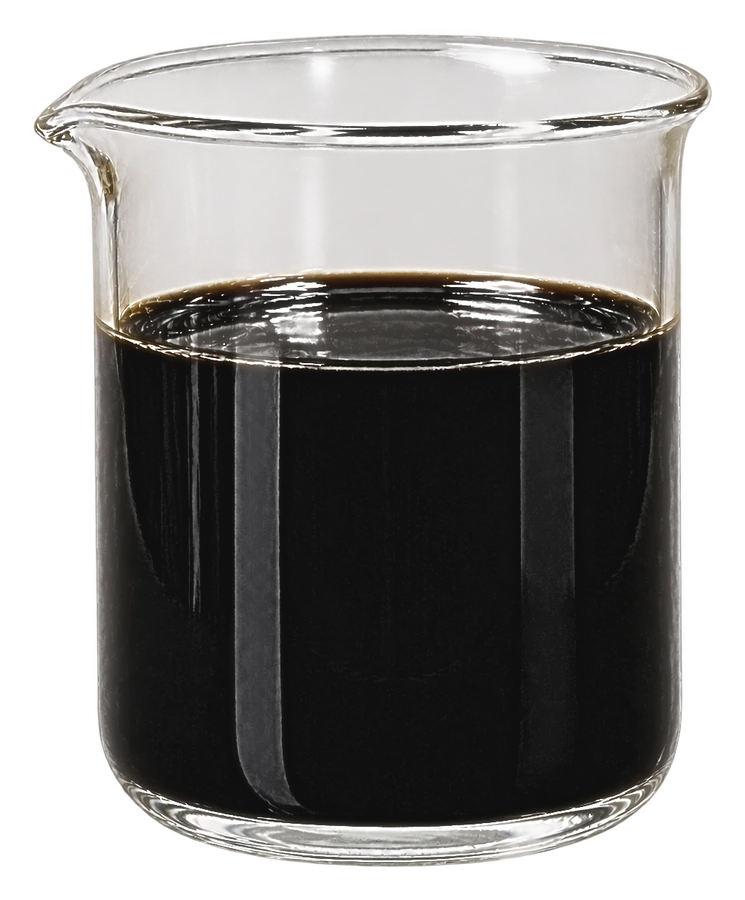

चित्र श्रेय प्रयोगशाला काँच के नमूने Wikimedia Commons पर मौजूद संदर्भ तस्वीरों से बनाए गए हैं, द्वारा Chemik10 (CC BY-SA 2.5) और एक CC0 पेट्रोलियम नमूना फ़ोटो.
तरल को हिलाकर उसका गाढ़ापन महसूस करें
माउस या उँगली तरल के ऊपर चलाएँ। ज़ोर से हिलाने के लिए दबाकर खींचें। कीबोर्ड: तीर कुंजियाँ हिलाती हैं, Space झकझोरता है।
बहुत गाढ़ा बहुत भारी। यह मुश्किल से हिलता है और धीरे-धीरे वापस बहता है।
डेटा से सामान्य श्यानताMax 180 or 380 mm2/s at 50 C
- हिलाने की गति
- 0 px/s
- तरल की गति
- 0%
- शांत होने में लगा समय
- -
- सतह
- स्थिर
यह श्रेणी केवल अनुभव का मार्गदर्शन है। दिखाया गया श्यानता मान विनिर्देश डेटा का मान है।
यह कैसा दिखता है
Black, viscous
इसका उपयोग कहाँ होता है
- Ships with slow and medium speed diesel engines
- Power stations
हैंडलिंग और सुरक्षा
- Store in heated tanks, typically 40 to 50 C for pumping and 100 to 150 C for centrifuge and injection, with the temperature kept at least 10 C above the pour point and below 20 C under flash point. Avoid overheating that causes coking. Check for incompatibility when mixing batches (ASTM D4740 spot test or D7060). Sampling follows ISO 3170 or ISO 3171 with MARPOL retained sample. Inspect for water, catalytic fines (aluminium plus silicon) and total sediment.
- Hot product can cause burns. Residual fuels contain polycyclic aromatics and can release hydrogen sulphide in tank headspace. Spills are very damaging to marine life.
सामान्य गुण
- रूप-रंग
- Black, viscous
- 15 °C पर डेंसिटी
- 960 to 991 kg/m³
- फ़्लैश पॉइंट
- Min 60 C
- विस्कॉसिटी
- Max 180 or 380 mm2/s at 50 C
- पोर पॉइंट
- Max 30 C
- सामान्य सल्फ़र
- Depends on type: HS up to 3.5%; VLS up to 0.50%
◉What it is
Intermediate fuel oil is a marine residual fuel blend. The numbers refer to viscosity in centistokes at 50 C: 380 or 180. According to Wikipedia, IFO 380 is about 98 percent residual oil with 2 percent distillate, while IFO 180 is about 88 percent residual and 12 percent distillate. In ISO 8217 terms IFO 380 corresponds to RMG 380 and IFO 180 to RME 180. They were the main ship fuels before IMO 2020 and are still sold in high and low sulphur forms.
⬡What it is made of
C20 to C70+ hydrocarbons: aromatics, naphthenes, resins and asphaltenes, with sulphur, nitrogen and metals.
⚛रसायन विज्ञान
Residual fuel contains large aromatic and naphthenic molecules, resins and asphaltenes, which are clusters of polycyclic aromatic rings with heteroatoms (S, N, O) and metals such as vanadium and nickel. Asphaltenes make the oil dense and viscous; resins keep them dispersed. Mixing incompatible fuels can precipitate asphaltenes as sludge.
⚙How it is made
Vacuum residue or visbreaker residue is diluted with cutter stock or light cycle oil to reach 180 or 380 viscosity.
▶How it works
The fuel is heated to about 130 C or more for injection. The 380 grade is usually cheaper per tonne than 180 because it needs less of the more expensive distillate cutter to reach its viscosity.
▣Storage, loading and inspection
Store in heated tanks, typically 40 to 50 C for pumping and 100 to 150 C for centrifuge and injection, with the temperature kept at least 10 C above the pour point and below 20 C under flash point. Avoid overheating that causes coking. Check for incompatibility when mixing batches (ASTM D4740 spot test or D7060). Sampling follows ISO 3170 or ISO 3171 with MARPOL retained sample. Inspect for water, catalytic fines (aluminium plus silicon) and total sediment.
★Why it matters in the Gulf
IFO 380 in high-sulphur and 0.50 percent forms is sold at Fujairah. Gulf refineries produce the residual component. Fujairah is one of the world's largest bunkering hubs, alongside Singapore and Rotterdam, and lies just outside the Strait of Hormuz on the Gulf of Oman (Wikipedia). Its oil industry zone has about 10 million cubic metres of refined-product storage (Wikipedia, year not given). Current bunker volumes by grade are not stated.
मुख्य अणु



मानक और स्पेसिफिकेशन
| ISO 8217 | RME 180 and RMG 380 grades: density 991 kg/m3 max, viscosity 180 or 380 mm2/s max at 50 C, flash point 60 C min. |
|---|---|
| MARPOL Annex VI | Sulphur limits. |
ख़तरे
Hot product can cause burns. Residual fuels contain polycyclic aromatics and can release hydrogen sulphide in tank headspace. Spills are very damaging to marine life.
इसका व्यापार कैसे होता है
Units
Metric tonnes (bunkers priced per mt); barrels for refinery trade at about 6.3 bbl per mt.
Benchmarks
Platts 380 CST HSFO and 180 CST assessments
Typical cargo
Bunker barge or tanker
Incoterms
FOB (load port), CIF or CFR, DAP at bunker port or delivered ex-wharf (barge).
Notes
380 is the global benchmark viscosity.
इसे बनाने वाली रिफ़ाइनरियाँ: हमारे सुझाव
91 सूचीबद्ध रिफ़ाइनरियाँ यह उत्पाद बनाती हैं, उनमें से 21 खाड़ी, ईरान और इराक़ में हैं। हम पहले खाड़ी के प्लांट, फिर चालू प्लांट, फिर क्षमता के हिसाब से रखते हैं।
- 1Ruwais Refinery
 United Arab Emirates · 922,000 bpdLargest capacity among Gulf-first matchesGulf locationOperatingDeep conversionएक्सपोर्ट एक्सेस
- 2Al-Zour Refinery
 Kuwait · 615,000 bpdGulf locationOperatingएक्सपोर्ट एक्सेस
- 3Ras Tanura Refinery
 Saudi Arabia · 550,000 bpdGulf locationOperatingDeep conversionएक्सपोर्ट एक्सेस
- 4SAMREF Yanbu Refinery Saudi Arabia · 400,000 bpdGulf locationOperatingएक्सपोर्ट एक्सेस
- 5Petro Rabigh Refinery Saudi Arabia · 400,000 bpdGulf locationOperatingएक्सपोर्ट एक्सेस
- 6Abadan Refinery
 Iran · 400,000 bpdGulf locationOperatingDeep conversionएक्सपोर्ट एक्सेस




इसे संभालने वाले टर्मिनल
- Port of Fujairah (anchorage and bunkering) United Arab Emirates
- Ras Tanura terminal Saudi Arabia
- Vopak Horizon Fujairah United Arab Emirates
- Bapco Sitra tank farm and marine terminal
 Bahrain
- Yanbu oil terminals (Red Sea) Saudi Arabia
- VTTI Fujairah United Arab Emirates




क्या आप जानते हैं
💡 The numbers are viscosity in mm2/s at 50 C, not density.
💡 The 50 C test temperature is used because heavy fuel is too thick to measure conveniently at 40 C.
IFO 380 and IFO 180 पर ख़ुद को परखें
What does 380 mean in IFO 380?
इस समूह में और
- HSFO 3.5% (High Sulphur Fuel Oil)
- VLSFO 0.5% (Very Low Sulphur Fuel Oil)
- ULSFO 0.1% (Ultra Low Sulphur Fuel Oil)
- Bunker Fuel (ISO 8217 Grades)
- Residual Fuel Oil (RFO / MFO)
- Vacuum Gasoil (VGO)
- Vacuum Residue
- Slurry Oil (Decant Oil)
- Cutter Stock
- Furnace Oil
स्रोत
- Bunker fuel (Wikipedia)
- Fuel oil (Wikipedia)
- IMO: Sulphur oxides (SOx) and particulate matter, Regulation 14
- Port of Fujairah (Wikipedia)
- Fujairah (Wikipedia)
ऊपर दिए स्रोतों के आधार पर PST के अपने शब्दों में लिखा गया। डेटा की विश्वसनीयता: medium। सामान्य मान मूल और अनुबंध के अनुसार बदलते हैं, इसलिए हमेशा अपने अनुबंध का स्पेसिफिकेशन पढ़ें।