Middle distillates
Ultra Low Sulphur Diesel (ULSD)
ULSD is diesel with sulphur at or below 15 ppm in the United States and 10 ppm in Europe. The term is used for any modern road diesel with near-zero sulphur.
← All productsAlso called: ULSD, ULSD 15 ppm, Ultra-low-sulfur diesel, Diesel S15
- Flash pointAbove 52 C (ASTM D975) or 55 C (EN 590)
- Density820 to 860 kg/m³
- Viscosity1.9 to 4.1 mm2/s at 40 C (ASTM D975 No. 2); 2.0 to 4.5 (EN 590)
- SulphurMax 15 ppm (US) or 10 ppm (EN 590)
- Boiling range170 to 370 °C
- HazardUN1202, Class 3 flammable liquid, packing group III (ADR/IMDG)
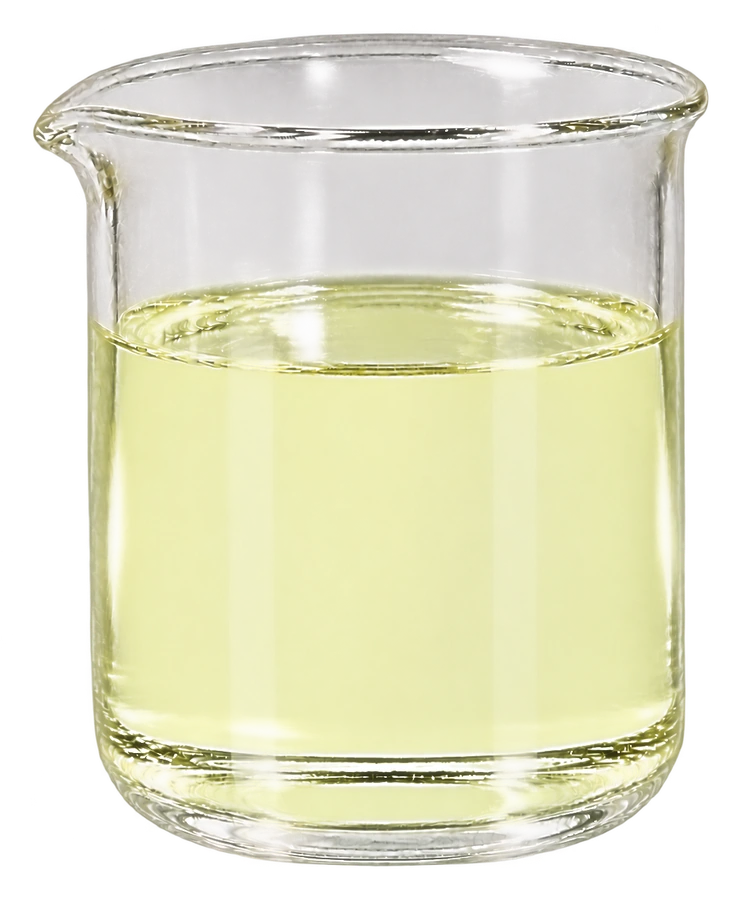

Image credits Laboratory glass samples are made from reference photos on Wikimedia Commons by Chemik10 (CC BY-SA 2.5) and a CC0 petroleum sample photo. Photograph: made from a reference photo by DanTD, CC BY-SA 3.0, via Wikimedia Commons.
Ultra Low Sulphur Diesel (ULSD) is a solid at normal temperature, so there is no liquid to stir. 1.9 to 4.1 mm2/s at 40 C (ASTM D975 No. 2); 2.0 to 4.5 (EN 590)
How it looks
Clear to pale yellow
Where it is used
- Road transport diesel
- Off-road machinery in regulated markets
- Blending stock for renewable diesel
- Rail and generator fuel
Handling and safety
- Store in clean, water-free tanks with water drains and fuel-compatible coatings; keep away from copper and zinc surfaces that harm stability. Watch water and microbial growth at the tank bottom and sample from top, middle and bottom with an automatic or manual sampler under ASTM D4057 or ISO 3170. Independent inspectors normally check quantity, density, sulphur, flash point and appearance at loading and discharge. Cold-climate cargoes may need cold-flow additives.
- Combustible rather than highly flammable (flash point above 55 C for most specifications). Harmful to aquatic life. Vapours can form explosive mixtures when heated or misted.
Typical properties
- Appearance
- Clear to pale yellow
- Density at 15 °C
- 820 to 860 kg/m³
- Boiling range
- 170 to 370 °C
- Flash point
- Above 52 C (ASTM D975) or 55 C (EN 590)
- Viscosity
- 1.9 to 4.1 mm2/s at 40 C (ASTM D975 No. 2); 2.0 to 4.5 (EN 590)
- Pour point
- Varies by season and grade
- Typical sulphur
- Max 15 ppm (US) or 10 ppm (EN 590)
◉What it is
Ultra low sulphur diesel is the clean road diesel required in most developed markets. In the United States the ASTM D975 S15 grade limits sulphur to 15 ppm, while in Europe the equivalent is EN 590 at 10 ppm. The low sulphur level is needed for diesel particulate filters and selective catalytic reduction systems to function. In trade, ULSD usually means the 10 ppm export grade unless a specification says otherwise. Many buyers specify the exact standard, such as EN 590 or ASTM D975 S15, rather than rely on the label alone.
⬡What it is made of
Typically C10 to C22 (mostly C12 to C20) paraffins, naphthenes and aromatics; boiling roughly 170 to 390 C.
⚛The chemistry
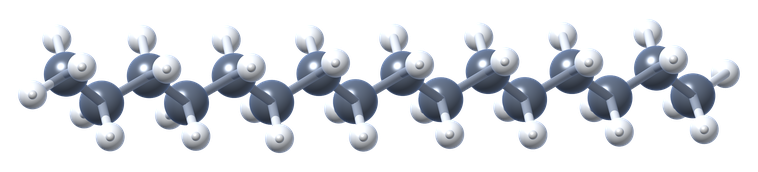
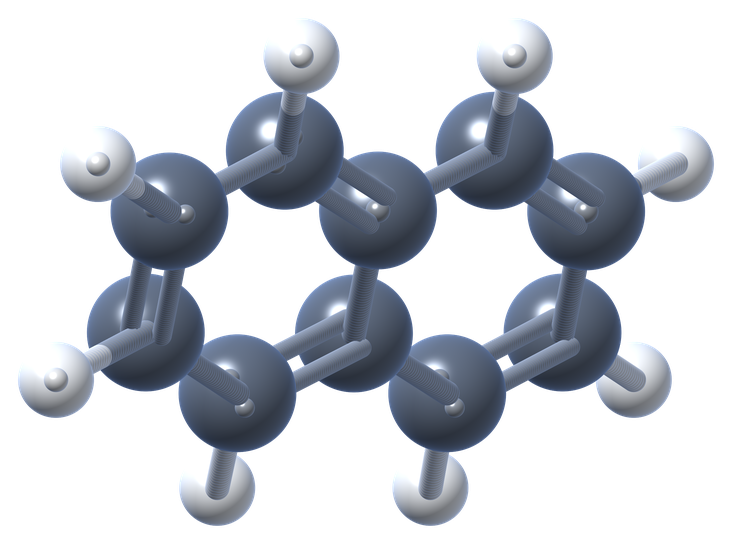
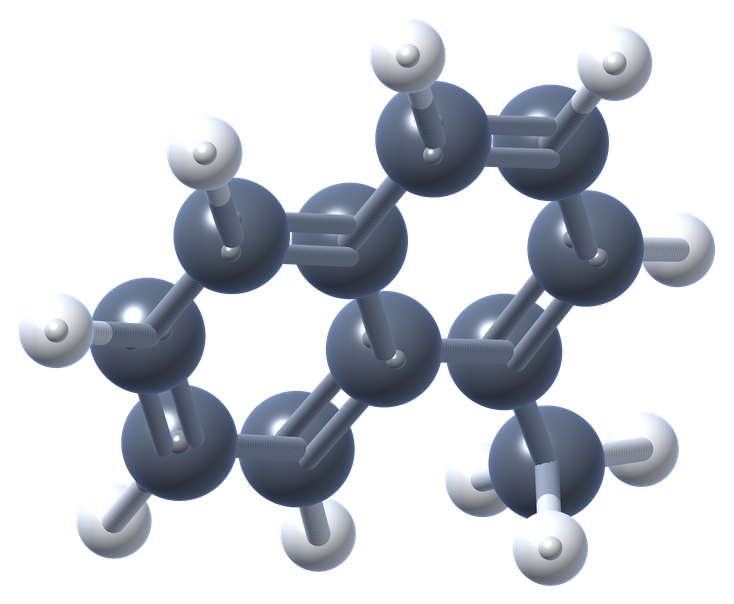
Diesel is mostly straight and branched alkanes such as hexadecane (C16H34, the cetane reference), plus cycloalkanes and alkylbenzenes. Long straight alkanes ignite easily under compression, which gives a high cetane number, but they also form wax crystals in cold weather. Aromatics and cycloalkanes ignite less readily and lower the cetane number but improve cold flow and density.
⚙How it is made
Made by deep hydrodesulphurisation of straight-run and cracked gasoil in a hydrotreater at about 330 to 400 C and 40 to 80 bar hydrogen pressure. Lubricity additives are added afterwards because the severe treatment removes natural lubricants.
▶How it works
Low sulphur lets exhaust aftertreatment devices work without poisoning and cuts sulphur dioxide and particulate matter. Because treatment strips natural lubricity, standards such as ASTM D975 and EN 590 set a maximum wear scar from a high-frequency reciprocating rig (HFRR) test, and suppliers dose lubricity additive to pass it.
▣Storage, loading and inspection
Store in clean, water-free tanks with water drains and fuel-compatible coatings; keep away from copper and zinc surfaces that harm stability. Watch water and microbial growth at the tank bottom and sample from top, middle and bottom with an automatic or manual sampler under ASTM D4057 or ISO 3170. Independent inspectors normally check quantity, density, sulphur, flash point and appearance at loading and discharge. Cold-climate cargoes may need cold-flow additives.
★Why it matters in the Gulf
Gulf refineries export hydrotreated diesel that meets 10 ppm specifications, and Fujairah storage lets traders hold ULSD for onward sale to East Africa, South Asia and Europe. Individual refinery grades are not stated.
Key molecules

Standards and specifications
| ASTM D975 | US specification; S15 grade has 15 ppm maximum sulphur |
|---|---|
| EN 590 | European specification; 10 ppm maximum sulphur |
| ASTM D6751 | Biodiesel blend stock standard in the US |
Hazards
Combustible rather than highly flammable (flash point above 55 C for most specifications). Harmful to aquatic life. Vapours can form explosive mixtures when heated or misted.
How it is traded
Units
Metric tonnes, with barrels (about 7.5 bbl per tonne at typical density) and cubic metres used for pricing and storage.
Benchmarks
Platts ULSD assessments (CIF Northwest Europe, FOB Arab Gulf 10 ppm gasoil); NYMEX ULSD futures in the US
Typical cargo
MR tanker cargoes of 30,000 to 37,000 mt; barge parcels of 2,000 to 5,000 mt
Incoterms
FOB (Arab Gulf load port), CFR or CIF (destination), DAP for inland deliveries; FCA for road or rail.
Notes
Always confirm the exact specification in the contract, because ULSD can mean 10 ppm or 15 ppm.
Refineries that make it: our suggestions
168 listed refineries make this product, 56 of them in the Gulf, Iran and Iraq. We rank Gulf plants first, then operating plants, then by capacity.
- 1Ruwais Refinery
 United Arab Emirates · 922,000 bpdLargest capacity among Gulf-first matchesGulf locationOperatingDeep conversionExport access
- 2Al-Zour Refinery
 Kuwait · 615,000 bpdGulf locationOperatingExport access
- 3Ras Tanura Refinery
 Saudi Arabia · 550,000 bpdGulf locationOperatingDeep conversionExport access
- 4SATORP Jubail Refinery Saudi Arabia · 465,000 bpdGulf locationOperatingDeep conversionExport access
- 5Mina Abdullah Refinery Kuwait · 454,000 bpdGulf locationOperatingExport access
- 6SAMREF Yanbu Refinery Saudi Arabia · 400,000 bpdGulf locationOperatingExport access




Terminals that handle it
- Port of Fujairah (anchorage and bunkering) United Arab Emirates
- Ras Tanura terminal Saudi Arabia
- Vopak Horizon Fujairah United Arab Emirates
- Bapco Sitra tank farm and marine terminal
 Bahrain
- Yanbu oil terminals (Red Sea) Saudi Arabia
- VTTI Fujairah United Arab Emirates



Did you know
💡 US ULSD (15 ppm) became mandatory for highway use in 2006.
💡 Treating diesel to ultra-low sulphur strips natural lubricity, so suppliers add lubricity additive.
Test yourself on Ultra Low Sulphur Diesel (ULSD)
What is the US ASTM D975 S15 sulphur limit?
More in this group
- Jet A-1
- Kerosene (illuminating)
- Diesel EN 590 (10 ppm)
- Gasoil 500 ppm
- Gasoil 50 ppm
- Heating Oil
- Automotive Gasoil (AGO)
- Red Diesel (Marked Diesel)
- Marine Gasoil MGO (DMA)
- Marine Diesel DMB
- LSMGO (0.1% Sulphur ECA Fuel)
- Biodiesel Blends (FAME, B7 to B20)
Sources
Written in PST's own words from the sources above. Confidence in the data: medium. Typical values vary by origin and contract, so always read the specification in your own contract.