Middle distillates
Jet A-1
Jet A-1 is the standard kerosene-type fuel for civil aircraft turbines worldwide outside the United States. It has a freezing point of minus 47 C and a flash point of at least 38 C.
← All productsAlso called: Jet fuel, Aviation turbine fuel, ATF, Kerosene (jet)
- Flash point38 °C
- Density775 to 840 kg/m³
- ViscosityMax 8.0 mm2/s at minus 20 C (typical limit in the specification)
- Cold flowFreezing point max minus 47 C
- SulphurUp to 0.30 % m/m (specification limit); typically much lower
- Boiling range145 to 300 °C
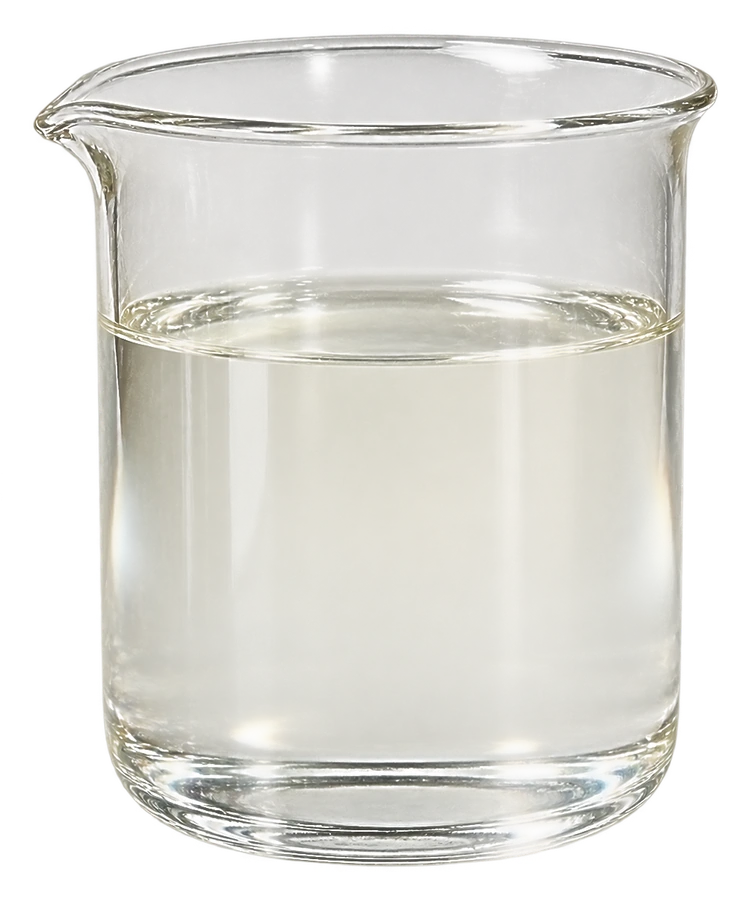

Image credits Laboratory glass samples are made from reference photos on Wikimedia Commons by Chemik10 (CC BY-SA 2.5) and a CC0 petroleum sample photo.
Stir the liquid to feel how thick it is
Move the mouse or a finger across the liquid. Press and drag to stir harder. Keyboard: arrow keys stir, Space shakes.
Thin Light and free flowing. Waves travel quickly and fade slowly.
Typical viscosity from the dataMax 8.0 mm2/s at minus 20 C (typical limit in the specification)
- Stir speed
- 0 px/s
- Liquid movement
- 0%
- Settled after
- -
- Surface
- Still
The class is a guide for feel. The viscosity figure shown is the one in the specification data.
How it looks
Clear and bright, colourless to pale straw. Free of visible water, dirt and haze. Colour is measured on the Saybolt scale: +30 is water-white, and a fuel that has turned yellow or dark has usually been contaminated or has aged.
Where it is used
- Commercial aviation turbine fuel
- Blending with sustainable aviation fuel (SAF)
Handling and safety
- Handled in dedicated clean systems with water separators and filters, joint inspection controls (JIG standards), and release certificates (Refinery Certificate of Quality).
- Flammable; static buildup in handling; antistatic additive used.
Typical properties
- Appearance
- Clear, colourless to straw
- Density at 15 °C
- 775 to 840 kg/m³
- Boiling range
- 145 to 300 °C
- Flash point
- 38 °C
- Viscosity
- Max 8.0 mm2/s at minus 20 C (typical limit in the specification)
- Pour point
- Freezing point max minus 47 C
- Typical sulphur
- Up to 0.30 % m/m (specification limit); typically much lower
◉What it is
Jet A-1 is a carefully controlled kerosene cut with a carbon range of about 8 to 16. It must meet tight limits for freezing point, flash point, thermal stability and cleanliness because it flows through aircraft fuel systems at altitude. It is made by distilling and treating crude oil, and may include approved additives such as antistatic additive, corrosion inhibitor and icing inhibitor. Jet A-1 contrasts with the US Jet A, which has a slightly higher freezing point of minus 40 C. Sustainable aviation fuel can be blended in up to approved limits.
⬡What it is made of
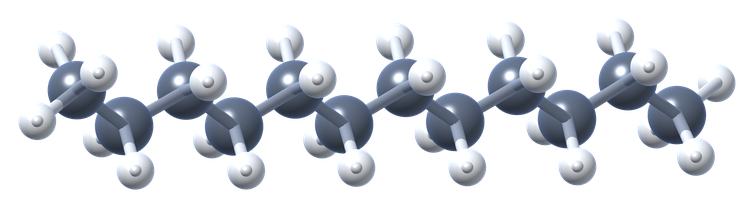
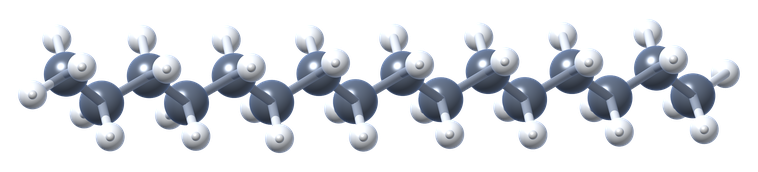
C8 to C16 paraffins, naphthenes and aromatics.
⚛The chemistry
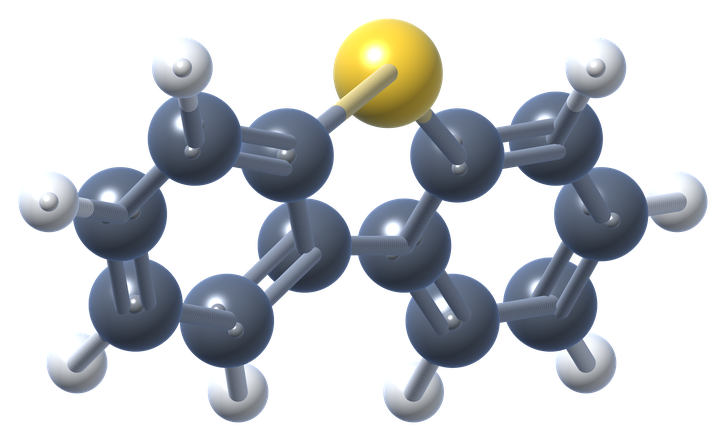
Kerosene molecules are medium-length alkanes and cycloalkanes with some aromatics. Straight chains of this length would freeze at low temperature, so the freezing point is controlled by composition. Aromatics help seals swell but form soot, so they are limited. Sulphur is limited to 0.30 percent mass by specification.
⚙How it is made
Straight-run kerosene from the crude distillation unit, treated by hydrotreating or Merox sweetening, with additives. Hydrocracker kerosene is also used.
▶How it works
A low freezing point keeps fuel flowing at altitude, the flash point ensures safe ground handling, and thermal stability prevents deposits in hot engine sections. Energy per kilogram is high at roughly 43 MJ/kg.
▣Storage, loading and inspection
Handled in dedicated clean systems with water separators and filters, joint inspection controls (JIG standards), and release certificates (Refinery Certificate of Quality).
★Why it matters in the Gulf
The Gulf is a major jet fuel hub, with supply from regional refineries and storage at Fujairah. Wikipedia reports about 10 million cubic metres of refined-product storage in the Fujairah oil industry zone. Verified jet fuel volumes were not retrieved.
Key molecules
Standards and specifications
| DEF STAN 91-091 | UK Ministry of Defence specification for Jet A-1. |
|---|---|
| ASTM D1655 | Standard specification for aviation turbine fuels (Jet A and Jet A-1). |
| IATA Guidance Material (Kerosene Type) | Industry guidance for aviation fuel quality. |
Hazards
Flammable; static buildup in handling; antistatic additive used.
How it is traded
Units
Barrels or metric tonnes
Benchmarks
Platts Jet Kero FOB Arab Gulf, Singapore, NWE
Typical cargo
LR1 or MR tankers 35,000 to 75,000 tonnes
Incoterms
FOB, CFR, DAP at airport
Notes
Release certificate and fuel quality must match DEF STAN 91-091 or ASTM D1655.
Refineries that make it: our suggestions
76 listed refineries make this product, 26 of them in the Gulf, Iran and Iraq. We rank Gulf plants first, then operating plants, then by capacity.
- 1Ruwais Refinery
 United Arab Emirates · 922,000 bpdLargest capacity among Gulf-first matchesGulf locationOperatingDeep conversionExport access
- 2Al-Zour Refinery
 Kuwait · 615,000 bpdGulf locationOperatingExport access
- 3Ras Tanura Refinery
 Saudi Arabia · 550,000 bpdGulf locationOperatingDeep conversionExport access
- 4SATORP Jubail Refinery Saudi Arabia · 465,000 bpdGulf locationOperatingDeep conversionExport access
- 5Petro Rabigh Refinery Saudi Arabia · 400,000 bpdGulf locationOperatingExport access
- 6Bapco Sitra Refinery
 Bahrain · 380,000 bpdGulf locationOperatingExport access




Terminals that handle it
- Port of Fujairah (anchorage and bunkering) United Arab Emirates
- Vopak Horizon Fujairah United Arab Emirates
- Bapco Sitra tank farm and marine terminal Bahrain
- VTTI Fujairah United Arab Emirates
- Al-Zour refinery tank farm and export facilities Kuwait
- Brooge Petroleum and Gas Investment (Fujairah Oil Industry Zone) United Arab Emirates




Did you know
💡 Jet A-1 has a freezing point of minus 47 C, while US Jet A is minus 40 C.
💡 Jet A-1 requires an antistatic additive; Jet A does not (Wikipedia).
Test yourself on Jet A-1
Jet A-1 maximum freezing point is:
See the PST specification page
More in this group
- Kerosene (illuminating)
- Diesel EN 590 (10 ppm)
- Ultra Low Sulphur Diesel (ULSD)
- Gasoil 500 ppm
- Gasoil 50 ppm
- Heating Oil
- Automotive Gasoil (AGO)
- Red Diesel (Marked Diesel)
- Marine Gasoil MGO (DMA)
- Marine Diesel DMB
- LSMGO (0.1% Sulphur ECA Fuel)
- Biodiesel Blends (FAME, B7 to B20)
Sources
Written in PST's own words from the sources above. Confidence in the data: medium. Typical values vary by origin and contract, so always read the specification in your own contract.